Governor Velasco proposes judicial reform in Bolivia following arrest of Attorney General
Juan Pablo Velasco announced a proposal for digital case files and citizen oversight following operations that resulted in the arrest of Róger Mariaca and other prosecutors.
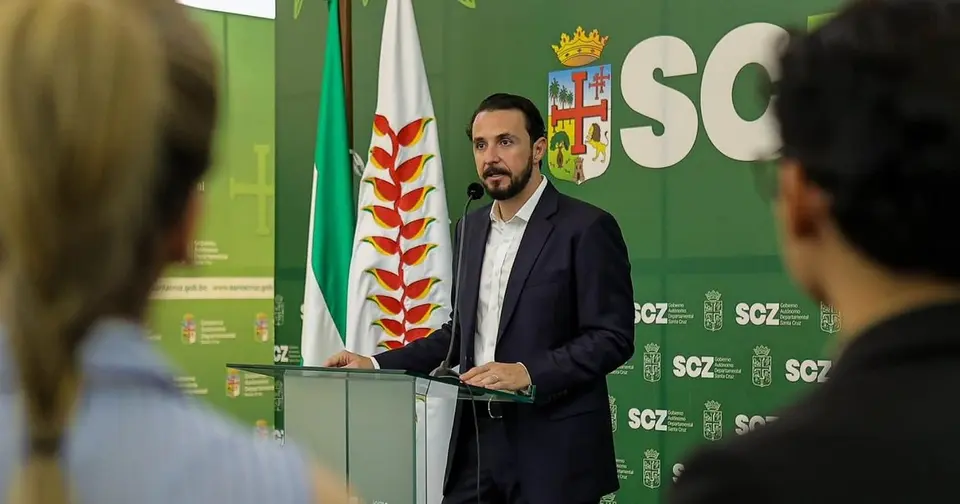
Velasco calls for transformation of justice system following Public Ministry operations
The governor of Santa Cruz, Juan Pablo Velasco, presented a proposal for comprehensive judicial reform following operations that, according to El Deber, resulted in the arrest of the Attorney General of the State, Róger Mariaca, the departmental prosecutor of Santa Cruz, Alberto Zeballos, and other authorities and officials of the Public Ministry.
The departmental authority expressed his position through his social networks, where he congratulated the operations and maintained that what occurred opens an opportunity to transform the justice system in Bolivia.
"Bolivia needs profound judicial reform, and it needs it now. What happened last night confirms what we Bolivians have been normalising for years: the system of justice administration does not function, and it was moving further away from functioning each day," Velasco stated.
Digital case files and process traceability
The governor proposed advancing towards a system with greater access to information and technological tools that would allow tracking of each judicial process.
"We need transparent and traceable justice, where every citizen can access complete information about each case: deadlines, proceedings, rulings and those responsible. With public digital case files and technological control tools, any irregularity will be exposed," he indicated.
Velasco announced that he would present a concrete proposal for technological transformation and judicial transparency, with implementation mechanisms, traceability and citizen oversight.
The operations that motivated the proposal also took place in the departmental prosecutors' offices in Sucre and La Paz, in addition to Santa Cruz.
Questioning of intermediation networks
The governor questioned the practices that, he stated, have enabled manipulation of judicial processes and the operation of intermediation networks within the system.
"We all know someone close to us who was a victim of this criminal network entrenched in the justice system: corrupt judges, bribed operatives and a system where whoever has money and power assembles and manages cases to their advantage," he affirmed.
Velasco also maintained that investigations should reach the structures that allegedly enable process manipulation. "When intermediation networks between lawyers, judges and operatives capable of manipulating processes are built around justice, we stop talking only about individual corruption and begin to talk about structures that must be investigated and dismantled," he added.
Congratulations to Government and departmental institutionality
The departmental authority urged investigations to continue and made explicit his support for Executive actions. "I congratulate the National Government for this fight against organised crime within the justice system, where lawyers who presented themselves as the great friends of the Judicial Body won cases and ruined innocent people," he indicated.
Finally, Velasco proposed modifying the mechanisms for the election of judicial authorities at the departmental level. He proposed that departmental prosecutors, the Departmental Court of Justice and other authorities be elected by the Departmental Legislative Assembly, arguing that this would contribute to deepening genuine autonomy.
"Bolivia needs to recover something fundamental in order to live in peace: the certainty that the law is equal for everyone. This could be the beginning of a new stage for Bolivia, and we must build it together," the governor concluded.
Source: El Deber