UN: Bolivia has become a hub for international drug cartel operations
The Unodc representative in Bolivia warns of the expansion of CJNG, PCC and Comando Vermelho in the country. Coca crops grew by 7% in 2025.
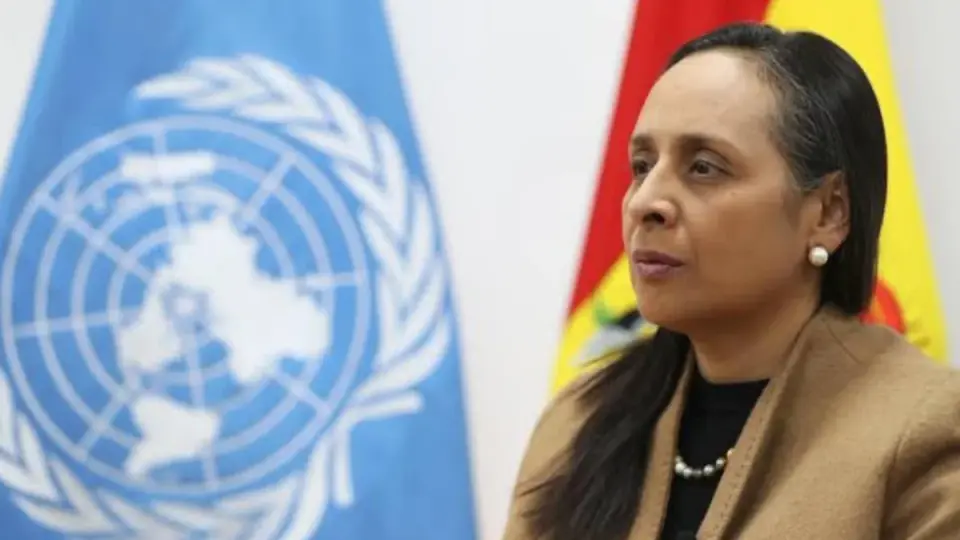
Bolivia, centre of operations for transnational drug trafficking according to the UN
Bolivia has become a "hub" or centre of operations for international drug cartels, according to an interview with EFE by Mónica Mendoza, representative in the country of the United Nations Office on Drugs and Crime (Unodc). Expreso.ec reports that the Government of Rodrigo Paz itself has acknowledged this reality, and that its approach represents an opportunity to "improve" anti-narcotics efforts.
Mendoza identified in Bolivia "a dimension of expansion of cartels" such as the Jalisco New Generation Cartel (CJNG) from Mexico, the Brazilian organisations First Command of the Capital (PCC) and Red Command (CV), as well as criminal groups from Peru and Colombia. The presence of these organisations is evident in the number of detainees of those nationalities in Bolivian prisons, "related to the command operations structure" of said groups, according to the official added.
Contract killing and territorial dispute in border areas
The Unodc representative noted a "significant" increase in cases of contract killing or extrajudicial executions, a sign that these groups "are confronting each other" and "are fighting over territories". For months, contract murders have become recurrent in border areas with Brazil, which led the Bolivian Government to mobilise the Army and elite units to reinforce security in those regions.
"Yes, there is presence of cartels. We are not talking about Bolivian cartels, we are talking about organisations from other countries that operate with the acquiescence, with the consensus of local organisations," Mendoza clarified.
Organised crime in the form of a "holding"
For the representative, Bolivia can no longer be viewed solely as a raw material producer or transit territory. The problem "is much more complex": there is a "confluence" of crimes such as smuggling, human trafficking, corruption and illegal mining, articulated in the manner of a "holding" or business consortium of crime.
Added to this is the increase in coca leaf crops. According to the latest Unodc report presented in September, plantations rose by 7%, from 34,000 hectares in 2024 to 36,400 in 2025. Bolivia, where coca leaves have traditional and ancestral use, is the third largest producer in the world of the shrub, behind Colombia—which recorded 261,000 hectares in 2024—and Peru, with 84,546 hectares reported in 2025.
The end of "narcopeace" and the capture of Marset
During the Governments of Evo Morales (2006–2019) and Luis Arce (2020–2025), the authorities at the time denied the presence of cartels or "big fish" of drug trafficking in Bolivia and claimed that illicit operations were limited to local "envoys" or clans.
The Paz administration, approaching one year in government, has acknowledged the operation of transnational organised crime in the country and defends its actions to combat it. Among the results, it cites the capture of Uruguayan Sebastián Marset, detained in March last and extradited to the United States.
Mendoza argued that drug trafficking in Bolivia "is not" conducted at "a low level", as illustrated by the Marset case. The capture of the Uruguayan also meant, according to the official, the end of "narcopeace": a tacit truce in which criminal organisations coexisted peacefully by having distributed routes, functions and territories, generating the impression among the population that the problem did not exist.
Institutional corruption and the Mariaca case
In South America "there is a policy of expansion and infiltration of organised crime" that has "penetrated some institutions" of Justice, which "transforms into a network of corruption" to avoid prosecution of crime, warned Mendoza. The representative made these statements when asked about the dismissal and imprisonment of former Bolivian Attorney General Roger Mariaca, accused by the Bolivian Executive of allegedly protecting "narcoterrorism".
For Mendoza, it is essential to pursue crime and its finances, and to combat the operational capabilities of large criminal organisations to halt their advance in Bolivia.
Source: Google News BO — Crime