Bolivia police capture high-ranking PCC member in Santa Cruz
Marco de Oliveira Ferreira, identified as a high-ranking member of the PCC, was detained in Santa Cruz following a domestic incident. Bolivia will expel him in the coming hours.
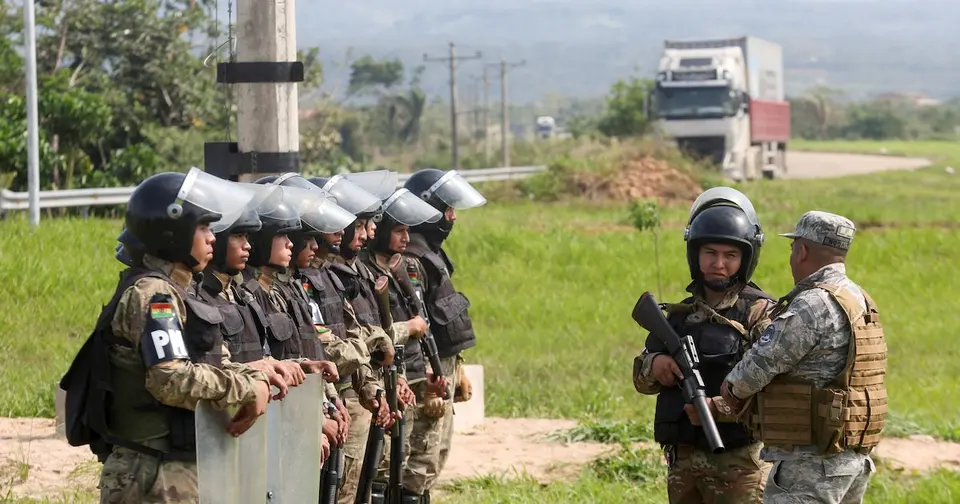
High-ranking PCC member detained in Santa Cruz following domestic incident
Bolivia's police arrested Marco de Oliveira Ferreira in Santa Cruz, identified as "a high-ranking member" of the First Command of the Capital (PCC), one of Brazil's most dangerous criminal organisations, according to infobae.com. The authorities announced his expulsion from the country in the coming hours.
The commander of Bolivia's police, Adrián Álvarez, stated that the Brazilian citizen was residing irregularly in national territory and was using a false identity. Álvarez detailed that Ferreira had left Brazil with a criminal record for drug trafficking, contract killing and organised crime, in addition to three outstanding conviction orders against him.
The arrest came after a "domestic incident" in a popular area of Santa Cruz. Officers who attended the scene confirmed that the man appeared on the wanted list of the Intelligence unit. The police indicated that they acted in accordance with established protocols and issued a formal resolution to expel the detainee.
Violence on the border and the Safe Borders Plan
The Government of Rodrigo Paz recently activated the Safe Borders Plan in response to several episodes of violence recorded in Santa Cruz in recent months. Among them were the shooting deaths of four civilians and an Intelligence officer in San Matías in August.
The Bolivian Executive attributes part of these crimes to the dispute between the PCC and the Red Command (CV) over drug trafficking routes on the border with Brazil. The conflict has increased violence in areas of the Chiquitania and Bolivian Amazon.
On 24 September, Bolivian forces also detained a woman allegedly linked to the CV and a man identified as a member of the PCC. Both had criminal records for drug trafficking in Bolivia and Brazil, in addition to residing irregularly in Bolivian territory.
New elite units and cooperation with Brazil and the United States
The Government announced that Brazil's Federal Police will soon open a permanent office in Bolivia to strengthen information exchange and actions against criminal organisations. Last week, the Government Minister, Marco Antonio Oviedo, also announced the creation of two elite units near the Brazilian border, with support from the United States.
More than 120 lieutenants and sergeants of Bolivia's police will begin an elite course against "narcoterrorism" next Monday. Following the training, they will be deployed to four border zones with Brazil, according to the Paz administration.
The training will be conducted at the National Police Academy (Anapol) in La Paz and will be directed at recently graduated officers. The Vice Minister of Internal Affairs, Police Strengthening and Transparency, Peter Maldonado, indicated that personnel will receive training to operate in border territories where the Executive identifies the greatest presence of organisations linked to drug trafficking.
Maldonado stated that these four border regions have experienced the country's most serious "narcoterrorism" problems. The plan also provides for participation by local inhabitants: the Executive will organise a working session with Brazil nut producers, ranchers, motorcycle taxi drivers and merchants from those regions.
"Operations are continuous and permanent to identify those materially and intellectually responsible for trafficking in controlled substances and to dismantle criminal organisations attempting to operate in Bolivia," Oviedo stated. The official had previously warned that both the PCC and the CV "are recruiting" Bolivians, which is why both organisations are being fought "with international cooperation".
Oviedo clarified that the Government has the cooperation of the DEA of the United States, Brazil's Federal Police and police organisations of the European Union, among other institutions.
Source: Google News BO — Crime