Shipment of Bolivian timber impregnated with drugs seized in Brazil; civic leader demands punishment
Vice-president of the Pro Santa Cruz Civic Committee classifies the case of timber with cocaine discovered in Brazil as a "national disgrace" and calls for accountability of the officials involved.
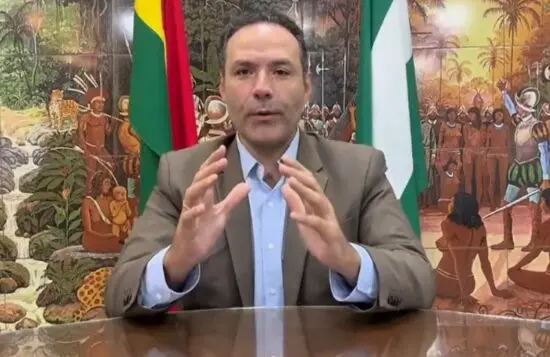
Shipment of Bolivian timber impregnated with drugs seized in Brazil; civic leader demands punishment
Brazilian authorities confiscated a shipment of 260 tonnes of timber exported from Bolivia, suspected of being impregnated with cocaine, during a joint operation involving the United States Drug Enforcement Administration (DEA) and Bolivia's National Customs Authority. The operation, named 'Escudo Maderero', was carried out in the cities of Corumbá (Mato Grosso do Sul) and Cáceres (Mato Grosso), following days of surveillance and the exchange of intelligence information, according to information from the portal eju.tv.
The seizure occurred after authorities intervened in four lorries transporting timber from the Santa Cruz department, when they suspected the presence of liquid cocaine in the legally exported timber.
Agustín Zambrana, vice-president of the Pro Santa Cruz Civic Committee, classified the case as a "national disgrace" and demanded that responsibility be assigned and exemplary sanctions imposed by the State. The civic leader warned that one must not negotiate with drug trafficking and pointed out that the case demonstrates the lack of internal controls and the permissiveness of previous governments, which would have turned Bolivia into fertile territory for drug trafficking.
"It is a disgrace for the Bolivian people, but it should be seen as a turning point to begin correcting the internal mechanisms of drug control in Bolivia. If this was not detected by the Bolivian State previously, there are responsibilities and in those responsibilities heads will have to roll," Zambrana emphasised at a press conference.
The civic leader demanded that officials involved in dealings with drug trafficking be punished exemplarily, so that society sees that crime does not go unpunished. He also called for transparency in investigations and public sanctions for all those responsible.
Zambrana stated that the people of Santa Cruz will not allow business dealings, passivity or benevolence towards drug trafficking and called on authorities to fight against this evil. "We need to set an example for our Bolivian society that we will not negotiate with drug trafficking," he declared.
The civic leader also mentioned that Bolivia must be active in investigations into drug trafficking related to drugs found in Brazil, Chile and anywhere else on the continent, since the country would have permitted the transit and establishment of drug cartels within its territory, citing the case of Uruguayan drug trafficker Sebastián Marset and other major cases that occurred over the last 15 to 20 years.
Earlier in the month, Chile's Public Prosecutor's Office and Customs Authority seized approximately one thousand tonnes of timber exported by 15 Bolivian companies, in which around 100 tonnes of cocaine were supposedly detected, also impregnated in the product, according to Chilean authorities. Zambrana insisted that these cases require a forceful response from the State and cannot go unpunished.
Source: Google News BO — Crime