Marcola, PCC leader, to be tried in 2027 for killing of police officer in Jundiaí
Jury trial of Marcola is scheduled for May 2027, 21 years after the alleged murder of a military police officer during the PCC's Crimes of May.
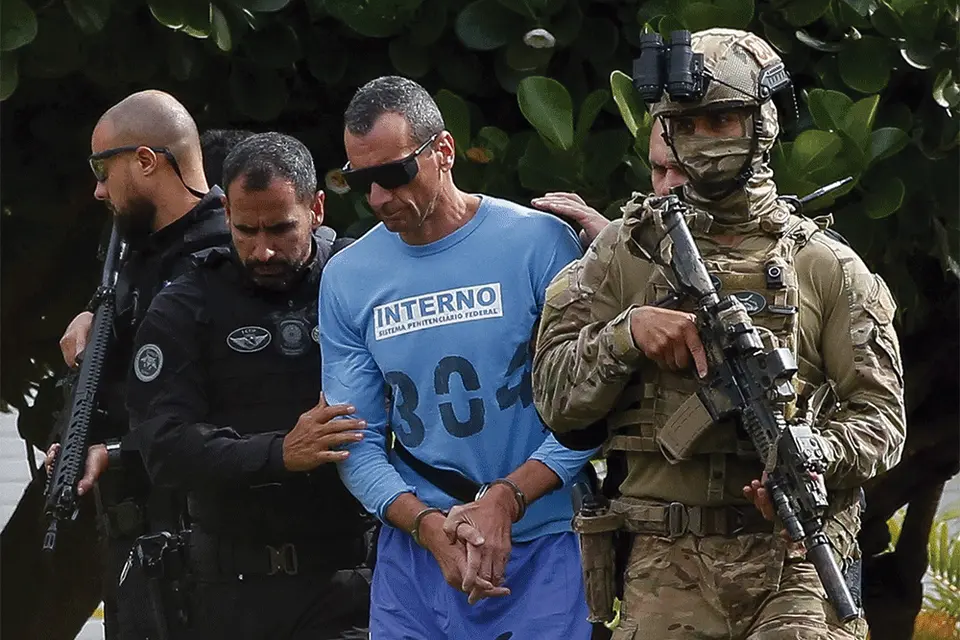
Marcola's trial for death of police officer scheduled for May 2027
São Paulo's justice system has scheduled the jury trial of Marcos Willians Herbas Camacho, known as Marcola, leader of the Primeiro Comando da Capital (First Command of the Capital), for 11, 12 and 13 May 2027. According to cartacapital.com.br, he is facing charges for one completed homicide and one attempted homicide against military police officers, committed on 12 May 2006, in Jundiaí.
The crimes occurred during a series of attacks organised by the PCC after the São Paulo state government ordered the transfer of 765 faction members to a penitentiary in the interior of the state, subject to stricter regime conditions. In response, the PCC launched attacks against public agents and security installations, effectively imposing a curfew in various regions of the state.
The episode became known as the Crimes of May and left 564 dead — 59 public agents and 505 civilians — making it one of the most violent periods in the recent history of Brazilian public security.
The charges against Marcola were filed by the São Paulo Public Ministry in September 2006. Three years later, the defendants were committed for trial — an act by which the judge recognises the viability of the accusation and refers the case to a jury trial. The trial had been scheduled for 2019, but the proceedings had to be transferred to another court district for security reasons.
Bruno Ferullo, the lawyer representing Marcola, stated in a note that his client denies having committed the crimes. The defence also emphasised that the judiciary itself recognised, in 2023, the excessive delay in the progress of this criminal action.
"The imprisonment currently served by Marcos results from convictions handed down in other proceedings. The defence considers that the prolonged passage of time is incompatible with the constitutional guarantee of reasonable duration of the process," the statement says, adding that the elapsed time also compromises "the production and preservation of evidence, especially in light of the effects that time can have on the memory of witnesses and evidentiary elements".
The trial will therefore take place 21 years after the events described in the charges — and nearly a decade after the initially scheduled date.
Source: Google News BR — São Paulo