François Burgat convicted for glorifying terrorism: 5,000 euro fine for praising Hamas
A Paris appeal court has convicted French Islamic scholar François Burgat for glorifying terrorism and ordered him to pay a fine. The 78-year-old had expressed respect for Hamas leaders on X.
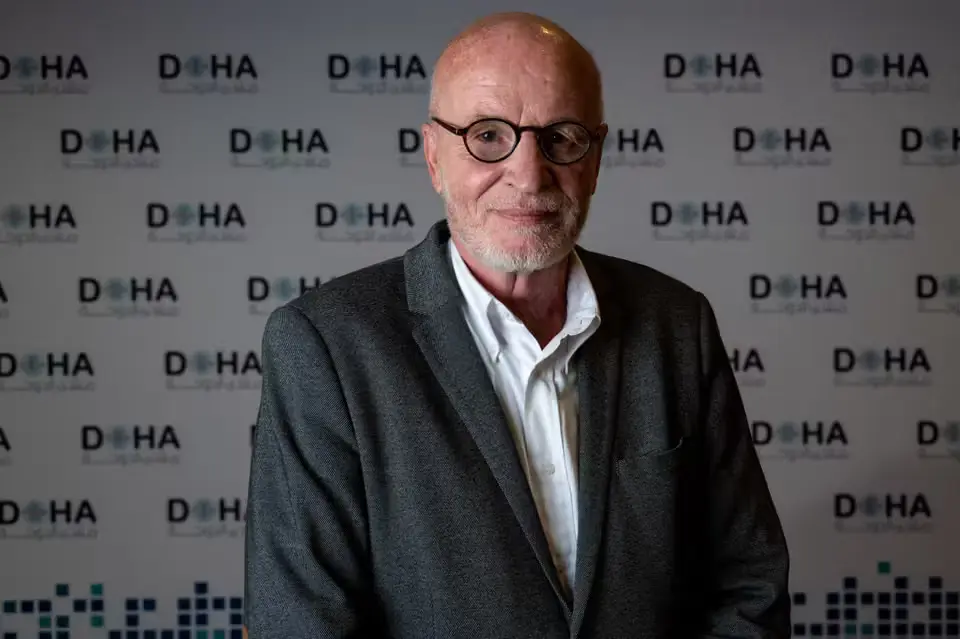
Appeal court overturns acquittal of Islamic scholar Burgat
A French appeal court has convicted Islamic scholar François Burgat of glorifying terrorism and sentenced him to a fine of 5,000 euros on Wednesday. Additionally, the 78-year-old will lose his passive voting rights for three years. According to the NZZ, a lower court in Aix-en-Provence had acquitted Burgat in April 2025.
The proceedings were triggered by two posts on the X platform from 2 January 2024 — less than three months after the Hamas attack on Israeli civilians on 7 October 2023. In one of the posts, Burgat wrote: "I have infinitely much, I repeat, infinitely much more respect and esteem for the leaders of Hamas than for those of the state of Israel." Shortly afterwards, he shared a Hamas statement in which reports of rape of Israeli women were described as propaganda. The Hamas fighters had been "fighters for freedom and dignity" and had acted on 7 October "with the necessary courage and honour", it stated.
The posts prompted the French domestic intelligence service to intervene. The public prosecutor's office launched an investigation for glorifying terrorism. The trial court acquitted Burgat, reasoning that the statements should be understood in the context of political debate. The appeal court did not follow this assessment: academic freedom ends where scientific analysis gives way to a positive portrayal of terrorist acts, the court stated in its ruling.
Prominent researcher with controversial career
The case has drawn broad attention in France because Burgat was counted among the most influential experts on political Islam for decades. The political scientist and Arabist conducted research in Egypt, Yemen and Algeria and published several books about authoritarian movements in the Middle East. His core thesis was that Islamist movements were motivated less by religion than by politics — a product of colonial experiences and unjust power structures. In the 1980s and 1990s, many considered this perspective a necessary corrective.
Over time, however, conflicts increased. Sociologist Gilles Kepel accused Burgat of downplaying Islamist networks and their actors. Kepel himself rose to become a sought-after terrorism expert after the 2015 attacks in France, while critics accused Burgat of losing analytical distance to his research subject.
Further controversies
The debate about Burgat is not limited to the current case. When Swiss Islamic scholar Tariq Ramadan was confronted with rape allegations, Burgat demonstratively stood behind him and described the proceedings as "lynching". Following the conviction of Abdelhakim Sefrioui — one of the defendants whose hate campaign preceded the murder of teacher Samuel Paty — Burgat wrote on X that France had taken another step away from the rule of law: "We are all terrorists."
Academic environment stands behind Burgat
Parts of the academic community reacted to the verdict with criticism. The Paris research centre Carep, whose scientific board Burgat long chaired, spoke of an "alarming decision" and warned of an attack on freedom of research. Solidarity also came from left-wing and pro-Palestinian circles, which see the proceedings as an example of growing pressure on academics and activists who have publicly expressed themselves on the Palestine question since the Hamas massacre.
The judges of the appeal court clearly distinguished themselves from this interpretation. The focus of the proceedings had never been on Burgat's fundamental stance on the Middle East conflict, but rather on specific statements that granted public recognition to a terrorist organisation.
Source: NZZ