Murder behind the bar: The dark history of the Lugano Bar on Langstrasse
A barkeeper dies in 2023 following a knife attack at the Zurich Lugano Bar – SRF illuminates the decades-long history of the notorious establishment.
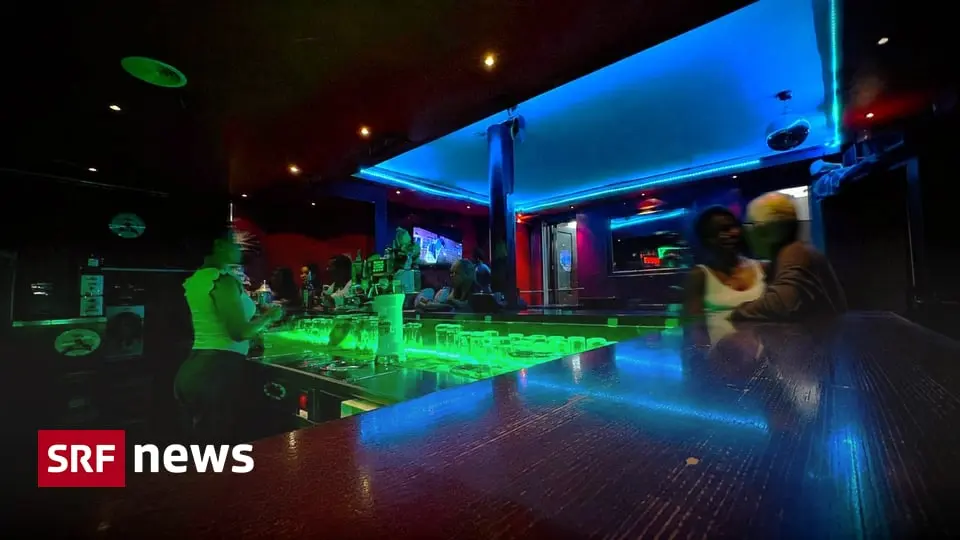
From workers' tavern to crime scene: The Lugano Bar at Langstrasse 108
An older man drinks a beer at the wooden bar counter. In front of him, behind that very counter, a barkeeper was murdered three years ago. Women wait for clients. This is the present state of the Lugano Bar at Langstrasse 108 in Zurich – as SRF describes in an investigation.
In summer 2023, a then 50-year-old man entered the contact bar, suddenly sprayed pepper spray in the barkeeper's face, and stabbed him at least seven times with a 13-centimetre-long knife. His lungs, kidney and spleen were injured. The barman bled to death on the spot.
According to the public prosecutor's office, the act was based on a delusion that had grown over months. The perpetrator had been searching the Langstrasse district for a woman named "Debora" and for a child whom he believed to be his own. When his search proved fruitless, he became convinced that people connected to the Lugano Bar were deceiving him and hiding the two from him.
Just over two months after the act, police arrested the man. Video recordings, movement data and analysed mobile phone data connected him to the crime scene, according to the court's assessment. Investigators found the clothes visible in camera images at his home. The alleged murder weapon lay on his bedside table – in Hungary, where he had temporarily returned after the act.
The Zurich district court convicted the now 53-year-old of murder to 13 years and five months imprisonment. A psychiatric report diagnosed, amongst other things, paranoid schizophrenia and described him as "unpredictable and violent". After serving his sentence he is to be expelled from the country for twelve years. The man with Hungarian nationality denies the act; his defence lawyer had demanded acquittal. The verdict is not yet final. Because of advanced cancer, he took part in the court proceedings from his sickbed.
A house with two murders
It was not the first bloodshed in this building. In early 2002, several shots rang out in the stairwell. Police who arrived found two bodies. Marco Cortesi, the then city police spokesman, spoke of a "devastating scene".
The trigger was an escalated argument: a woman knocked on the wrong door in the building whilst wanting to visit her lover. The neighbour hit her in the face. When her friend found out, he shot at her first – because she was trying to stop him from retaliating – then at the neighbour.
After this incident, businessman Rico Caprez had grand plans. He bought the entire building including the bar and wanted to turn it into a hotel for ordinary guests. The Lugano Bar was to remain, but the milieu was to disappear. The plan failed. Later, according to media reports, the building came into the hands of a central figure in the red-light milieu – a man known on Langstrasse as "Papi".
Forced prostitution and cramped conditions
By the time of the coronavirus pandemic at the latest, the conditions under which the residents above the bar lived became publicly apparent. After two positive coronavirus tests, all residents had to go into quarantine in 2020. Police found roughly 50 women, with four people sometimes sharing a small room. An investigation by the NZZ also linked the building to forced prostitution and human trafficking.
Italian music, one franc per beer
The history of the bar began quite differently. In the 1970s, Christine Cristofani worked here; she later took over the lease with her partner. Her regular customers were mainly Italian workers. A beer cost one franc, card games such as Briscola and Scopa were played, sometimes well into the night. Italian music trickled from the jukebox, and a picture of Lake Lugano with Monte San Salvatore hung on the wall – this is how the then leaseholder described the bar in an NZZ report.
However, in the 1980s and 1990s, the establishment was regularly the target of police raids, particularly on suspicion of illegal sex work in the rooms above. The then building leaseholder denied any responsibility in an interview with the Tages-Anzeiger: whoever rented a room could receive a friend or lover there. And money in exchange for sex was not illegal. "We don't look under the bedclothes," he said at the time. Critics accused him of profiting from the sex trade.
Where does the name come from?
One legend says the founder of the bar came from Lugano. Another tells of a sports team from Lugano that once allegedly occupied all the rooms in the building. There is no definitive answer – and perhaps that fits this place. A great deal has been documented about the Lugano Bar, and yet some things remain unclear to this day.
Source: SRF