Chile seeks extradition of man accused of killing Venezuelan refugee
A 40-year-old man detained upon entering the United States from Mexico is sought by Chilean justice for the kidnapping and death of Lieutenant Ronald Ojeda, who had sought asylum in Santiago.
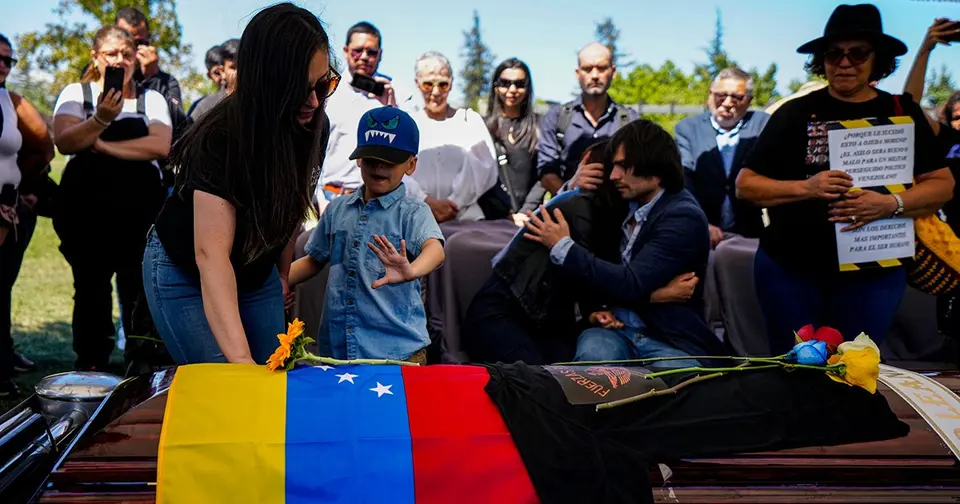
Chile seeks extradition of man accused of killing Venezuelan refugee
A man in his forties who entered United States territory via Mexico in late last year remains in federal custody in Los Angeles, where Chilean authorities are seeking his return to face charges over a homicide that occurred in the national capital.
According to reporting by ProPublica, Rafael Enrique Gámez Salas is sought by local justice authorities after being identified as the alleged coordinator of a kidnapping that resulted in the death of Ronald Ojeda, a 32-year-old former Venezuelan military officer who had been granted asylum in Chile. Ojeda had been part of a failed coup attempt against the Caracas government.
Prosecutors in the case contend that Gámez acts as one of the top leaders of Tren de Aragua, a criminal gang with origins in Venezuelan territory. According to the investigation, the former lieutenant was deprived of his freedom by individuals seeking to extract information about groups opposed to Nicolás Maduro's regime. During this captivity, Ojeda is believed to have died while his abductors subjected him to torture.
The investigation has expanded to reach Venezuelan Interior Minister Diosdado Cabello, whom Chilean detectives consider the mastermind behind the attack. Senior representatives of the Public Ministry have confirmed that statements from detainees linked to the crime point directly to the Venezuelan official. Cabello is believed to have provided funds to leaders of the criminal organisation, who subsequently ordered the operation to be carried out by gang members based in Chilean territory.
The situation is complicated by the relationship that the White House, under Donald Trump's administration, has maintained with Cabello in recent months. Despite Washington having previously included him in a narcotics case—alongside a high-ranking Tren de Aragua commander—and offered a substantial reward for his arrest, the Venezuelan official continues in his position and has been received by US delegations.
Among the meetings are conversations with Interior Secretary Doug Burgum on mining exploitation in Venezuela, and a recent meeting with General Francis Donovan, who oversees US military operations in Latin America, to discuss assistance following the earthquakes that affected the Caribbean nation on 24 June.
Meanwhile, twenty people await trial in Chile for their participation in the criminal network. State Department staff have supported the process for Gámez to be returned to the South American country, although they have not applied pressure for Caracas to remove, detain or extradite Cabello, according to statements that have emerged from US government officials.
In May, Foreign Minister Marco Rubio was asked whether Cabello continued to be classified as a narcoterrorist. His response was laconic: his country's position on the matter remained unchanged, and any modification would be communicated in due course.
Source: Google News CL — Crime