Leak of Stavros Dimosthenes' body photographs: Police investigation one year on
The disciplinary investigation into the leak of photographs of a murder victim's body from a mortuary remains ongoing. The Data Protection Commissioner is calling for a unified framework for managing sensitive material.
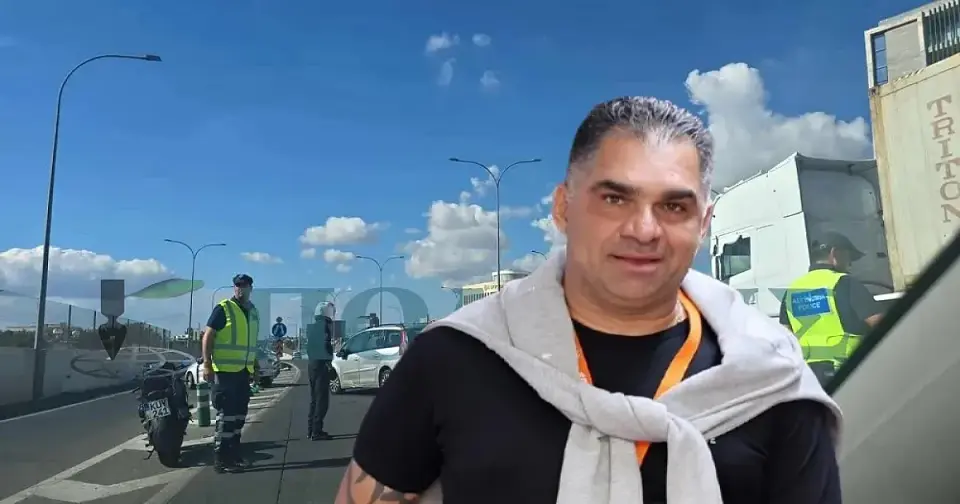
Disciplinary investigation into mortuary photographs remains open after one year
The disciplinary investigation by Cyprus Police concerning the leak of photographs of the body of Stavros Dimosthenes, a murder victim, from the mortuary remains ongoing one full year later, according to reports by Politis.
The matter was raised on Monday before the Parliamentary Committee on Human Rights, following a proposal by DISY MP Michalis Kounounis. The committee examined the broader issue of protecting crime victims and their relatives from the disclosure of personal data.
Police: Access only for service purposes
Thomas Hatzikyriakou, spokesperson for Cyprus Police at the session, assured that the collection of material from crime scenes is permitted exclusively to persons who require specific material for investigative purposes in the course of their duties. He emphasised that handling is conducted with discretion and confidentiality, while the service has the ability to trace the material at every stage.
In response to a question from the Committee Chair and AKEL MP Christos Christofidis, Hatzikyriakou confirmed that the investigation into the case of the leak of Stavros Dimosthenes' photographs remains open as a disciplinary offence. Christofidis requested further updates, commenting on the time period that has already elapsed.
Fines imposed on police for similar breaches
An official from the Office of the Commissioner for the Protection of Personal Data informed the committee that administrative fines have previously been imposed on Cyprus Police for analogous breaches. Indicative examples cited included the provision of material to an unauthorised person who had retired from the force and was working as a private detective, as well as the publication in media of excerpts from a statement just 24 hours after its receipt. It was also noted that in certain cases the source of leaks cannot be established.
Commissioner: Need for unified framework
The Commissioner for the Protection of Personal Data Maria Christofidou submitted a memorandum with recommendations to the committee, emphasising the need to establish a common practical framework for managing material for all involved bodies. This framework, according to Christofidou, should determine "who has access to photographs, statements and audiovisual material, how they are kept and transmitted securely, how access is recorded, where feasible, and how the need for access is reviewed as a case progresses".
She added that an immediate response procedure is also required in the event of a leak. When asked about existing protocols in other services, such as hospitals, the Commissioner stated that if such protocols exist, in practice they are not being applied.
Ministry of Justice: Legislative framework is sufficient
Spyros Giallouridis, Legal Officer at the Ministry of Justice, informed the committee that following the passage of legislation in 2016—in implementation of an EU directive on victim protection—a guide was drawn up on the rights of affected parties. He expressed the view that the criminal code is sufficient to bring prosecutions where necessary, but noted that the Ministry remains open to improvements should such a need arise.
Press Ethics Committee: Fine balances
The Chair of the Press Ethics Committee Ellie Kotziamani stated that she was unaware of the existence of the police guide and expressed the committee's intention to examine it, particularly in relation to the disclosure of information to media.
Kotziamani emphasised the importance of weighing each case of disclosure of information, with criteria encompassing both respect for personal data and the effective exercise of journalism. She cited the murders of Solomou, Isaac and Fystas as examples of cases where the publication of violent images serves a symbolic function for society as a whole.
She also highlighted public ignorance of their rights, recognising responsibility on the part of the competent services, and referred to an instance of swift action by the committee: the rapid withdrawal of photographs that circulated from the Helios airline disaster approximately five years ago.
Source: Politis