Security fence breached at Leipzig Airport – police investigate
A vehicle has allegedly driven through the security fence at Leipzig Airport. Police have closed a runway and are conducting an investigation.
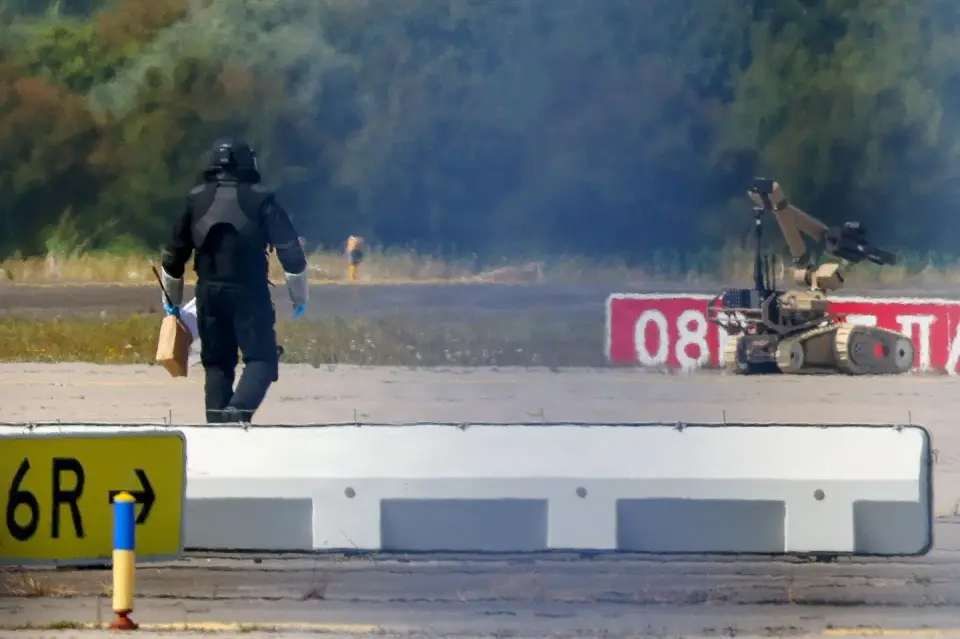
Fence breach at Leipzig Airport under investigation
German police are investigating a security fence breach at Leipzig Airport on Sunday morning, according to B.T., citing news agency Reuters and several German media outlets.
A vehicle has apparently driven through the fence, according to the reports. It remains unclear whether police regard the incident as intentional, or who might have been responsible.
The investigation so far has yielded neither any finds of unauthorised persons nor suspicious objects. The airport has closed one of its runways as a result of the incident, and the investigation is expected to continue throughout the day.
Background: Drone with explosives in August
The incident occurs several months after a serious security incident at the same airport. On 4 August, investigators discovered a drone laden with explosives near a runway. Parts of the airport – one of Europe's largest cargo hubs – had to be temporarily closed before operations could resume. No one was injured.
German authorities subsequently concluded that Russia was behind the attempted drone attack. Interior Minister Alexander Dobrindt explained in early September that the drone itself and the technology used pointed to professional actors with high level expertise.
The head of the German foreign intelligence service, Martin Jäger, warned in early October of an intensified Russian "shadow war" against Germany. During a public hearing in the Bundestag, he specifically highlighted the attempted drone attack in Leipzig.
"No other country poses as direct, comprehensive and concrete a threat to Germany," Jäger said during the hearing.
Police have not disclosed whether there is a connection between Sunday's fence incident and the August case.
Source: B.T.