Guayaquil mayor Aquiles Álvarez arrested for money laundering and tax fraud
Ecuador's Public Prosecutor arrested the mayor of Guayaquil, Aquiles Álvarez, before dawn on 10 February as part of the "Goleada" investigation. Two of the mayor's brothers and eight other people were also detained.
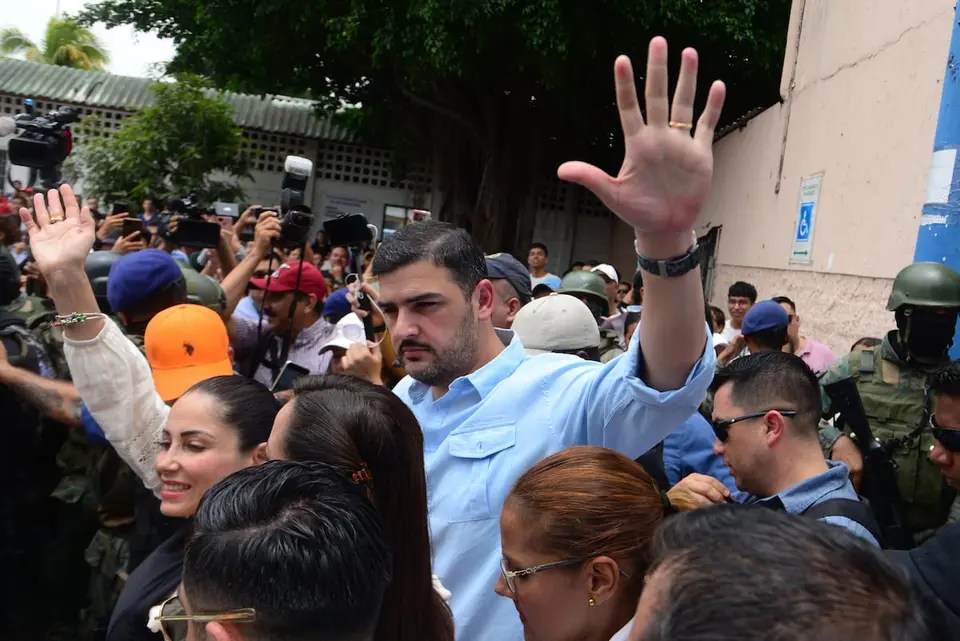
Arrest of Guayaquil mayor deepens political crisis in Ecuador
Ecuador's Public Prosecutor carried out an operation in the early hours of 10 February and arrested the mayor of Guayaquil, Aquiles Álvarez, as part of an investigation called Goleada, according to elpais.com. The charges link the mayor to alleged crimes of organised crime aimed at money laundering and tax evasion.
The operation was not limited to Álvarez: two of his brothers and eight other people were also detained, several of them with ties to the municipality of Guayaquil and Barcelona Sporting Club, a football club whose presidency is held by one of the mayor's brothers. All were transferred to Quito for a bail hearing at which the Public Prosecutor must present the full hypothesis of the case.
Second legal front for Álvarez
This case opens a second legal front for the mayor. The first, known as the Triple A case, links him with alleged illegal fuel trafficking, an activity in which Álvarez operated before assuming office as mayor. In that case he already faces the use of an electronic ankle monitor and was called to trial along with 20 other people, although the process has suffered multiple postponements and was expected to begin in the coming days.
Ramiro García, the mayor's defence lawyer, stated that the new case refers, in general terms, to the same facts as the Triple A case. "Now they have added money laundering," said García, referring to the illicit fuel trafficking that occurred approximately five years ago.
During the raids, the Public Prosecutor seized mobile phones, USB devices, laptop computers, cash and documents which, according to the institution, are related to the investigation. The agency also reported that Álvarez was not wearing the electronic ankle monitor at the time of his arrest. García, for his part, insisted that the device was charging—as happens every day—and that the cash seized was not in the mayor's residence.
Accusations of political persecution
The arrest generated immediate reactions from Álvarez's political and legal circle. His associates claim that this is persecution directed against the main opponent of president Daniel Noboa, and that the operation seeks to divert attention from the structural problems facing the country. The Executive did not issue statements responding to those accusations.
A night of institutional upheaval
Álvarez's arrest was one of several events that unfolded in a matter of hours. At midnight on the same Tuesday, the Judiciary Council—a key body for the administration of justice in Ecuador—called an extraordinary session to appoint a temporary president. Mario Godoy, head of the Council, has been under investigation for weeks in a political trial in the National Assembly, following accusations of pressure exerted on an anti-corruption judge to favour Jezdimir Srdan, a drug trafficker of Serbian origin convicted of laundering 11 million dollars. Godoy's wife participated in the initial defence of the Serb and has also represented other high-profile criminals, including Fito, leader of the Los Choneros gang and the first Ecuadorian drug trafficker extradited to the United States.
Godoy requested leave for a second time, which would have automatically activated the assumption of office of his substitute, Alexandra Villacís, as president of the Council. However, a restriction registered in the government system blocked that transition without clear explanations being offered. The blockage fuelled suspicions of political interference. Finally, the Council chose Damián Larco, a figure considered close to the Executive, to occupy the post temporarily.
In the same early morning hours, after one o'clock, Leonardo Cortázar—implicated in a corruption case involving the brother-in-law of former president Guillermo Lasso and which was the trigger for his early exit from power—arrived in Ecuador following his extradition and was transferred to the maximum security prison in Santa Elena. The move could generate new tensions for the former president and his political movement CREO.
Guayaquil without a mayor, Ecuador without respite
Hours after these events, Álvarez's arrest left Guayaquil without its highest authority, a city that records a rate of 85 homicides per 100,000 inhabitants and is considered today the most violent in Ecuador and one of the most dangerous in the region.
The country accumulates day after day of political conflicts that offer no respite to a population that already lives with violence, economic hardship and mistrust in institutions. The succession of operations, administrative decisions and judicial movements concentrated in a few hours deepens that feeling in a scenario where politics offers no signs of stability.
Source: Google News EC — Guayaquil