Ecuador and the EU inaugurate first anti-drug Fusion Centre in Latin America, in Guayaquil
Ecuador and the European Union inaugurated a Fusion Centre in Guayaquil to combat organised crime, the first of its kind in Latin America with a focus on port security.
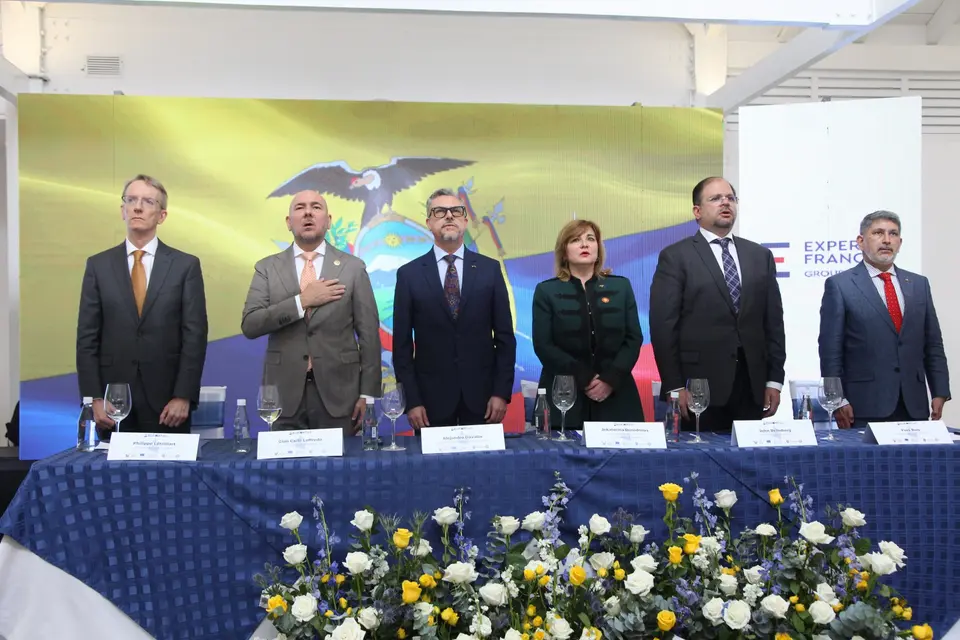
New Fusion Centre against organised crime opens in Guayaquil with European backing
At an official ceremony held in Guayaquil, Ecuador and the European Union inaugurated the Ecuadorian-European Fusion Centre, made up of specially selected units from Ecuadorian security institutions. According to eeas.europa.eu, it is the first centre of its kind in Latin America with a focus on modern port security, inspired by European models.
The centre was launched by the Project for Strengthening Security Coordination Mechanisms in Guayaquil (EUFORT-EC), co-financed by the European Union's Foreign Policy Instrument Service (FPI) and implemented by Expertise France. The project partners are the Judicial Police of Portugal, the Belgian Federal Police, and the Maritime Analysis and Operations Centre for Narcotics (MAOC-N).
Ecuador's National Police and Navy participate actively in the centre, which is fully operational. The infrastructure has furniture, hardware and software, including technological solutions for information security and intelligence.
Among the authorities present were Alejandro Dávalos, acting foreign minister of Ecuador; Gian Carlo Loffredo, defence minister; John Reimberg, interior minister; Jekaterina Doródnova, ambassador of the European Union in Ecuador; Philippe Letrilliart, ambassador of France; Giovanni Davoli, ambassador of Italy; and José Ferreira, executive director of MAOC-N, among other institutional representatives.
During the ceremony, memoranda of understanding were signed between MAOC-N, Ecuador's National Police, and Ecuador's Navy, consolidating regional cooperation. A plaque was also unveiled in recognition of the European Union's support and the EUFORT-EC project.
Ambassador Doródnova highlighted during the ceremony that "the contribution of European Union cooperation to Ecuador on security matters amounts to approximately USD 30 million in bilateral and regional programmes over the past three years", and added that "as Team Europe, we work together with Ecuador's authorities to combat transnational organised crime".
Ferreira, director of MAOC-N, noted that "the Fusion Centre will facilitate the efficient exchange of intelligence and the coordination of operational resources, enabling joint planning and the execution of high-impact anti-drug operations", and that the model opens the way for "reinforced cooperation with like-minded international partners".
Interior Minister Reimberg described the centre as "a key strategic tool in the fight against transnational crime and criminal economies, particularly in the port sector", emphasising the relevance of international cooperation as a pillar in the fight against drug trafficking.
Defence Minister Loffredo stated that "organised crime and drug trafficking are threats that cross borders, so responses must also be shared, coordinated and responsible", and described the EUFORT-EC project as "a concrete example of that cooperation".
Acting Foreign Minister Dávalos noted that the project strengthens the relationship between Ecuador and Europe "to address one of the most complex and urgent challenges on our shared agenda: the fight against transnational organised crime and the protection of public safety".
The Fusion Centre seeks to consolidate interinstitutional coordination both in Ecuador and in the region, as part of a broader security cooperation strategy between the European Union and Andean countries.
Source: Google News EC — Guayaquil