US revokes visas for 27 officials from Bolivia, Colombia, Ecuador and Peru over corruption and drug trafficking
Washington sanctioned judges, prosecutors and businessmen from four Latin American countries under a policy aimed at protecting regional democracy.
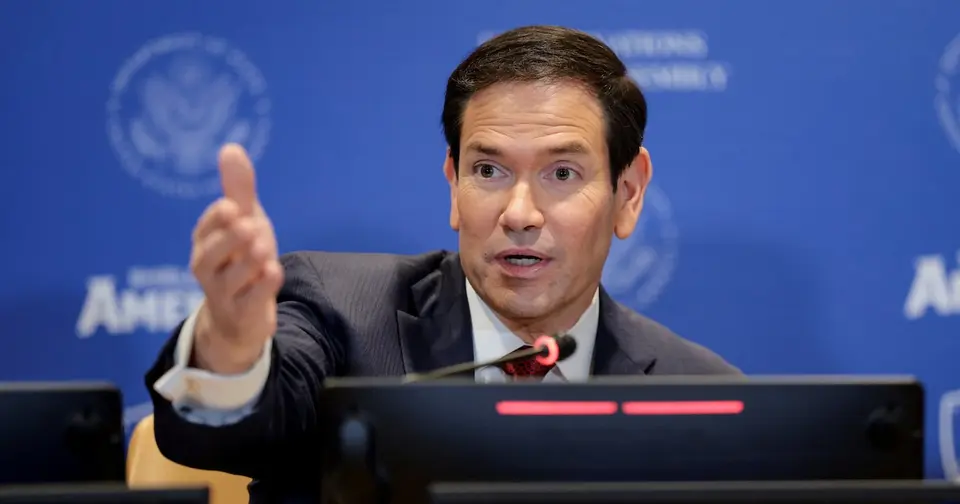
State Department sanctions 27 people from four Latin American countries
Washington revoked or restricted visas for 27 officials, judges, prosecutors and businessmen from Bolivia, Colombia, Ecuador and Peru, along with their immediate family members, according to an announcement by the State Department on Monday. The measure, reported by infobae.com, singles out the attorney general of Bolivia, Roger Mariaca, as a principal target.
The sanctions were adopted under section 212(a)(3)(C) of the Immigration and Nationality Act, a provision that allows the exclusion of foreign nationals whose presence could generate serious adverse consequences for US foreign policy.
"Corrupt foreign officials can no longer freely enter the United States," the State Department said in presenting the measure. The agency added that the restrictions apply when the affected individuals "undermine a democratically elected government through corruption or drug trafficking activities."
Link to the Shield of the Americas
Washington linked the decision to commitments under the so-called Shield of the Americas, an initiative promoted by the Donald Trump administration to strengthen regional cooperation against criminal organisations and drug trafficking. Members of that initiative agreed to coordinate sanctions, designations and financial measures against individuals and groups that affect "security, rule of law and democracy" on the continent.
"Undermining a democratically elected government is a threat to security and rule of law in the Americas and will not be tolerated," the official statement said.
Bolivia accounts for the largest number of those affected
Bolivia is the country with the most officials targeted. The United States revoked visas for 12 people and their families; nine others were barred from obtaining a visa in the future if they apply.
Among those affected are prosecutors, judges, magistrates, a colonel of the police and a businessman. The list includes Martin Daniel Irusta Flores, Albania Chane Caballero Saavedra, Alberto Zeballos Flores, Rosario Ximena Flores Paniagua, Iván Manolo Lima Magne, Álvaro Mauricio Nava Morales Carrasco, Israel Ramiro Campero Méndez, Alberto Samuel Soto de la Vía, Iván Ramiro Campero Villalba, Rodrigo Aldo Vedia Espinoza, Frans William Cabrera Quispe and José Luis Iriarte Cussi.
The State Department also applied a public designation against Mariaca, who was elected attorney general in 2024 for a term of six years. According to Washington, the official "abused his public offices" by soliciting and accepting bribes to facilitate drug trafficking activities, and enabled violent criminals to evade justice.
"His actions jeopardise the efforts of President Trump to combat narco-terrorism," the agency said. The designation was applied under section 7031(c) of US legislation on appropriations for national security and international affairs, a provision that allows the Secretary of State to act when he has credible information regarding participation in significant corruption or serious human rights violations.
Colombia, Peru and Ecuador
In Colombia, the restrictions fell on businessman Euclides Antonio Torres Romero, owner of a conglomerate active mainly in the energy, road signage and public lighting sectors, and senator Martha Isabel Peralta Epieyú, a member of the Historic Pact and the Alternative Indigenous and Social Movement.
In Peru, the United States revoked the visa of Juan Carlos Núñez Matos, judge of the First Constitutional Circuit of Lima, and extended the measure to his immediate family members.
Ecuador was included in the operation with two citizens affected, although the State Department did not disclose their names in the official statement.
Permanent mechanism for coordinated action
US authorities emphasised that the new restrictions constitute an instrument of continuous application. "It is a durable mechanism that allows the United States to act quickly, in coordination with our partners, as evidence develops," the State Department said.
The measure comes following strengthened cooperation between Washington and Colombia, Ecuador and Peru during September on security and the fight against drug trafficking.
Source: Google News EC — Crime