Human smugglers recruit on social media – police shut down over 100 accounts
The Police and Border Guard Board has ordered the closure of over 100 social media accounts used to share information related to human smuggling and recruit new drivers. Eleven suspects were arrested in October.
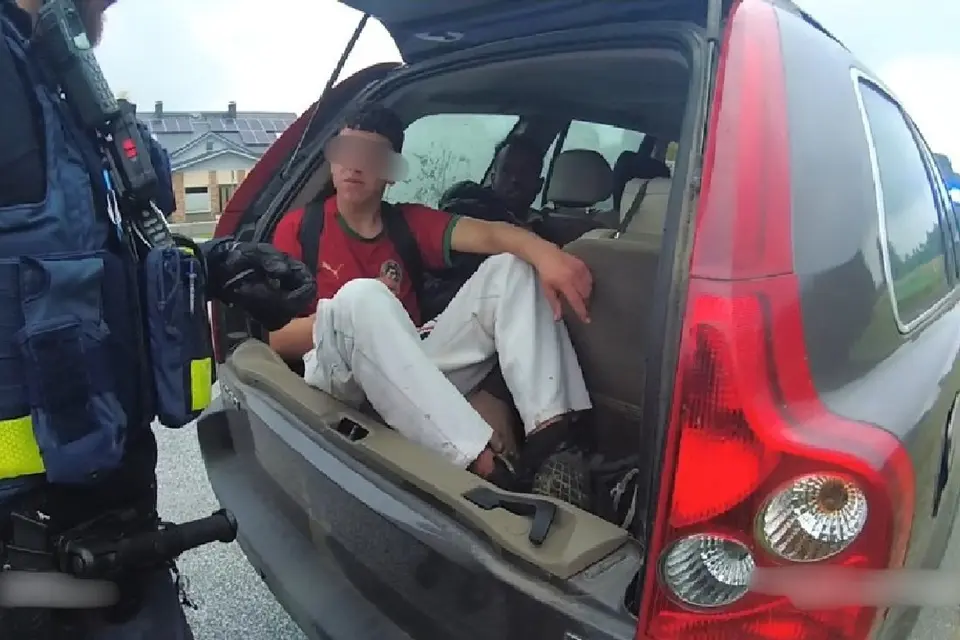
Smuggler recruitment network extends to social media and across Europe
The Police and Border Guard Board (PPA) has ordered the closure of over 100 social media accounts that were used to share information related to human smuggling and recruit new drivers, reported delfi.ee. In October, police arrested 11 people suspected of illegally transporting foreigners across the border.
Among those arrested are a Lithuanian, a Latvian, a Bulgarian, a German, Ukrainians and Pakistanis. Despite their different backgrounds, the same patterns repeat: the desire to earn money quickly and willingness to take major risks. In most cases, the offers were discovered through social media.
PPA: pressure begins at the Belarus-Latvia border
Veiko Kommusaar, deputy director of the PPA in the field of border management, explained that migration pressure originates at the Belarus-Latvia border. "We are not talking about tens of lost migrants, but about a continuous flow that emerges at the Belarus border, which the authorities there deliberately allow through," he said.
According to Kommusaar, an entire shadow economy has grown around this, in which the movement of people has become a commodity. "A network connecting clients, drivers and routes extends across the whole of Europe," he said. While the pressure trend has declined, he emphasised that the migration rush has not ended this year and the ESTPOL mission and reinforced internal border controls will continue.
Since the end of July, the PPA has detained 434 illegally arrived foreigners who entered Estonia in 99 groups. 55 criminal proceedings have been initiated and 17 people have been charged.
Prosecutor: a driver's journey may end in prison
Senior prosecutor Toomas Koitmäe warned that smuggling organisers deliberately create the impression that this is a simple transport service and a quick job. "In reality, this journey can end in prison. Several recent drivers have already been sentenced to jail by the court," said Koitmäe. The proceedings on remaining cases continue and the suspects are in custody.
Under the law, illegally transporting a foreigner across Estonia's state border is punishable by up to three years imprisonment. If a migrant is placed in a life-threatening or seriously harmful situation, the punishment can be up to seven years.
October cases: vehicles, hidden people, forged documents
1 October. The PPA inspected a vehicle with Latvian registration plates on Viljandi Road in Harju County and found six men of Moroccan and Somali origin in the cargo area without documents. A 54-year-old Latvian citizen driving the FIAT van was detained as a suspect.
3 October. Police detained a Volvo with Latvian registration plates in Tori parish, driven by a 62-year-old German citizen. Seven men of Moroccan and Somali origin were found in the vehicle with no legal basis to remain in Estonia.
4 October. Border guards discovered three men of Eritrean and Ethiopian origin hidden under a tarpaulin in the luggage compartment of an Audi heading to Sweden at Paldiski North Harbour. The driving licence presented by the 20-year-old Ukrainian citizen driving the vehicle proved to be forged. The vehicle also contained another Ukrainian citizen – both were detained as suspects.
5 October. Police stopped a Toyota with Lithuanian registration plates in Häädemeeste parish. At the wheel was a 22-year-old Pakistani citizen with Lithuanian residence permit, accompanied by another Pakistani citizen with Lithuanian residence permit and two Somali citizens without documents. The Pakistani citizens were detained as suspects in a crime.
6 October. Police stopped a Kia Sportage with Latvian registration plates at kilometre 85 of the Tallinn-Tartu-Luhamaa road. At the wheel was a 63-year-old Bulgarian citizen, with a total of seven third-country nationals illegally arrived in Estonia in the vehicle. The court sentenced the Bulgarian to one year and ten months in prison, three months of which must be served immediately. After serving his sentence, the man will be deported from Estonia and faces a five-year entry ban.
12 October. Police stopped a 31-year-old man arriving from Düsseldorf at Tallinn airport who had forgotten his shoulder bag on the plane. Swedish identity documents belonging to other persons were found in the bag. According to the suspicion, a man residing in Germany arrived in Estonia to provide foreign documents to illegally residing foreigners to cross the Schengen border. On the same day, a 51-year-old Ukrainian citizen was arrested in central Tallinn, with two Iraqi and two Somali citizens found in his Ford Transit cargo area. According to the suspicion, the Ukrainian planned to transport them further to Finland.
23 October. A 48-year-old Lithuanian citizen was arrested in Pärnu, suspected of repeatedly illegally transporting migrants across the Estonian border. According to the suspicion, he transported at least 25 foreigners from North Africa and the Horn of Africa region across the Estonian border during October. The migrants were discovered in Tallinn in Mustamäe, Nõmme and the harbour area.
Source: Google News EE — Crime (et)