2.4 tonnes of cocaine seized in Cartagena de Indias destined for Port of Valencia
Colombian anti-narcotics police intercepted the cargo on 12 June, concealed in sacks of coffee pellets. The operation comes days before the release of the last chief of Operation Spider.
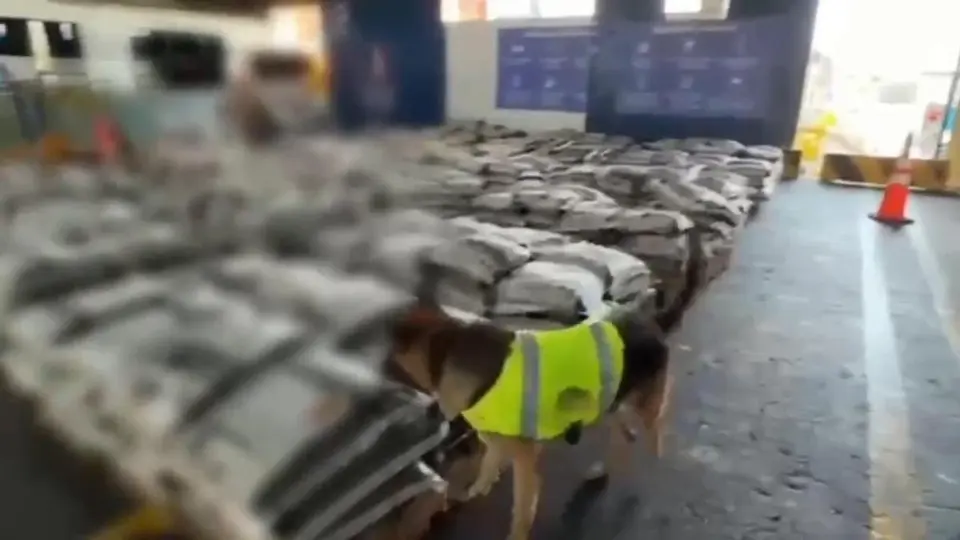
Blow to drug trafficking: 2,400 kilos of cocaine destined for Valencia intercepted in Cartagena de Indias
Colombian anti-narcotics police seized 2.4 tonnes of cocaine on Friday 12 June hidden in a shipment of coffee pellets destined for the Port of Valencia. According to Google News ES — Crime (es), the intervention took place at Cartagena de Indias Port in the north of the Andean country during an inspection of merchandise bound for European ports considered high risk.
Three days after the operation, on Monday 15 June, Colombian police made the intervention public. Brigadier General William Castaño Ramos, director of anti-narcotics, indicated that the operation made it possible to remove "over 6.1 million doses of cocaine hydrochloride from illicit international markets". The 2,400 kilos seized have an estimated value of 13,408 million Colombian pesos, equivalent to approximately 3.45 million euros at the price on exit from the producing country, around 1,400 euros per kilo.
Once cocaine reaches Europe, that price multiplies between 12 and 14 times. In Spain, large shipments arriving at Valencia's wharves are currently negotiated between 17,000 and 20,000 euros per kilo, well below the 30,000 to 35,000 euros it reached barely a decade ago. With these margins, the criminal organisations that would have financed the shipment—mainly Albanian organisations linked to the so-called Balkan cartel—would have obtained between 40.8 and 48 million euros gross, with a net profit—after deducting distribution costs and commissions—of between 37.3 and 44.5 million euros.
Cocaine mixed with cargo, not hidden in rucksacks
On this occasion, the technique used differs from the so-called lost hook method, the most widely used in the Port of Valencia over the past two decades. That system involves inserting one-kilo drug tablets into rucksacks stashed inside the container, so that the importer of the legal merchandise is unaware that their shipment is being used for drug trafficking.
In the cargo intercepted in Cartagena, the cocaine was not physically separated but mixed directly with part of the coffee pellet sacks. Colombian police estimate that the drug represented 9.8% of the total merchandise, distributed in 1,660 bags placed on pallets. That method implies, according to investigators, that the recipient of the shipment was necessarily aware of the contents, given that separating the contaminated sacks from the clean ones requires considerable time and a secure space, something that the simple recovery of rucksacks from a container does not require.
For now there are no detainees.
The shadow of Operation Spider
The finding takes on an additional dimension due to its temporal proximity to the release of the last of the chiefs of the large-scale organisation dismantled in Operation Spider, carried out by Udyco of the National Police in October 2025. That operation was described as the largest case of systemic corruption detected at Valencia port: it involved dock workers, transport companies and, according to judicial proceedings, some Civil Guard commanders.
The central mechanism of the network was precisely the lost hook method: recovery teams extracted drugs from the wharves in a matter of minutes without raising suspicion. Over sixty people were investigated in the framework of that case, whose judge is the judge of Plaza 15 of the Investigation Section of Valencia.
The shipment intercepted in Cartagena was aborted exactly one week before that last chief recovered his freedom. The temporal coincidence raises the question of whether there is an attempt to rebuild the dismantled network, although both the National Police and the investigating court will follow closely any movement by those responsible for the large-scale organisation.
Valencia, historical gateway to the European market
Valencia Port is among the most active European destinations for receiving large cocaine shipments by sea, a position consolidated over almost two decades. The cargo now intercepted would have been shipped from Cartagena de Indias to that port if the routine inspection—assisted, according to Colombian police, by dogs trained in drug detection—had not detected the presence of drugs, although sources consulted suggest that behind the intervention there could be a broader ongoing operation.
The 1,660 sacks of coffee pellets contaminated with cocaine were displayed by Colombia's National Police at a warehouse at Cartagena de Indias port.
Source: Google News ES — Crime (es)