Alleged fraud at Escombreras desalination plant: trial postponed until 2027 after 9 years
The corruption case surrounding the Escombreras desalination plant has accumulated nine years of investigation and the trial of the main section will not take place before September 2027.
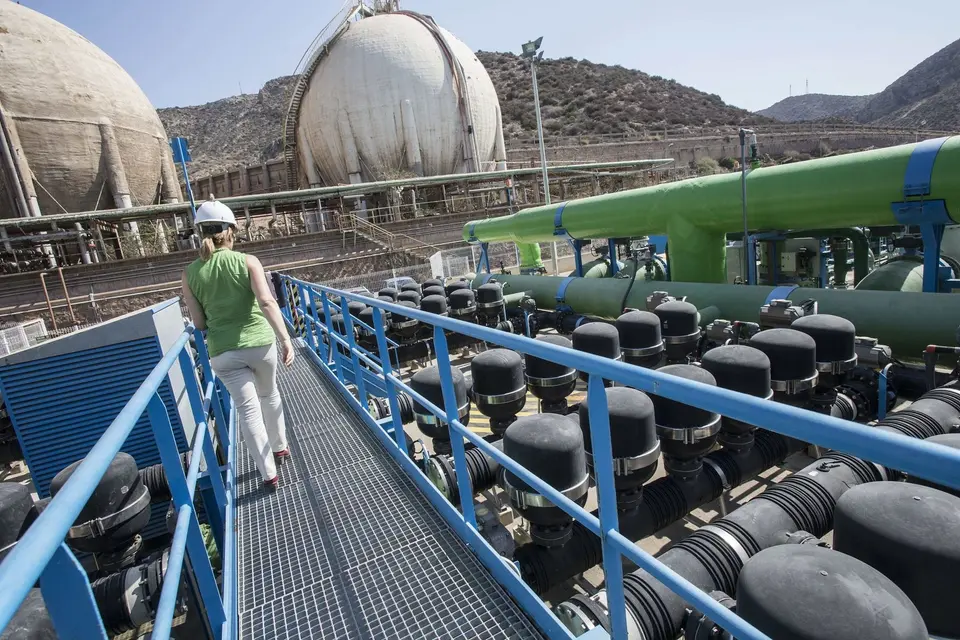
The 'La Sal' case has been lodged in Cartagena courts for nine years
The collapse of the administration of justice in the Murcia region has postponed until 15 September 2027 the trial over the alleged corruption network linked to the construction and operation of the Escombreras desalination plant, according to Google News ES — Crime (es) based on information published by La Verdad. The section affecting former regional president Ramón Luis Valcárcel has thus accumulated a delay that is already concerning the Public Prosecutor's Office due to the risk of sentence reduction.
Valcárcel faces a prosecution request for 11 and a half years in prison from the Public Prosecutor's Office, which accuses him of continuing prevarication, continuing fraud and embezzlement in the lease contract for the acquisition of the plant by the Murcia Community.
Cerdá and fourteen other defendants, without a trial date
The bulk of the so-called 'La Sal case' affects former Councillor for Agriculture and Water Antonio Cerdá, against whom the Public Prosecutor's Office is seeking 14 years in prison, and fourteen other defendants. This main block of the proceeding still lacks an oral hearing date due to saturation of the calendar of the Murcia Provincial Court.
The proceeding, which investigates the increase in the plant's cost from the initial 175 million euros to 600 million, began in 2016. The investigating judge agreed to open oral trial in 2024. Sources from the Public Prosecutor's Office suggest the possibility that Cerdá's section could be combined with Valcárcel's and both could be tried jointly in September 2027.
Nine years of investigation for fraud against three organisations
Parallel to this case, since nine years ago at the Court of First Instance number 1 in Cartagena another matter relating to the desalination plant has been under investigation: that of alleged fraud committed by officials of Tedagua, the company holding the concession for managing the plant between 2007 and 2016. According to the investigations, the damages would have reached up to 120 million euros to the coffers of the Community, around 200,000 euros to the State, and 1.9 million to the insurance company Generali Seguros.
The Economic and Tax Crime Unit (UDEF) of the National Police found in May 2024 evidence of subsidy fraud, fraud and falsification of documents in a report prepared at the request of the Cartagena court. The investigation began following the complaint of a former employee of the desalination plant—himself investigated for alleged illegal payments to suppliers—subsequently expanded by the Superior Public Prosecutor's Office.
The Public Prosecutor's Office requests for the third time to reactivate the case
For the third time—the second in less than two years—the Cartagena Area Public Prosecutor's Office has requested the court to reactivate the proceeding with decisive impetus. This was confirmed to La Verdad by the area's chief prosecutor, David Campayo. His predecessor, Carmen de la Fuente, made the same request in view of the accumulated delays in a body that has experienced several changes of judge since 2017.
The Economic and Tax Crime Group of the Regional Police Headquarters submitted to the court a report detailing indications of criminal conduct against two Tedagua employees: A. R., head of administration, and M. G., head of plant. The company belonged until 2021 to the ACS group through its subsidiary Cobra.
Falsified invoices and subsidies under scrutiny
The investigators analysed the alleged falsification of invoices to justify the receipt of regional subsidies intended to cover operating costs of the Escombreras plant, when in fact they corresponded to costs of Tedagua facilities in Badajoz, Romania, Algeria and Tunisia. They also examined grants from the Ministry of Economy for an innovation project in 2010 and compensation from Generali Seguros for a fire in the same year. In light of this report, the court must decide whether to open oral trial or close the case.
The UDEF further detailed the alleged manoeuvres executed from Tedagua to collect a subsidy from the General Secretariat for Science, Technology and Innovation for an R&D project. "The said project was carried out deficiently and without intention of being used, since the intention was to withdraw it as soon as the subsidy was granted," the Police concluded in their report.
The viral video of banknotes and the complaint of bribery
The Cartagena court is also instructing proceedings for an alleged crime of corruption between private parties and against Social Security related to a former employee of the plant. An autonomous supplier reported him for demanding commission payments to award him painting work contracts at the facilities. The complainant recorded with his telephone the moment in which he delivered, supposedly, 4,500 euros in cash—equivalent to 3 per cent of the outstanding invoice—and how the employee counted the banknotes.
The images, disseminated in April 2016, went viral in the media. The employee was arrested following their dissemination. In his statement before the court he denied having enriched himself through bribes and maintained that he merely followed instructions from his superiors. He provided emails and digital documents which, according to case sources, would prove that Tedagua circumvented controls of the Public Water Authority (EPA) of the Community and that regional officials would have acted in collusion in exchange for gifts and other compensation.
The defendant, for his part, denied the accusations and offered to cooperate with the Public Prosecutor's Office to dismantle the alleged network, from which he claimed to have been a victim due to internal disagreements in the company.
Source: Google News ES — Crime (es)