Shortage of patrol vessels renders SIVE anti-drug system ineffective along Andalusian coast
Only three high-speed patrol vessels are operational to monitor nearly 1,000 km of Andalusian coastline against approximately 600 drug-smuggling speedboats. SIVE detects every movement, but without the means to intercept the alerts.
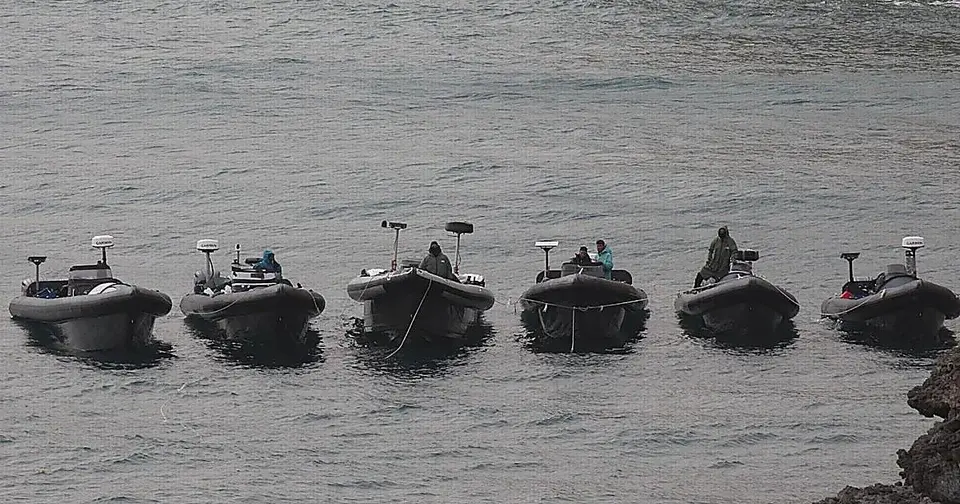
Only three patrol vessels for nearly 1,000 kilometres of Andalusian coast
Andalusia's coast is monitored in real time by SIVE, but the detection system has lost its practical effectiveness: there are insufficient vessels to respond to alerts. According to ABC, faced with an estimated 600 active drug-smuggling speedboats along the coastline—a figure from the National Security Department—the Civil Guard has no more than 20 patrol vessels, many of them out of service or lacking the capacity to catch traffickers' speedboats.
The so-called petaqueros—vessels that supply fuel to drug-smuggling speedboats—operate with full awareness of this gap. They know the system locates them, but also that no one will come to intercept them. "You can't respond to all the alerts. There are no patrols at sea. SIVE works well, but you can't cover the alerts," an agent stationed in the fight against drug trafficking in Andalusia told ABC.
SIVE detects, but cannot intercept
SIVE—Integrated System of External Surveillance—is the Civil Guard's technological network that monitors Spanish coasts using long-range radars, infrared cameras, optical sensors and artificial intelligence. Data from each sensor station reaches land bases instantly, from where operational response is coordinated. The system also serves to locate missing persons at sea, migrant boats in emergencies and drifting vessels, but its main workload stems from drug trafficking.
Drug traffickers once attacked SIVE antennas and attempted to sabotage it. That is no longer necessary: the limitation is not in detection but in response. The union Unified Association of the Civil Guard (AUGC) denounces that available patrol vessels do not exceed twenty, and that many of them are not operational.
The Aister HS60: six in total, three in use
The most effective vessel for pursuing drug-smuggling speedboats is the Aister HS60, which reaches speeds of 60 knots and maintains stability during the sharp turns necessary for encirclement and interception. The Civil Guard has six of these units along the Andalusian coast, but the actual operational number is even lower.
One of the Aister vessels in Cádiz is under repair due to problems with the aluminium frames of the hull. Another, based in Huelva, was seized judicially as it was one of the vessels involved in the accident in which agents Germán Pérez and Jerónimo Jiménez died, who died whilst pursuing a drug-smuggling speedboat. The one in Málaga is stationed on the Guadalquivir to prevent vessels from moving up the river towards Seville province. The result, according to ABC, is that only three Aister HS60 vessels are available to patrol the entire Andalusian coast.
Smaller vessels, insufficient against larger speedboats
The rest of the fleet consists of smaller-tonnage vessels that lack the capacity to intercept the most powerful drug-smuggling speedboats. The Rodman 66, with an aluminium hull and fibreglass superstructure, measure 22 metres in length and reach 46 knots, but prove insufficient against the larger models used by traffickers.
The most extreme case of the disparity in resources was exposed by the murder of agents David Pérez and Miguel Ángel González in Barbate. They were run down by a vessel with four 300-horsepower engines, 14 metres in length and 5,000 kilos of carbon fibre capable of passing over the Civil Guard's smaller speedboats.
In some operations, agents have had to serve in a Zodiac S43, a twelve-metre vessel powered by two engines. It lacks the power to pursue large speedboats, nor the capacity for drug seizures. A similar operational unit in Ceuta had to be withdrawn after suffering breakdowns. The one operating in Cádiz has been modified to prevent it from filling with water during rough seas.
Sanctions, another factor that undermines pursuit
The problem is not merely the lack of material resources. When a petaquero or a member of a drug-smuggling speedboat is arrested by the Civil Guard at sea, in most cases he faces only a smuggling offence. The operational efforts and risk undertaken by agents usually result in an administrative fine and a penalty that traffickers pay without difficulty. The result is that few of those detained at sea are sent to prison.
To this situation is added the proliferation of so-called taxi-pateras, vessels that transport irregular migrants and which also operate from the Strait. Since the invasion of Ceuta, according to ABC, these speedboats have increased landings on Andalusian coasts, adding another variable that SIVE must respond to without additional resources.
The AUGC requests safety measures that were rejected
Faced with the situation, the AUGC raised four specific requests to the Labour Risk Prevention Commission: a specific risk assessment for operational vessels, a minimum crew of four agents per vessel in boarding operations, restriction on the use of semi-rigid vessels without protection in hostile operations, and revision of the activation system for the Aister HS60. The response was negative. "They were rejected with the argument that it should be the crew themselves who assessed the risk of each intervention," the union explains.
In Cádiz, agents point out that drug-smuggling speedboats access the sea from multiple points—San Pedro, the Guadalete river or Sancti Petri—which makes it impossible to concentrate the response. SIVE records every departure. The patrol vessels, meanwhile, are overwhelmed.
Source: ABC