'Horiátiko': Gifts to EFKA and Labour Inspectorate staff – €6 million seized in Ireland and Denmark
New dimensions in the 'Horiátiko' case: gifts to public officials, list with 'bribes' and seizure of €6 million in accounts abroad.
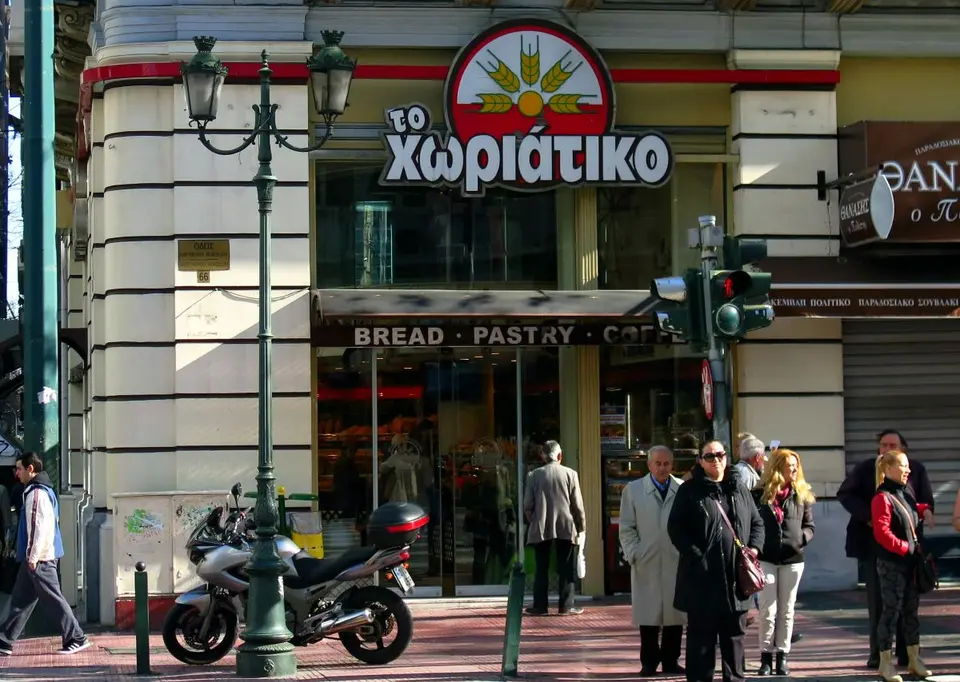
Bribery of state officials and money laundering of millions at the centre of the 'Horiátiko' case
New dimensions are emerging in the case of tax fraud and criminal organisation surrounding the 'To Horiátiko' bakery chain. According to Dikastiko.gr, the substantial case file appears to reveal contacts between the accused and state officials, public service employees and persons with institutional roles.
The case file contains references to gifts given to EFKA and Labour Inspectorate employees, whilst parallel investigations are being conducted into suspicious transactions with officials from property services on islands. A suspicious contact with the mayor of a major Greek island is also being investigated, as well as the handing over of documents that should not have been in the possession of specific individuals. Particular interest is being shown in reports of police officers who allegedly warned of imminent inspections.
The list with 'bribes'
Police officer Vassilis Lamprópoulos revealed on MEGA that a list was found in the possession of network members containing the word "ladi" (oil – a Greek term for bribes) next to names and amounts. The authorities are examining whether these entries are connected to possible bribery of state officials and what transactions exactly may have been carried out.
Seizure of €6 million in accounts in Ireland and Denmark
The Organised Crime Suppression Division, through the Police Cooperation Division of ELAS, has requested the seizure of two bank accounts – one in Ireland and one in Denmark. The accounts are in the names of two foreign women who have not been arrested: one has fled to Romania and the other to Germany.
The accounts were linked to POS systems of businesses in Greece and through them black money was being channelled. The money laundering was carried out by sending funds to Greece as remittances from abroad, and subsequently purchasing real estate, tourism businesses and other assets. Approximately €6,000,000 has been identified in the two accounts, however it is estimated that the total amounts will be considerably larger, as the Anti-Money Laundering Authority has a parallel investigation underway into other accounts and safe deposit boxes.
How the network operated
The 58-year-old owner, described as the head of the criminal organisation, had built an extensive network of over 100 straw men. Through them, the organisation opened and closed companies, purchased real estate and participated in auctions for beaches – mainly in Rhodes – with exorbitant amounts, only to close the companies later leaving massive debts. In Rhodes alone the organisation had managed to control 28 beach concessions, which is why 14 of the 59 accused were arrested there.
In total, the criminal organisation operated 433 businesses, mainly in Attica, Rhodes and Mykonos. Of these, 340 involved establishments of health interest – from bakeries and cafés to nightclubs and strip clubs. The remainder were staff leasing companies and similar structures.
Coordination took place from central offices in Attica, where an informal accounting office operated. There was also a specialised external accounting office with branches in Mykonos and Rhodes.
The straw men were paid a monthly salary of approximately €1,000 – they were typically people with low living standards or health problems. In certain cases, the organisation presented as business managers non-existent persons or people who had died. The 58-year-old, without the knowledge of the straw men, created sole proprietorships using their details, opened bank accounts and operated the establishments exclusively for his own benefit.
Debts of €120 million to the state
The primary objective of the organisation, according to competent police sources, was to avoid obligations to the state – with every legal and civil liability being directed to the straw man in question. Over the course of a decade, the organisation failed to pay amounts totalling approximately €120,000,000:
- Employer contributions to EFKA: approximately €38,800,000
- Debts from returnable advance payments, employee tax payroll deductions: approximately €38,000,000
- Hidden taxable income (VAT, Income Tax etc.): approximately €43,000,000
Indicative of the method of operation is the fact that in auctions for beach rentals, the organisation was awarded amounts considerably higher than the starting price – for example, a beach with a starting price of €100,000 was awarded at €1,000,000 for a three-year period, by a company which later disappeared leaving the debts to the straw man. The investigation is ongoing.
Source: Dikastiko.gr