NGO for children with cancer: €340,000 in donations and only €55,800 to the family
Six members of a criminal organisation are alleged to have embezzled donations from an NGO that supported children with serious illnesses, whilst simultaneously being involved in match-fixing in football.
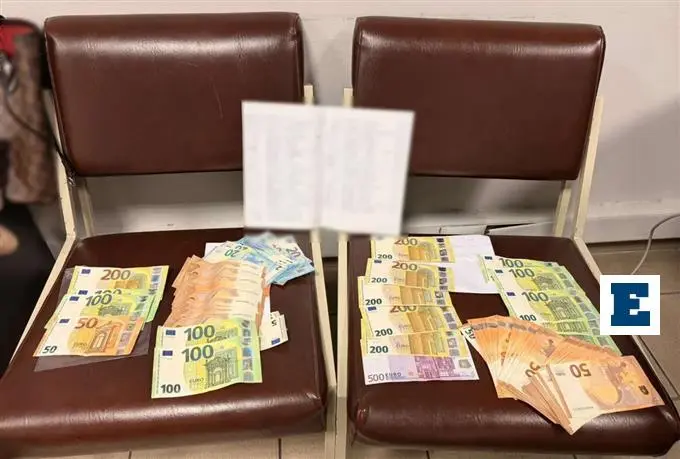
Fraud through NGO: donations for children with cancer ended up in suites and branded shopping
More than €340,000 was collected for a child who suffered from an aggressive form of cancer and died last August — the family ultimately received only €55,800. This is revealed by Ethnos, citing findings from an investigation by police authorities into a mammoth fraud case involving a well-known non-profit organisation.
In a second case, a family of a child with a serious neurological condition received not a single euro from the €73,200 that had been collected in its name, according to the findings of the authorities.
The ELAS investigation and the dismantling of the organisation
The case was uncovered following a months-long investigation by the Department of Prosecution of Economic Crimes of the Sub-directorate for Combating Organised Crime in Northern Greece. The investigation led to the dismantling of a criminal organisation comprising six members, organised into two distinct subgroups.
The first subgroup is alleged to have undertaken the deception of donors and the embezzlement of money from fundraising activities. The second is alleged to have operated in the manipulation of football matches and illegal gambling, involving the bribery of referees and predetermined decisions.
How the NGO operated
The organisation had founded the non-profit in 2018, with a stated purpose of collecting money for children with serious health problems — mainly various forms of cancer — as well as for children with disabilities.
The administrators selected specific children as beneficiaries and posted photographs and information about their health condition on social media. Through Facebook and Instagram, appeals were made to cover hospitalisation costs, medical procedures, transport and accommodation. In this way, the organisation managed to create a strong profile of credibility, attracting a large number of donors — among them well-known artists, athletes and businesspeople, whose donations were publicly promoted to further strengthen public trust.
"Money does not concern me"
The recorded conversations cited in the investigation are revealing. On 22 September 2026, a woman with a central role in the case contacts a clinic in Athens to schedule a consultative visit concerning cellulite treatments and body fillers. She presents herself as a businesswoman in the education sector with three tutoring centres in Northern Greece, and when the conversation turns to the cost, she clarifies that the financial matter does not concern her.
A few days later, on 3 October, the same person contacts an airline to change a booking, explaining that she flies almost every week and always travels in business class — requesting corresponding seats for herself and her children. The cost of the change amounted to €547.86 and she requested immediate charging via card with invoice issuance.
The shell company and luxury expenses
The banking transactions of a company that is characterised as a shell company by the authorities and is alleged to be connected with the organisation's activities are of particular interest. €55,000 from the NGO was credited to this company.
In the company's accounts, expenses were identified that point to a luxurious lifestyle: €2,700 and a further €405 at a well-known fashion house renowned for its handbags, €574 at a restaurant in Mykonos, €2,738.76 on a room-booking platform, €1,049.73 at a delivery company and €728.04 for airline travel. A transfer of €2,500 to a car rental company without a driver was also recorded, as well as €4,775 to a company that manages luxury hotel complexes in Crete. Withdrawals totalling €24,300 were identified from the same corporate account.
In a conversation on 23 October, the woman involved describes a cruise ship route for which €250 was paid for two hours, as well as a visit to a famous restaurant — an image that completes the portrait of the luxurious life that the members of the organisation are alleged to have led, whilst simultaneously depriving resources from seriously ill children and their families.
Source: Ethnos