El Salvador deploys 1,000 troops to Haiti after gang ambush
Approximately 1,000 Salvadoran troops have been deployed to Haiti, while four of their colleagues remain missing following an ambush on 18 October.
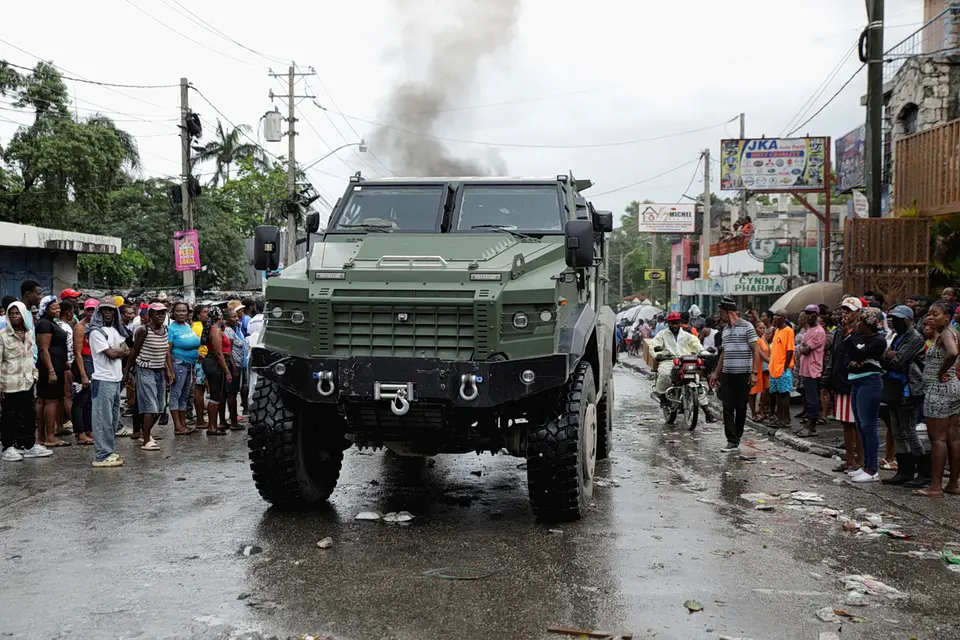
Salvadoran troops in Haiti: four missing after gang attack
The authorities of El Salvador have urgently deployed around one thousand members of its armed forces to Haiti, according to a source in the Haitian security mechanism who spoke to news agency Reuters — and as cited by in.gr. The mobilisation took place amid concern over four Salvadoran troops who have been missing since 18 October, when they fell into a gang ambush in a suburb of Port-au-Prince.
The troops were transported by air over recent days, with the United States providing C-130 transport aircraft for the operation, according to an official of the US armed forces. This deployment significantly expands San Salvador's role in the security crisis experienced by the Haitian capital.
Unclear orders and unanswered questions
It remains unclear, however, whether the Salvadoran force will act autonomously, how long it will remain in the country, or whether additional reinforcements will follow. Neither the government of Haiti nor that of El Salvador responded to a request for comment from Reuters. The source in the Haitian security mechanism requested anonymity, citing the sensitivity of the matter.
Salvadoran President Nayib Bukele stated last week that he had ordered a military operation to locate the four missing personnel, without clarifying the size of the force that was to be deployed. Over the weekend, Bukele denied a report by the New York Times, denying that four bodies found in the area belonged to the missing troops.
Denial of involvement by gang leader
No organisation claimed responsibility for the ambush. Wilson Josephs, leader of the 400 Mawozo gang, released videos in which he categorically denied that his members were holding the missing personnel or were involved in the attack.
Gang Suppression Force at one-third of its strength
The development comes against the backdrop of the failure of the International Mission Against Gang Violence (MSS) to reach its projected staffing levels. The force, operating under a mandate of the UN Security Council, has deployed around 2,000 personnel so far — just over one-third of its planned staff — more than a year after the start of its mission, without tangible results in the field.
In recent years, gangs have dramatically expanded the territories they control, occupying the largest portion of Port-au-Prince and its surroundings. Their violent attacks and extortion have displaced almost 1.5 million Haitians within the country. The crisis accelerated following the murder of President Jovenel Moïse in the summer of 2021 by a group of mercenaries — a position that has remained vacant since then.
Haiti's transitional political leadership has sought international support for restoring security since 2022, despite negative experiences from previous international interventions in the country.
Warning over civilians
Pierre Esperance, head of the non-governmental organisation National Network for the Defence of Human Rights, estimated — according to APA-BPE — that the rapid deployment of Salvadoran forces could help stem the terrorisation of civilians by gangs. At the same time, however, he warned that operations must be conducted with exceptional care in order to avoid casualties among residents living in neighbourhoods under the control of armed groups.
"Not everyone who lives in areas controlled by gangs is a gangster," Esperance emphasised.
Source: in.gr