At least 47 dead in gang raid on Kenscoff near Port-au-Prince
Armed gangs attacked the suburb of Kenscoff, killing at least 47 people according to the UN and abducting over 50 others. Haiti is preparing for elections in December.
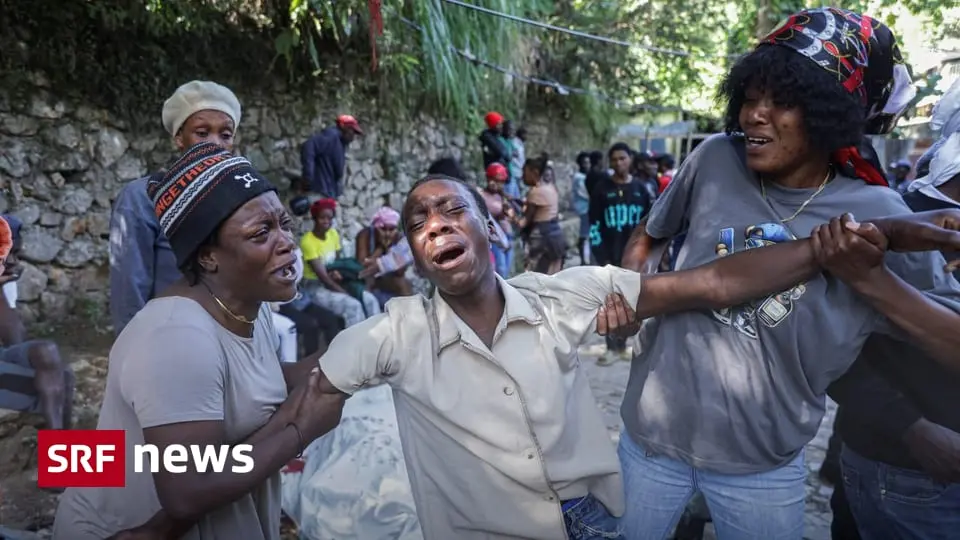
Armed gang raid in Kenscoff: 47 dead, over 50 abducted
During a night-time raid on the suburb of Kenscoff south of Port-au-Prince, armed gangs killed at least 47 people according to the UN. As the UN Mission for Haiti (BINUH) announced, more than 50 additional people were also abducted and 22 injured.
The attackers stormed the town centre, set numerous houses on fire and entered a church where displaced persons had sought shelter. According to the United Nations, 22 of the victims were killed in the church itself.
Strategic importance of Kenscoff
Criminal gangs have been trying for years to bring Kenscoff under their control, as reported by SRF. The mountainous municipality is located around ten kilometres south of the capital and enables monitoring of important road connections. In the immediate vicinity is Pétion-Ville, a relatively affluent suburb where numerous institutions, embassies and banks are located.
Journalist and Haiti expert Toni Keppeler also points to the transmission masts in Kenscoff, through which the government communicates. "That means whoever controls Kenscoff controls access to the capital and can cut off the government from communication," says Keppeler.
The attacking group
The perpetrators belong to a coalition of several gangs that is cynically named "Living Together". "The group consists of a few thousand men and was formed about two years ago to prevent wars between individual gangs and to be capable of large-scale raids," Keppeler explains.
Haiti's ongoing security crisis
Haiti is the poorest country in the Americas and has just under twelve million inhabitants. Since the assassination of President Jovenel Moïse in July 2021, the country has had no elected head of state. Violent gangs control at least 70 per cent of the capital Port-au-Prince — they terrorise communities, rape women and recruit children for criminal purposes.
In just the first five months of this year alone, armed gangs killed 2,300 people in Haiti according to UN data. More than 1,100 others were injured, nearly 100 abducted.
Response from the interim government
The Haitian interim government confirmed the attack but did not provide an exact death toll. It described it as an "abhorrent criminal assault" and put security forces on the highest alert. Reinforcements were sent; the police eventually managed to drive back the attackers and regain control of the area.
Reasons for the timing of the attack
The gangs have come under increasing pressure in recent months, as Keppeler explains. The interim government is training new police officers and soldiers as quickly as possible and has already recaptured several neighbourhoods in Port-au-Prince. In parallel, an international intervention force is being built up, which is eventually to comprise around 5,500 personnel and support Haitian security forces.
For Keppeler, that could be exactly what triggered the raid: "The gangs could be trying to seize strategically important locations before the intervention force is built up to full strength." Besides that, it could be a show of power. "The gangs want to show: we are still powerful. We can still do what we want," says the journalist.
Elections in December under difficult conditions
Haiti is currently preparing for the first general elections in more than a decade. Just under six million inhabitants are called to vote on 13 December. However, credible implementation is considered extremely difficult under current security conditions.
According to Keppeler, the elections are taking place primarily under pressure from the international community, which wants an elected and legitimate government as its point of contact. "The current interim government has two priorities: first to restore security and second to hold elections again. And it means it in that timeframe," says Keppeler. It is not to be expected that the security situation can be stabilised by the first round of voting in December to such an extent that an orderly process is possible nationwide.
Source: SRF