Salvadoran forces bomb 400 Mawozo headquarters in Haiti — 20 dead
President Bukele announced the destruction of the "general headquarters" of the 400 Mawozo gang. The Miami Herald reports at least 20 dead.
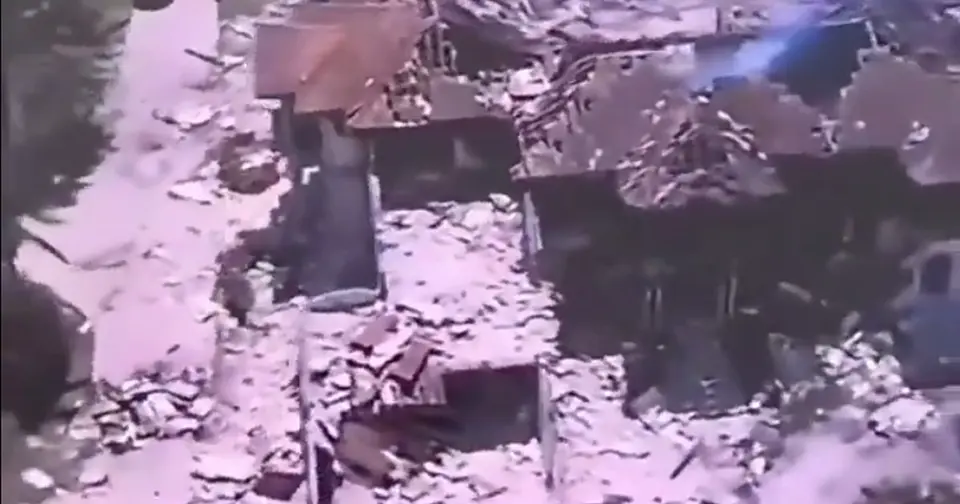
Bombing of 400 Mawozo headquarters by Salvadoran military in Haiti
Salvadoran armed forces overturned and destroyed, according to In.gr, the "general headquarters" of the 400 Mawozo gang in the community of Croix-des-Bouquets, east of Port-au-Prince. The president of El Salvador, Nayib Bukele, announced the operation via X on 10 November 2026, accompanying his message with a 48-second video recorded in Haitian Creole.
In the footage, at least three light helicopters bearing Salvadoran markings can be seen repeatedly firing rockets at a building while people run around it. Bukele commented ironically that most gang members fled "without even attempting to fight back".
Target: the home of Wilson Joseph
The attack targeted the residence and headquarters of Wilson Joseph, leader of the 400 Mawozo gang, also known by the nickname "Lanmô San Jou". The newspaper Diario El Salvador reported via X that the gang leader "was not in the residence at the time of the operation".
The American newspaper Miami Herald, citing unnamed sources, reported that the operation took place on Sunday 8 November, with the Salvadoran military supporting an operation by Haitian police, and recorded at least 20 dead. Bukele did not clarify exactly when the attack was carried out.
The catalyst: photograph on X
According to In.gr, the attack was ordered after a user on X uploaded on 5 November a photograph of a two-storey house and asked Bukele to destroy it. "Where is this house? Give us the exact address and we will destroy it," the president replied. Following the attack, he remarked characteristically: "We kept our promise".
The mission and the legal framework
This is the first known attack by Salvadoran forces since Bukele ordered the deployment of more than 2,000 troops in Haiti, with material support from the United States. The official objective of the mission is to locate four Salvadoran military helicopter engineers who remain missing following an ambush by criminals in a suburb of Port-au-Prince on 18 October.
Most of the deployed military personnel do not belong to the International Mission against Gangs (MSS), which has a mandate from the UN Security Council. The United Nations clarified that the Salvadoran military operation is being carried out outside the organisation's mandate and the monitoring mechanisms it has established.
In early November, the 400 Mawozo leader had sent a letter to the UN Secretary-General, António Guterres, requesting that the deployment of Salvadoran troops be halted. The 400 Mawozo is one of Haiti's most powerful gangs and is linked to kidnappings and extortion; in 2021 it kidnapped 16 Americans and one Canadian missionary.
Support from the Dominican Republic — with reservations
The president of the Dominican Republic, Luis Abinader, aligned himself with Bukele, stating that the two countries are cooperating actively. "We support him in all dimensions of custody and information gathering, and we will continue to support him," Abinader said in a statement released by his office in Santo Domingo. At the same time, he emphasised that the MSS and the Salvadoran military must "coordinate" their actions.
The Dominican Republic and Haiti share the island of Hispaniola, but relations between the two countries remain particularly strained. Abinader has ordered the construction of a wall along the shared border, stretching 380 kilometres, and its militarisation, in order to prevent the entry of undocumented migrants from Haitian territory.
Amnesty International calls for transparency
On Monday the day before yesterday, Amnesty International urged the governments of El Salvador and Haiti to make public the bilateral agreement that permitted the deployment of Salvadoran troops. The organisation also called on the two governments to ensure that their operations respect the protection of human rights.
Source: In.gr