Former Counter-Terrorism Chief Suspected in Ukrainian Money Courier Case
János Hajdu, who left his position at the Counter-Terrorism Centre at the end of May, was questioned as a suspect on Monday. According to the charge, he held seven Ukrainian citizens in custody without legal grounds.
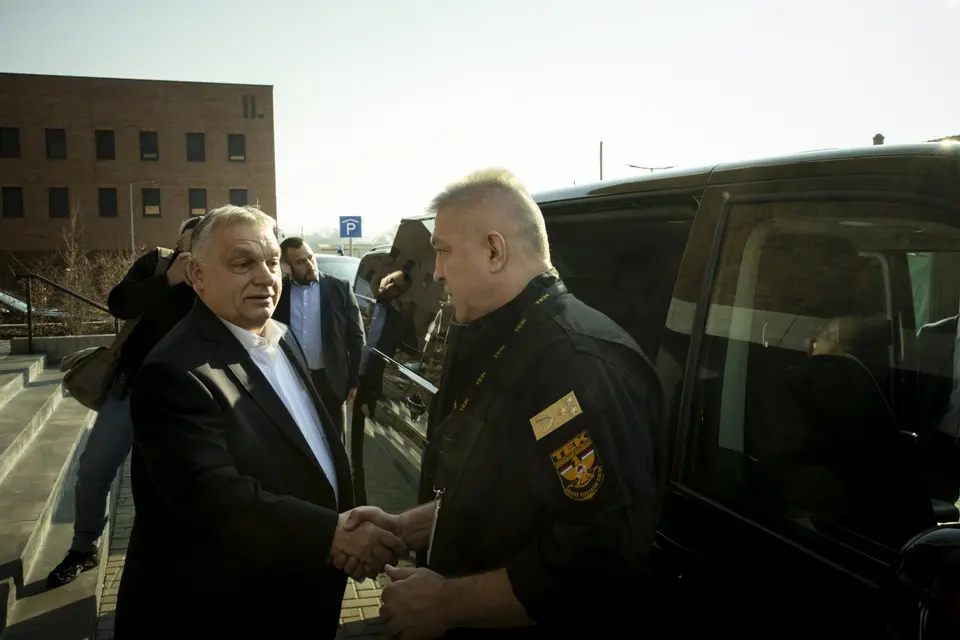
Former Counter-Terrorism Chief Suspected in Ukrainian Money Courier Case
János Hajdu, who recently left his position as head of the Counter-Terrorism Centre, appeared before the investigation prosecutor's office on Monday as a suspect. The Central Investigation Prosecutor's office brought charges against him in seven cases of unlawful detention resulting in the torture of victims.
The investigation concerns events in March, when staff from the Counter-Terrorism Centre stopped two vans heading from Austria to Ukraine at a rest stop on the M0 motorway. Seven Ukrainian citizens were travelling in the vehicles, escorting valuable cash and gold bars. Members of the intervention unit placed the passengers on the ground, handcuffed them, and put hoods over their heads, before taking them to the organisation's headquarters.
According to the prosecutor's office, the former director was aware that customs authorities had already questioned the individuals involved as witnesses and did not wish to take further action. Nevertheless, the detention continued. The alleged victims were reportedly kept in handcuffs for nine hours, and sight-obstructing devices were applied in a manner that violated their rights.
The suspect appealed against the charge, denied his guilt, and made a statement. Because he no longer holds office at the agency, the authorities determined there was no need to place him in custody.
The March operation was prompted by a complaint from the Constitutional Protection Office, filed on the basis of data from the Information Office. According to media reports, former Prime Minister Viktor Orbán ordered the intervention. Official communication pointed to money laundering, though this was not supported by evidence. The Ukrainian Oschadbank and Austrian Raiffeisen both stated that the shipment's documentation was in order.
The confiscated assets, worth more than 27 billion forints, were returned to Ukraine only months later, following the elections. President Zelenskyy reported on this in May.
Viktor Orbán responded to Monday's news on social media. In his post, he described Hajdu as a "role model" whom they support, and stated that in "every normal country, recognition would be due" for what he did. The former prime minister claimed "politically motivated prosecution" has begun and alleged that the current cabinet is acting in the interests of the Ukrainians.
According to an alleged prosecution summary obtained by 444, decision-makers including Viktor Orbán, former State Secretary Örs Farkas, János Hajdu, and former customs authority head Tamás Demeter should all be questioned.
Source: 444.hu
Source: 444