Riga deputy Eņģelis accused of involvement with underage girl
Riga City Council deputy Mārtiņš Eņģelis, who resigned in September citing burnout, may have concealed the true reason — a complaint by an underage girl regarding sexual harassment.
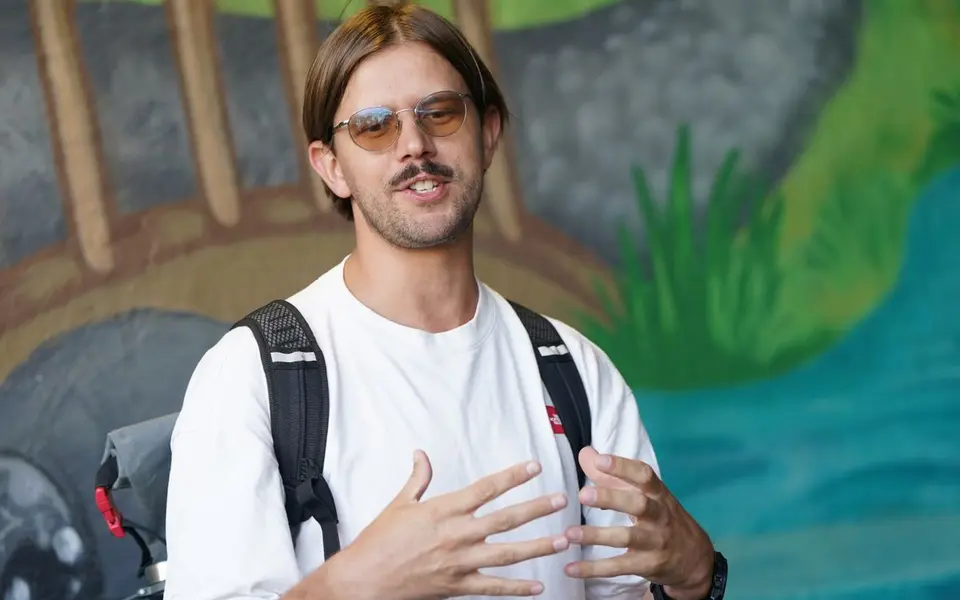
City council deputy's resignation may have been prompted by sexual harassment complaint
Riga City Council deputy Mārtiņš Eņģelis (Progressives), who handed over his mandate on 10 September, citing prolonged burnout, most likely did not tell his colleagues and journalists the truth. According to Diena, the real reason may have been a complaint by an underage girl regarding sexual harassment, which she submitted to law-enforcement institutions.
Information at the editorial office's disposal suggests that the Progressives party was possibly informed of the true reasons for the resignation and even encouraged Eņģelis to leave active politics. Evidence supporting this version also includes the fact that the young woman had consulted the Guardianship Board about protecting her rights before 10 September — the day the deputy handed over his mandate.
Meeting and intimate contact
The complainant has actively worked on youth projects. Eņģelis, in turn, worked on the Riga City Council committee in the field of youth affairs. The two met in April of this year — the deputy helped the young woman resolve housing and career issues. As early as May, he began to show private interest.
According to the complaint, on 19 June, intimate contact occurred between the two. There was no direct violence, however the young woman indicates that a few days before, she herself mentioned to Eņģelis in correspondence that she was not of legal age. She also does not state that the deputy showed interest in her consent to sexual intimacy. In the complaint, what happened is described only as follows: "Between us there was also intimate contact. After what happened, I did not feel entirely that everything that happened was right."
Contact continued until the end of July
After 19 June, the young woman attempted to clarify the nature of the relationship and clearly stated that she was not interested in it. However, Eņģelis continued to send messages and video on communication platforms until the end of July — expressing that he did not want to end the relationship and that the young woman "mattered" to him.
The young woman sought help and received an explanation that she was being manipulated. This is what prompted her in early October to file a complaint with the police. In the complaint, she asked the Guardianship Board not to disclose what happened to her guardian — her grandmother.
Complaint submitted to police and minister
A copy of the complaint in Diena's possession was submitted in the first days of October to the State Police, Justice Minister Edvards Smiļtēns, and the Guardianship Board of Riga City Municipality.
When asked about the complaint, the State Police indicated that it does not provide information about complaints by specific individuals, whilst emphasising: "Upon receiving complaints about alleged criminal acts, especially against minors, they are examined accordingly and a thorough investigation is conducted," explained Simona Grāvīte, head of the State Police Public Relations Department, by e-mail. The police thus neither confirmed nor denied the existence of the complaint.
The Ministry of Justice, to which the complaint was sent for informational purposes, confirmed without elaboration that such a document exists. "The Ministry of Justice informs that the minister has received a complaint from a private individual and at the moment this complaint has been submitted to the minister for assessment," stated the official reply. Given that the editorial office framed the question specifically regarding former Riga City Council deputy Eņģelis and described the complaint's author as an underage girl, it can be assumed that Smiļtēns is examining this specific complaint.
Eņģelis's statements about "burnout"
According to information provided by news agency LETA, upon leaving the Riga City Council, Eņģelis wrote on Facebook that he had been experiencing burnout since May. He cited as reasons the heavy workload in political and communications work, as well as complications from moving house.
"As a result, I assess my current capacity to attend to municipal, committee and commission work as weak — so responsibly, fully, with respect, with enthusiasm and with the intensity that voters expect," Eņģelis wrote in the statement.
In Diena's assessment, the deputy told part of the truth with these words — the burnout in May actually reflects the period when private interest in the young woman began — however, he did not disclose the essential circumstance. In the case of a politician, such an interpretation can be considered misleading, as none of the listeners gained any indication of the complaint's existence and its connection to the handover of the mandate.
Pre-election context and the party's role
Diena notes that the matter acquires special significance during the pre-election period: it concerns a politician who may have provided false explanations to the public, and the Progressives party, which may have been informed about everything yet chose to remain silent about the situation.
Suspicions suggest that Eņģelis may have involved an underage girl, possibly using his powers as a deputy in the field of youth affairs and manipulating the young woman in such a way that she only became aware of it with delay. Given the young woman's privacy and the fact that direct confirmation of the complaint's receipt by police has not been obtained, Diena does not disclose further details of how events unfolded.
Source: Diena