Judge Łubowski recused from Ziobry ENA case
The Warsaw Regional Court has recused Judge Dariusz Łubowski from hearing the National Prosecutor's Office's request for a European Arrest Warrant against Zbigniew Ziobro. The reasons are doubts about his impartiality.
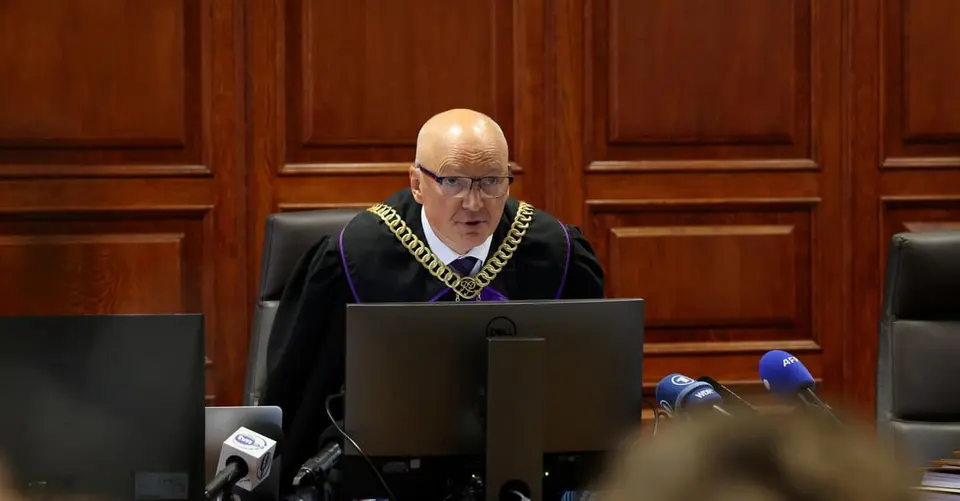
Judge Łubowski recused from Ziobry ENA case – court decision of 19 February
The Warsaw Regional Court recused Judge Dariusz Łubowski on 19 February 2026 from hearing the National Prosecutor's Office's request for issuing a European Arrest Warrant (EAW) against Zbigniew Ziobro. According to oko.press, the decision was issued by Judge Katarzyna Stasiów, and the ruling was published on the court's website.
The application for recusal was filed by the National Prosecutor's Office, accusing Łubowski of lacking impartiality. The spokesperson for the National Prosecutor's Office, prosecutor Przemysław Nowak, confirmed on Wednesday that the prosecution had also filed a separate application with the Court of Appeal for the recusal of the judge from hearing an appeal in the matter connected with the EAW for Ziobro.
December ruling as a source of doubts
The prosecution questioned Łubowski's impartiality based on his earlier ruling from December 2025. He had then quashed the EAW for former deputy justice minister Marcin Romanowski, who – like Ziobro – resides in Hungary. Both politicians come from the Sovereign Poland party; the prosecution wishes to bring charges against them in connection with the Justice Fund scandal.
In quashing the December EAW for Romanowski, Łubowski relied on the decision of Hungarian Prime Minister Viktor Orbán's government, which granted Romanowski political asylum in December 2024. The judge found that the granting of asylum demonstrated that the former deputy minister faced persecution in Poland. In that same ruling, he called Donald Tusk's government a "cryptodictatoreship" and stated that it could persecute politicians from the Law and Justice camp and that it violates the Constitution and human rights.
First recusal decision – the Romanowski case
The National Prosecutor's Office filed a new request for an EAW for Romanowski, whilst simultaneously requesting Łubowski's recusal. In mid-January 2026, the Warsaw Regional Court granted this application, finding that the judge had revealed political views, which could raise doubts about his impartiality.
The National Prosecutor's Office based its next application on this ruling – this time concerning Łubowski's recusal from the EAW case for Ziobro himself. It indicated that the judge's attitude towards the current government and the prosecution was already known.
Justification from Judge Stasiów
Judge Katarzyna Stasiów agreed with the prosecution's arguments. In the justification of the ruling, she noted that the EAW cases for Ziobro and Romanowski were "twin cases", and therefore the grounds for Łubowski's recusal from both proceedings were the same.
Stasiów found that in quashing the EAW for Romanowski, Łubowski "did not consider the legal grounds of his decision, but made a positive assessment of the Hungarian authorities and a negative assessment of the Polish authorities, including the National Prosecutor's Office subordinate to it". She stated that such an approach "in the social perception may raise justified doubts about the judge's impartiality and his identical emotional attitude to the opposing parties in the investigation".
The judge also criticised Łubowski for incorrectly applying the presumption of innocence when hearing the EAW request. As she pointed out, an EAW is a type of red notice issued following prior consent to temporary detention – and at this stage the presumption of innocence does not apply.
Words of Minister Żurek and their interpretation
Stasiów further contested the way Łubowski interpreted a statement by Justice Minister Waldemar Żurek from December 2025. The minister said at the time on Onet: "This is cowardice. A kind of game on the part of Mr Ziobro, because he has repeatedly said that he would stand with his visor raised, styled himself as a sheriff. A sheriff is someone who is not afraid to face up to things. We have free media and free courts, we follow procedures. Really, if we wanted to, we would bring him in the boot of a car, services all over the world do such things, nothing new. But we follow the law and its rules".
Łubowski interpreted this statement as saying that opposition figures should be abducted and transported in car boots. Judge Stasiów found such an interpretation to be unjustified and indicative of bias.
What next – judge drawn by lot, new EAW for Romanowski
The EAW request for Ziobro will now be heard by one of three judges from the international criminal law section of the Warsaw Regional Court – selected by way of a draw.
Independently of the above, on 17 February 2026 the Warsaw Regional Court issued a new – second – EAW for Romanowski. The court ruled that there are grounds for his prosecution on the territory of the European Union, since the court's consent to his temporary detention remains in force. Romanowski left for Hungary at the end of 2024, shortly before the arrest warrant was issued. Ziobro received asylum in Hungary in December 2025.
Łubowski's role in the Warsaw court
For many years, Łubowski was the only judge at the Warsaw Regional Court dealing with international requests – including EAWs and extradition requests. Since 2018, by decision of court president Joanna Bitner, who was appointed by the Justice Ministry under Ziobro, he headed the single-judge international criminal law section. His specialisation in international law and knowledge of several foreign languages influenced the decision to assign him this role.
Source: Onet