Medical malpractice case in child's death at Sanador blocked by prosecutors for 8 years
Prosecutor Marius Iacob has kept the case of the death of little Ștefan Alexandru, who died at Sanador Hospital at 1 year and 10 months old, in his drawer since March 2024. The statute of limitations threatens to close the case without any guilty party.
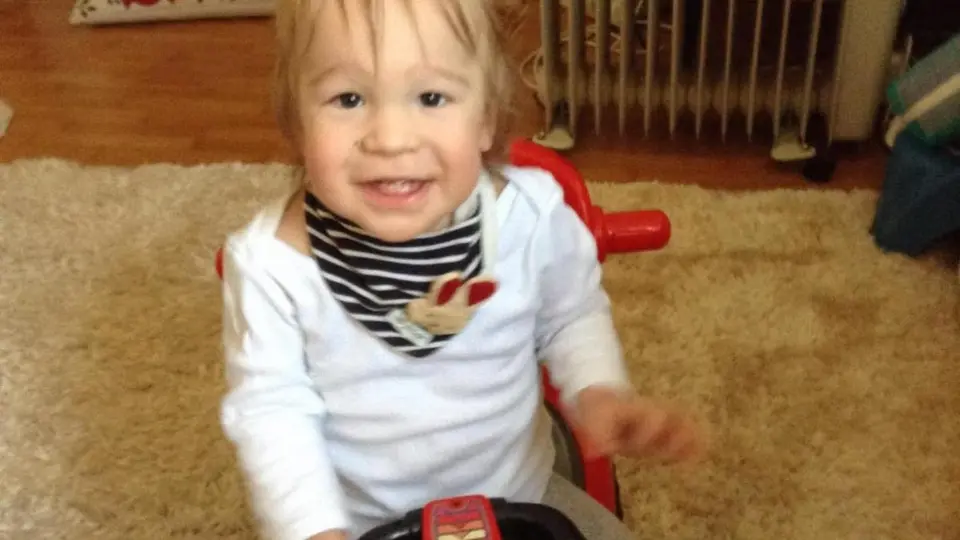
The case of Ștefan Alexandru's death, blocked by prosecutors for nearly eight years
Jurnalul.ro reports that the family of a child who died in 2018 at Sanador Hospital in Bucharest has, after eight years, no verdict and no indictment of the doctors considered responsible. Little Ștefan Alexandru died on 20 October 2018, at the age of 1 year and 10 months, a few hours after a surgical procedure described by specialists as routine.
According to statements from experts who later analysed the case, the child showed signs of internal haemorrhage shortly after the operation. His condition deteriorated rapidly, and the child suffered cardiac and respiratory arrest. The child's mother repeatedly called hospital doctors, without them intervening in time. An autopsy performed on 23 October 2018 established that death resulted from haemorrhagic shock — an internal haemorrhage that nursing staff said should have been detected immediately by any specialist or even by a student in the final year of the first year of medical school.
The Medical College found errors, sanctions remained symbolic
On 25 March 2019, the Romanian Medical College completed its disciplinary investigation into this case, concluding that the doctors involved failed to monitor the child postoperatively according to professional standards. However, the sanction imposed was merely a vote of censure. Since then, the criminal case has not reached court, despite Ștefan's parents attempting for nearly eight years to obtain an indictment of the doctors.
Prosecutor Marius Iacob — described by the publication as a well-known name in the system — took over the criminal investigation against the doctors, but has kept it in his drawer since March 2024. Previously, another prosecutor had handled the case for five years without sending it to court, requesting, according to the child's grandmother, clarifications on several occasions — a tactic the family regarded as a pretext for delay. The Institute of Forensic Medicine issued an opinion regarded as incontrovertible, and the Medical College formulated its own conclusions, but the case remains blocked.
The statute of limitations, prosecutors' silent weapon
The concrete danger, flagged by Jurnalul.ro, is that the offences risk being barred by the statute of limitations if the case is not sent to court in time. Once the limitation period is reached, no guilty party can be punished, even if guilt were proven.
Ștefan's grandmother, herself a journalist, has analysed the case with rigour and previously told Jurnalul that the forensic medical examinations are clear. "We filed complaints everywhere, at all state institutions, we went to court, where we lost the case for requesting an indictment, then it was taken over by prosecutor Marius Iacob and we hoped justice would be done, but since then nothing has happened and the case still has not reached court. No institution responds to our requests in accordance with Law no. 544/2001", she stated.
A system that protects inaction
Ștefan Alexandru's case illustrates, according to the publication, a wider practice in the Romanian judicial system. The number of cases "resolved" by waiting for the statute of limitations is, according to Jurnalul.ro, very large. The mechanism operates in two main variants: either the prosecutor issues a decision not to initiate criminal investigation (NUP), or simply leaves the case unresolved until the legal deadline expires.
Requests to reopen investigations return, in a vicious circle, to the same prosecutors who made the initial decision. Complaints addressed to the General Prosecutor's Office or the Superior Council of Magistracy produce no different results. Even when judges, seized of an appeal, request that the criminal investigation continue, prosecutors end up closing the cases anyway. Romania has been condemned by the European Court of Human Rights for similar cases, without the practice changing substantially.
Among the most high-profile cases closed through statute of limitations or NUP in 2023 are cases with defendants such as Elena Udrea or Ioana Băsescu. The publication notes that among the prosecutors who resorted to this method is also Marius Bogdan Bulancea, former head of the Section for Combating Crimes Assimilated to Corruption Offences at the National Anti-Corruption Directorate.
The family, blocked at every institutional step
The medical malpractice case from Sanador is not singular in the landscape of such cases that came to Jurnalul.ro's attention over time. What distinguishes it is the direct and documented involvement of the family: Ștefan's grandmother monitored each procedural stage, filed complaints to all relevant institutions and obtained clear expert opinions, without these producing any change in prosecutors' conduct.
The courts rejected the family's request for an indictment. Prosecutor Marius Iacob took over the case in circumstances where the family's hopes were high, but, according to the grandmother's statements, from that point on no concrete progress has been recorded. The offences risk being barred by the statute of limitations, and the child who died at Sanador Hospital nearly eight years ago could ultimately remain without any officially recognised guilty party.
Source: Jurnalul.ro