Robert O'Connor found guilty of manslaughter in triple stabbing of Louth family
A Co Louth man who stabbed his parents and brother to death has been convicted of manslaughter by diminished responsibility. The Central Criminal Court jury returned unanimous verdicts on all three counts.
Unanimous verdict in Louth triple killing trial
A 32-year-old man who stabbed his mother, father and younger brother to death at their Co Louth home has been found guilty of manslaughter by reason of diminished responsibility, irishmirror.ie reports. The Central Criminal Court jury returned unanimous verdicts on all three counts, rejecting a full murder conviction while also declining to acquit Robert O'Connor on grounds of insanity.
O'Connor, of Drumgowna, Louth Village, Dundalk, had pleaded not guilty to the murders of his mother Louise (56), his father Mark (54) and his brother Evan (27). The killings took place at the family home between 28 and 29 September 2025. He had entered his plea on the basis of either insanity or diminished responsibility. The three victims sustained a combined 139 stab wounds.
Psychiatric evidence divided on insanity threshold
The jury of six men and six women deliberated for four hours and eight minutes across two days. Both psychiatric experts who gave evidence agreed that a verdict of guilty of manslaughter by reason of diminished responsibility — under section 6 of the Criminal Law Insanity Act 2006 — was appropriate. However, they differed on whether O'Connor met the higher threshold for a special verdict of not guilty by reason of insanity under section 5 of the same act.
Consultant forensic psychiatrist Dr Fiona Toal, called by the defence, testified that O'Connor did not know his actions were wrong and was unable to refrain from committing them. She found he met the criteria for a not guilty by reason of insanity verdict.
Dr Ronan Mullaney, testifying for the prosecution, reached a different conclusion. He told the trial that O'Connor met the criteria for diminished responsibility but not for a full insanity acquittal. Dr Mullaney noted that O'Connor had expressed remorse and that his question to gardaí about "what kind of time" he might face demonstrated "a good understanding of his role."
State and defence staked out opposing positions
Prosecuting senior counsel Roisin Lacey SC had described the central issue in the trial as the "battleground" between the two sides: whether O'Connor was legally insane at the time of the killings. In their closing speech, the State submitted that verdicts of manslaughter by diminished responsibility were more consistent with the weight of the evidence and reflected the agreed position of both psychiatrists.
Lawyers for O'Connor had urged the jury to return verdicts of not guilty by reason of insanity, arguing this would ensure he received "the proper mental health treatment" he needed and would not be "misdiagnosed for a fourth time."
Cocaine use and missed medication preceded killings
The court heard that O'Connor had not been taking his schizophrenia medication in the months before the killings and had been using cocaine. He told gardaí he had a row with his parents over drugs, "lost his head," and said he had only intended to kill his father and brother — not his mother.
O'Connor described to investigating officers how he stabbed his autistic brother Evan like a "blood bag." He later recounted how his mother pleaded with him to let his younger brother go while he held the family at knifepoint in their sitting room. A pathologist testified that the majority of Evan's wounds were inflicted while he was still alive.
Judge outlined two-verdict framework
Presiding judge Mr Justice Mícheál P O'Higgins told the jury following the three-week trial that the psychiatric evidence in the case narrowed their deliberations to one of two possible verdicts: not guilty by reason of insanity, or guilty of manslaughter by reason of diminished responsibility.
Mr Justice O'Higgins directed that if the jury was not satisfied on the balance of probabilities that O'Connor was legally insane at the time, only then should they consider the alternative verdict of diminished responsibility. In that case, he said, they were required to address three questions: whether the prosecution had proven beyond reasonable doubt that O'Connor carried out the killings; whether they were satisfied on the balance of probabilities that he was suffering from a mental disorder; and whether that disorder substantially diminished his responsibility for his actions.
"Was his mind in control or was the mental disorder in control at the material time?" the judge asked the panel.
Jury exempted from future service
Following the verdicts, Mr Justice O'Higgins exempted the twelve jurors from jury service for the next six years.
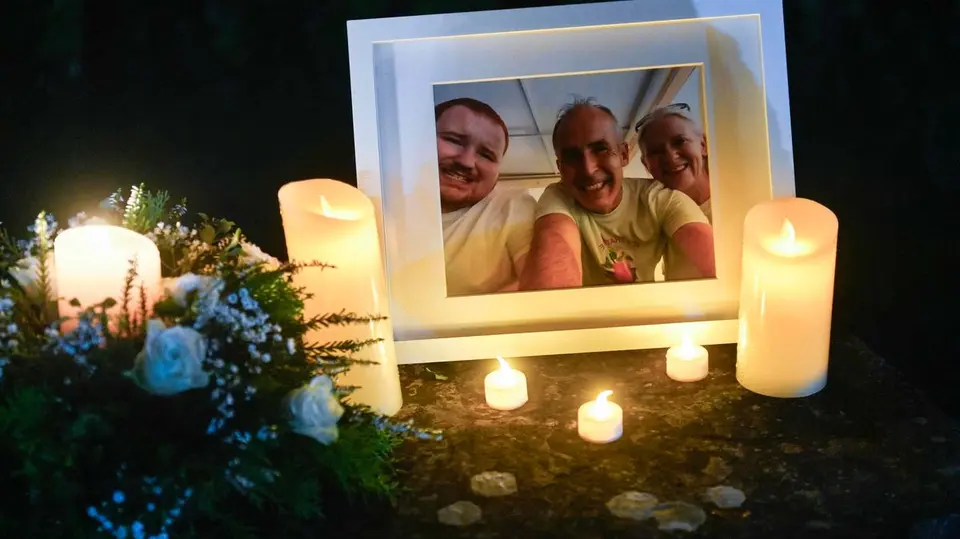
A candlelight vigil was held at Stonetown Community Walking Track in Co Louth in memory of Louise and Mark O'Connor and their son Evan.
Source: Irish Independent