Family of St Lucian fisherman Ricky Joseph seeks answers after US military strike
Ricky Joseph, 35, was killed in a US military strike on a fishing boat in February. His family still has no body, no explanation, and no closure.
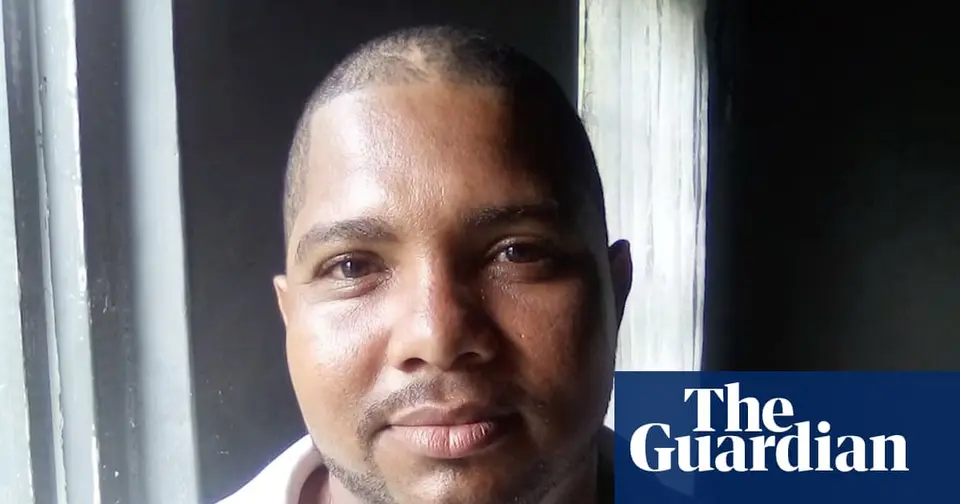
St Lucian fisherman's family left without answers after US 'drug boat' strike
More than four months after Ricky Joseph left his St Lucia home for the last time, his family remains without his body, without a clear explanation of his death, and without any formal process through which to contest the accusations against him.
Joseph, 35, set out early on the morning of 13 February to fish for tuna, ballyhoo and snapper. His partner, Lucille Charles, and their children were still asleep when he left. He did not return.
"I started calling people and asking if they had seen him. I kept trying to reach him," Charles told theguardian.com. "I sent messages. I kept telling myself he would come back, but then I began to feel that something had happened to him."
The truth emerged in fragments: media reports, rumours of an explosion, and then confirmation that the boat Joseph was on had been destroyed in the Trump administration's military campaign against vessels allegedly transporting drugs to the United States. Charles said Joseph had no criminal record. "I never knew him to be involved in anything like that," she said.
More than 200 killed in over 60 strikes
To date, more than 200 people are thought to have been killed in more than 60 strikes on vessels across the Caribbean and Pacific. The most recent attack took place on 21 June. Human rights organisations, national governments and the United Nations have condemned the strikes as "extrajudicial killings", arguing that even if those on board were involved in smuggling — as Donald Trump has claimed without providing evidence — drug trafficking is not an offence punishable by death under US or international law.
An analysis by the Washington Office on Latin America (WOLA), a US-based NGO, found that news coverage of the attacks was declining as media interest waned. "It's so normalised now that it doesn't even get much attention when there is a new strike… I think people are getting somewhat numb to it," said Adam Isacson, WOLA's director for defence oversight.
Family suspended in grief
After Joseph disappeared, police visited the family home to take statements and collect a photograph, but provided little information, Charles said. Although the family was later told that Joseph's remains had been found, they have not received his body. Without a burial, without an explanation, and without any legal proceedings, Charles said the family was left suspended in raw grief.
"I had to tell the children that their father was gone," she said. "That was very hard… they never got the chance to see him, to say goodbye, or to have closure."
Joseph's brother, Titus, described the moment he saw the charred wreckage of the boat. "When I got close to that boat, I felt like my brother was still there. I felt his spirit. It hurt me badly. I started crying. I could not even really handle it," he said.
"What reminds me of him most is passing by the sea… I would remember seeing him walking from the sea or going to the sea. Every time I pass there, I think about him. I still feel like I am seeing Ricky… that is how much he is missed."
Titus Joseph rejected any suggestion that his brother was a criminal. "If the boat was carrying so much cocaine and then it exploded and caught fire, where is the evidence? Where is the cocaine? That is what I want to know. I know Ricky. He was a fisherman. That was his life."
Investigation identified victims with no trafficking links
Ricky Joseph was one of 13 people killed in the US boat strikes to be identified in a joint investigation led by the Latin American Center for Investigative Journalism, involving 20 journalists. The investigation found that several of the victims showed no indication of involvement in drug trafficking.
US Southern Command (Southcom), which oversees US military operations in Latin America, did not respond to a request for comment.
Cameron Taliam, the owner of the boat Joseph was on, said he did not know the fisher personally but knew the captain, who was known locally as "Nafi." "I never knew him to be anything out of the way, no problems with the law… one of the nicest guys," Taliam said of the captain.
No official account of the attack has been provided. The strike took place in the waters of St Vincent and the Grenadines. Taliam said he pieced together what happened from scattered reports from authorities and accounts from witnesses who described seeing a US drone circle, strike another vessel, and then turn toward his boat.
Fishers afraid to go to sea
Taliam, who operates a fleet of fishing vessels, said the strikes have had a direct impact on his business. "They're asking me to change the colour of my boats because almost all my boats are in green and black… They feel like my boats are being targeted," he said. Fishers were now reluctant to take his vessels out to sea.
St Lucia's Prime Minister Philip Pierre said an investigation was launched following the attack. But in May — three months after the strike — he told reporters he had yet to receive further information from Washington. "We cannot insist that the US gives us answers… And the sad thing is that we have had no further information on this matter," Pierre said.
Isacson said Caribbean governments were struggling to obtain answers in part because they lacked direct contact with the branch of the US government responsible for the strikes. He added that the Trump administration had "been very clear that it is going to wield all of its political and economic tools against anybody who challenges these."
Taliam said he did not hold the prime minister responsible. "He wasn't the one who did anything to my boat," he said. "The world just needs to realise that we have a psycho on the loose… Trump is a psycho."
Source: Google News LC — Crime