Gang violence and gun crime surge in Lambeth and Southwark, Met Police warns
Gun crime rose by over 20% in two south London boroughs this summer, with 11 killings since April. Officers warn gangs are actively recruiting vulnerable young people.
Youth gang tensions escalate across south London boroughs
Eleven people have been killed in Lambeth and Southwark since April — around a fifth of all London homicides in that period — as gun crime and knife violence surged across both boroughs this summer, bbc.co.uk reports.
Recorded gun crime rose by 23% in Southwark and by 22% in Lambeth in the year ending August 2026, compared with the previous year. The Metropolitan Police recorded 14 lethal barrel discharges across the two boroughs, double the seven recorded in the equivalent period the previous financial year. Knife injuries reported to police in Lambeth climbed 9% between April and August this year against the same months in 2025.
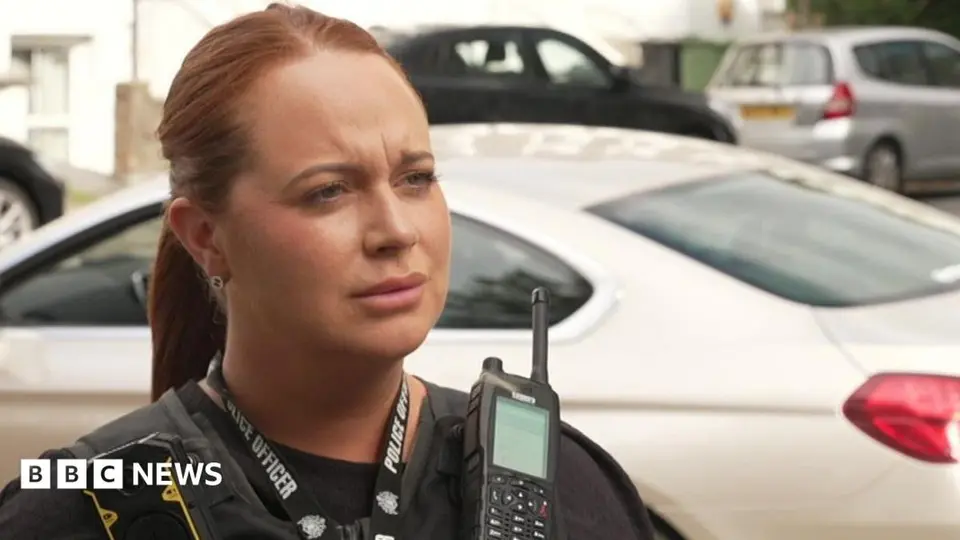
"There are parents who think next time we come to their door, it will be to tell them their child is dead," said PC Zoe Ticehurst, who serves on the Metropolitan Police's proactive offender targeting and management team.
Her colleague, Detective Constable Faisal El Issaoui, described the environment facing young people growing up on some of the capital's most deprived estates. "It's very hard for a lot of young people who are brought up on these estates. That's the only thing they can see. Unfortunately, when you get to a certain age, there's a choice that has to be made."
Gangs target children during school holidays
Both officers said the summer months — when schools are closed and children spend more time on the streets — represent a prime recruiting window for local gangs. El Issaoui explained that gang members are practised at identifying vulnerable young people, particularly those from deprived backgrounds or excluded from school.
"They might get offered money in exchange for holding on to something, or to carry something from one place to another, as a means of sort of making some quick money. That's how it starts."
Ticehurst added that warning signs often appear at home. "They come home with new stuff and the parents haven't given them money, or they go missing for days. And unfortunately they're caught up in stuff they shouldn't be."
She described visiting families in which parents feared their child faced an ultimatum on the threshold of adulthood. "They go into that last year of school and they believe they've got to make a choice: go into the gang, or they don't."
A bus driver shot dead in Clapham
Roadside memorials to young victims of violence line several streets in Lambeth. Outside a pub in Clapham, a woman laid flowers in August for Auguste-Marie Bile-aka Amoa, 25, a bus driver shot dead on Willington Road on 10 August. Police said they needed the community's help to establish what happened. A 22-year-old man arrested on suspicion of murder after attending hospital with a gunshot wound was subsequently released with no further action.
"It was early evening," said Ticehurst. "There were people in the pub behind me, and there were people on the high street. A lot of people saw what happened here and I think it was a big shock."
Although homicide in London fell to its lowest level in more than a decade last year, the concentration of killings in Lambeth and Southwark this year has alarmed officers operating in the area.
Rival gangs within minutes of each other
El Issaoui named multiple gangs active across the borough. Among them, he cited ABM — standing for All About Money — and the O-Tray gang, based on Wandsworth Road, whose territory is, in his words, "literally two minutes away." The close proximity of rival groups means that tensions frequently spill into open violence on the street.
"It's tit-for-tat stuff, and unfortunately it does affect a lot of innocent people who aren't linked to gang crime," he said.
Many of the gangs have existed for decades but, according to El Issaoui, have been "re-branded — with the new generation overtaking the old." He pointed to social media as a significant accelerant, with members livestreaming incursions into rival territory. "Just to say, 'we're here, come get us', sort of thing."
He also described a more disturbing dynamic: violence treated as a scoring system. "Any affront into another area will be seen as a point score for that gang. It's even more points if an actual gang member was targeted, but as far as these groups are concerned, normal passersby are fair game. It's a really dangerous element for local communities, where innocent people get literally caught in a crossfire."
Targeted operations yield 700 arrests
Over the summer, the Metropolitan Police launched several targeted operations in response to the surge in violence. Plainclothes officers and firearms patrol units searched for individuals suspected of carrying weapons or dealing drugs. Police said more than 700 arrests were made and over 40 weapons seized, along with quantities of Class A drugs.
Ticehurst and El Issaoui work in plainclothes, engaging directly with families and attempting to connect young people with education programmes and apprenticeship schemes. The work, they said, comes with considerable resistance.
"I think a lot of parents are in denial about what their young children are up to," said Ticehurst. "They kind of shut it down, even though we're telling them, 'we know this is happening'."
El Issaoui acknowledged that attitudes towards the police vary sharply among residents. Some parents welcome their presence; others do not. A further group, he said, are desperate for help but feel unable to compete with the pull of county lines drugs networks on their children.
Source: Google News UK — Crime (en)