RAF Fairford counter-terror case: from 'bomb plot' arrests to police bail
Five men arrested near RAF Fairford were bailed after no explosives were found in their vans — only petrol. Investigators are now working to establish who, if anyone, was behind the incident.
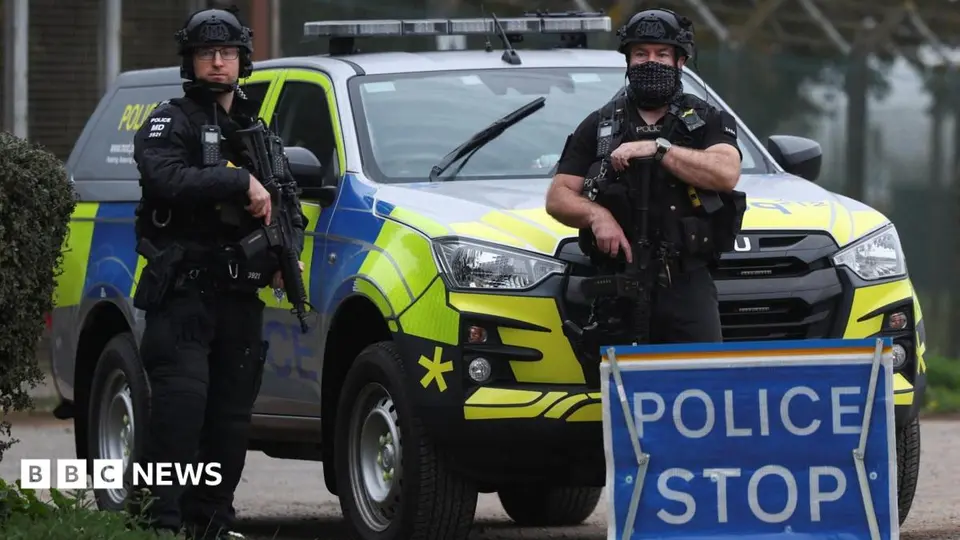
No explosives found, five men bailed — what happened near RAF Fairford?
In the early hours of Sunday morning, residents of Whelford — a village adjacent to RAF Fairford, a base used by the US Air Force — were woken and told to evacuate. A major police operation was under way. One villager photographed five men sitting on the ground, stripped to the waist, handcuffed and under armed guard.
The five were arrested on suspicion of offences under the Explosives Act. But as bbc.co.uk reports, counter-terrorism detectives subsequently confirmed that military remote-controlled robots found no explosives in the suspects' three vans — only an "accelerant", identified as petrol. What several newspapers had labelled a "suspected bomb plot" ended with the men being released on police bail.
Trump and Rubio weigh in — then UK police push back
The incident drew immediate comment from Washington. US President Donald Trump asserted that the men had been attempting to cause "big damage" to the base. "We had them under view for a long time, and we got them," he declared. US Secretary of State Marco Rubio described the situation as "very serious", adding that it "clearly involved the hands of a foreign actor".
Laurence Taylor, head of Counter Terrorism Policing in the UK, offered a pointed response. The concern that many people had been feeling had been "heightened by the international commentary", he said — a barely concealed rebuke of the statements from Washington. Taylor also defended the decision to grant bail with "very strict conditions", which President Trump had criticised. The move was, Taylor said, "an investigative decision and one which is grounded in experience and strategy".
Why bail, not continued detention?
The legal framework in play matters here. The five men were held under the Police and Criminal Evidence Act (PACE), not the Terrorism Act (TACT). Under PACE, detectives could apply bail with strict conditions, but could not hold suspects for up to 14 days as TACT would have permitted.
Once it became clear that no explosives had been found, investigators were left with five men from London, all in their 20s, who had been discovered parked near the air base in the middle of the night under suspicious circumstances — with some petrol, but little other concrete usable evidence. Persuading a senior officer or magistrate to extend detention without something more definite would likely have been difficult.
The decision to bail the men may also reflect tactical calculation. Taylor's language — "experience and strategy" — hints that releasing the suspects on conditions could serve the investigation, perhaps by encouraging cooperation or enabling covert monitoring of their subsequent movements.
Was there prior intelligence?
For a time it was unclear whether surveillance teams had already been tracking the men before villagers spotted them, or whether those residents were genuinely the first to alert police. Taylor has since offered some clarification, stating that Sunday's response came "due to a range of information that we received" — suggesting detectives had access to intelligence before the early-morning call-outs.
Security had visibly been increased at RAF Fairford in the days preceding the incident, which points to some prior awareness of a potential threat. Elite firearms officers responded rapidly to villagers' 999 calls.
Three scenarios investigators are weighing
Both counter-terrorism and military sources have indicated to BBC journalists that the investigation remains at an early stage. Detectives are reported to be trying to identify a possible "controlling hand" behind the presence of the men and their petrol in Whelford. Three broad scenarios are under consideration:
- The five men may be entirely innocent and in a position to offer a credible explanation for being there.
- They may have been paid or deceived into moving the vehicles and petrol, without knowing who they were ultimately working for.
- They may have been part of a plot that was interrupted before reaching a more dangerous phase.
What comes next
Investigators are now examining mobile phones and computers, tracking vehicle movements, searching addresses, and drawing on the covert capabilities of MI5, GCHQ and US intelligence agencies. The outcome of that work will determine whether further arrests follow, whether charges are brought against the five men already bailed, and whether a full account of what happened in Whelford in the early hours of that Sunday morning ever becomes public.
Source: Google News UK — Crime (en)