Trevor Dunkley jailed for life over 1998 murder of Patricia Lashley in Dudley
Trevor Dunkley, 66, has been sentenced to life in prison for killing his partner Patricia Lashley, whose disappearance went unsolved for 28 years.
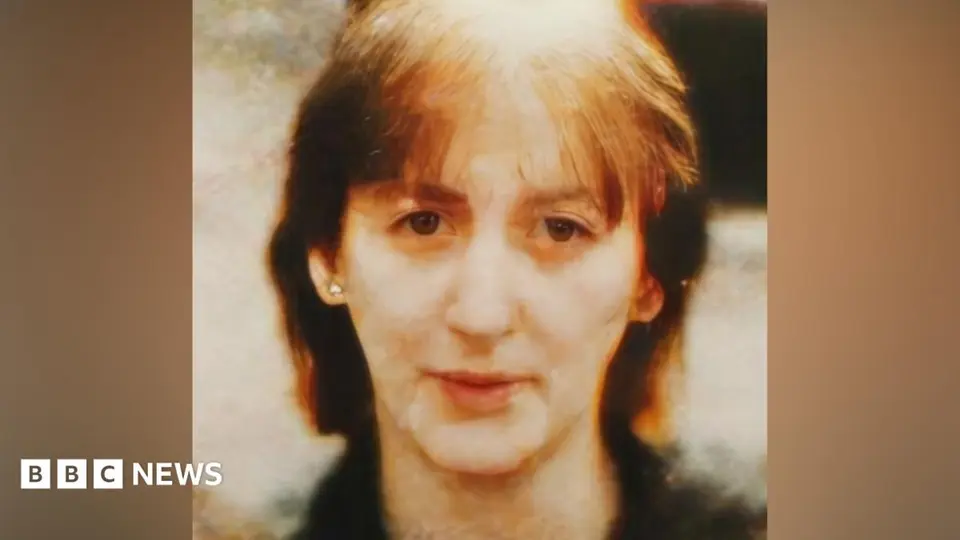
Dudley man convicted of partner's murder after 28-year cold case confession
Trevor Dunkley, 66, was handed a life sentence with a minimum term of 10 years and 10 months at Wolverhampton Crown Court on Friday, after admitting the 1998 murder of his partner Patricia Lashley — a crime he concealed for nearly three decades.
According to bbc.co.uk, Lashley, 33, was last seen near the couple's home on Hall Street, Dudley, in September 1998. Dunkley had consistently told police he had returned from a night shift to find she had vanished, leaving her nine-month-old son alone in the flat.
Four of Lashley's children were present in court as the sentence was delivered.
How the murder was committed and concealed
Prosecutor Robert Price told the court that Dunkley, who worked as a furnaceman, admitted to police that he had "snapped" during an argument with Lashley one night between 22 and 28 September 1998. He said he had "hit her on the head and kept hitting until she went quiet." Price added: "He was wearing chunky rings, which did most of the damage."
Dunkley moved Lashley's body into the cellar of their Hall Street home, where it remained for approximately a year. He later told police: "I could hear the rats under the kitchen floor." When he returned to the cellar, "there were only bones left," and he disposed of her remains in household waste bags over four bin collections.
Her remains have never been recovered.
Judge Chambers confirmed that Dunkley had hidden the body in the cellar before disposing of her remains into household waste bins. He was also handed a concurrent two-year sentence for preventing Lashley's lawful burial.
A sudden confession after 28 years of silence
Despite being spoken to by officers on multiple occasions over the years, Dunkley maintained his account of returning home to find Lashley gone. His admission came only after police informed him that Lashley's family — including her children — were seeking answers about her disappearance.
He became emotional and said: "I killed her, I'm sorry."
Detective Inspector Michelle Cordell of West Midlands Police told the BBC the confession had come as a surprise. She described Dunkley as "calculated" and "callous", and said officers may never fully understand his decision to come forward.
"I don't think we will ever understand the reasons why he's chosen now to confess. Only Trevor Dunkley knows why now," Cordell said. "He was very aware that in confessing he was going to spend the rest of his life in prison. He was very cool, very calm."
Impact on Lashley's children
After Lashley's disappearance, Dunkley took her nine-month-old son — of whom he was not the father — to social services. The boy was subsequently placed into care and adopted. Lashley's adopted son's parents were also present in court on Friday.
Judge Chambers identified this as "the most significant aggravating factor" in the case, noting that the child had grown up believing he "had been abandoned" by his mother, when in fact Dunkley had "caused the death" of the woman who bore him.
Det Insp Cordell said of Lashley's children: "They would want nothing more than to have their mother present in their life. That's something Trevor Dunkley took away from them in the cruellest fashion."
Mitigation and sentencing
In mitigation, defence barrister Balbir Singh described Dunkley as "a decent and hardworking man" with no previous convictions and a strong employment record. Singh told the court the murder had not been premeditated, and that Lashley had at times "behave[d] in a manner that was stressful for the defendant."
Dunkley had told police in interview that he had met Lashley in a pub and found her "very outgoing." He said she had told him she was pregnant by another man, and that after her son was born she "changed" and "made life hell with her nagging." He also said: "I didn't love her at all because she's not my type of woman and I just wanted to help with the baby."
Judge Chambers acknowledged that Dunkley's confession was "to his credit" but told him directly: "You did a dreadful thing and the passage of time is only down to your untruths."
Family's statement
Lashley's sister, who had reported her missing in June 1999 — triggering the original police investigation — said in a statement that her sister had "had a very difficult start in life" and "sought comfort in alcohol." The court also heard that Lashley had a history of mental health problems.
Dunkley pleaded guilty to Lashley's murder at Wolverhampton Crown Court in September, before Friday's sentencing brought the case to a formal close after 28 years.
Source: Google News UK — Crime (en)