Ex-cop Matthew Farwell murder trial: defence slams DOJ strategy over evidence
Farwell's defence accuses prosecutors of distancing themselves from state police amid claims of lost evidence. Trial enters second week in federal court.
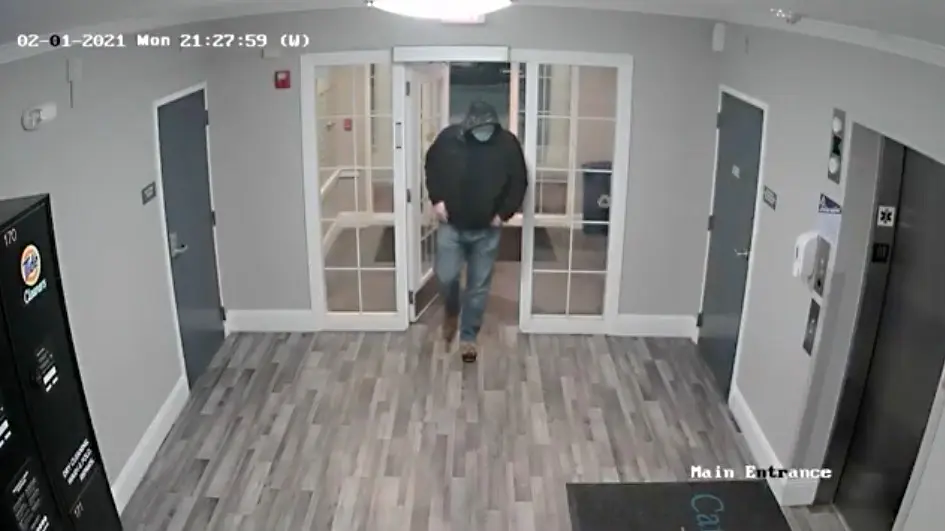
Defence challenges federal strategy as Farwell murder trial enters second week
The defence team of former police officer Matthew Farwell has accused the Department of Justice of deliberately distancing itself from the Massachusetts State Police during his ongoing federal murder trial, according to bostonherald.com. Defence attorney Joanne Daley described the alleged tactic as inappropriate, raising her objections before Chief U.S. District Judge Denise J. Casper at the close of the trial's fourth day.
The dispute surfaced after prosecutors called FBI forensic examiner Christopher Beckstrom to testify — one day after state police investigator Nicholas Guarino revealed that an external hard drive containing evidence had crashed, causing investigators to lose files.
"The government is the government," Daley told Casper outside the presence of the jury. "If the government is laying the foundation for failure to test, failure to preserve, as long as it's understood that the defendant, not the government, gets the benefit of that attack, then we have no objection."
Casper rejected that framing, noting that the defence itself was "relying on a prior law enforcement investigation as part of its case, which the government is not." Daley pushed back: "Your honor, there would be no federal investigation without the evidence seized by the state police. It's not an uninvolved agency."
Daley also pressed for a "failure to preserve" jury instruction — a direction that would allow jurors to assume any lost evidence would have favoured the defence. Casper declined, telling Daley: "I don't see a basis for that yet."
240,000 communications recovered from victim's devices
Beckstrom, a master digital forensic examiner, testified that federal investigators recovered approximately 240,000 communications from the devices of Sandra Birchmore, the 23-year-old woman Farwell is accused of killing. Around 10 per cent of those communications were exchanged with Farwell.
Beckstrom also told the jury that on the day Farwell handed his devices over to the Massachusetts State Police — 9 February 2021 — he conducted two searches that prosecutors characterised as incriminating: "Can you revoke consent in Massachusetts?" and "Can deleted iMessage be recovered by Cellebrite?"
Farwell surrendered the devices eight days after he was accused of killing Birchmore and her unborn son and staging her Canton apartment to make the death appear a suicide.
On cross-examination, Beckstrom acknowledged he found "some searches related to suicide" on Birchmore's devices. He testified she had searched Google for information about suicide ribbons around 7:50 p.m. on the night she died, 1 February 2021, including the query "What color is the suicide ribbon?" — a search that returned an image of a purple ribbon.
Just days earlier, on 27 January 2021, Birchmore had compiled a list of baby names in Apple Notes. One of them was Matthew.
Contrasting testimony from state police examiner
Guarino, who examined the devices as a forensic specialist for the state police, offered testimony that directly contradicted Beckstrom's findings. He told the court he found no messages between Farwell and Birchmore on the officer's cellphone, and subsequently returned the device to Farwell.
Guarino also acknowledged deleting data he considered "repetitive" to save server space, explaining: "Originally this came to me as a suicide, the redundant data was removed." He now works as an examiner directly for the Norfolk District Attorney's Office. He denied withholding any evidence: "There's no evidence I'm withholding," he said from the stand.
FBI shifted investigation from misconduct to witness killing
FBI Special Agent Heidi Kelsch testified that the bureau opened its probe into Farwell in October 2023, after the state Office of Medical Examiner had already ruled Birchmore's death a suicide — a determination it has since revised to undetermined. The investigation initially focused on colour-of-law offences before pivoting to whether Farwell killed Birchmore as a potential witness to a federal crime.
Kelsch said she found 40,000 messages between Birchmore and Farwell on the young woman's phone, many containing graphic details about their sexual encounters. The last testimony jurors heard on Friday was Kelsch and Assistant U.S. Attorney Elizabeth Riley reading explicit text messages Farwell had sent to Birchmore about sexual encounters with the underage girl.
In one message, Birchmore referred to 10 April 2013 — the day she said Farwell first had sex with her — as "the best day of my life." Farwell replied: "Me too."
Stoughton Police internal report found 'inappropriate relationships'
The Stoughton Police Department did not investigate Birchmore's death, as it occurred in Canton, outside its jurisdiction. Chief Donna McNamara testified earlier in the trial that the department did, however, open an internal investigation into Farwell.
That report concluded that Farwell, his twin brother William Farwell, and former Deputy Chief Robert Devine had engaged in "inappropriate relationships" with Birchmore. Farwell resigned from the Stoughton Police Department in April 2021.
The department's Police Explorer programme — where Farwell first met Birchmore when she was 12 years old — was disbanded in September 2022.
Farwell's defence maintains that Birchmore died by suicide in her Canton apartment shortly after Farwell ended their relationship and told her he was not the father of her unborn child. Jurors were set to return on Monday to begin the trial's second week.
Source: Google News MT — Crime (en)