Fort Hood killer Nidal Hasan seeks to delay firing squad execution in federal court
Fort Hood shooter Nidal Hasan has asked a US federal court to postpone his scheduled execution by firing squad. Three shooting survivors have also been barred from witnessing it.
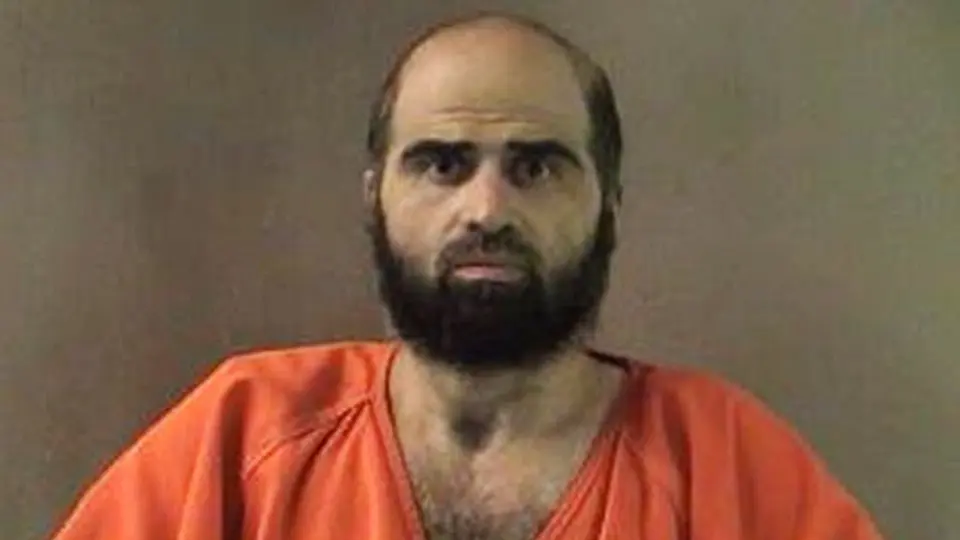
Hasan files for stay of execution days before scheduled firing squad
Fort Hood shooter Nidal Hasan, who killed 13 people at the Texas military base in 2009, filed a request in federal court on Tuesday to delay his execution by firing squad, cbsaustin.com reports. The execution had been scheduled for 3 December.
In the filing, which Hasan signed himself, he states he "intends to demonstrate that the military court's judgment and his resulting sentence of death were obtained and are maintained in violation of his federal constitutional and statutory rights." A hearing was scheduled for Wednesday morning.
Hasan, a former Army psychiatrist, was convicted of multiple counts of murder and attempted murder following the attack, which also wounded more than 30 people.
A legal argument banned at the original trial
One of Hasan's central arguments is that he was prevented from presenting a justification defence at his 2013 court-martial. According to court documents, he had sought to argue that his actions were legally defensible because he was "defending the Afghan Taliban, who are trying to establish Islam as Supreme Law of their land, from an unlawful attack by the United States Army."
After the trial judge barred that argument, Hasan — who had dismissed his lawyers and represented himself — largely remained silent throughout the three-week proceedings. The military called nearly 90 witnesses; Hasan called none and delivered no closing argument. His court-appointed standby counsel concluded at the time that his only objective was to receive a death sentence.
Tuesday's filing states that Hasan intends to continue representing himself, though he is being assisted by lawyers from the American Civil Liberties Union Capital Punishment Project. The ACLU lawyer listed in court records and the Pentagon did not immediately respond to requests for comment.
Trump-nominated judge assigned to the case
The case has been assigned to Judge Tony Mattivi of the US District Court in Kansas, where Hasan is held at the military prison at Fort Leavenworth. Mattivi was nominated to the federal bench by President Donald Trump and confirmed by the Senate on 9 June.
His judicial biography notes that between 2009 and 2013 he served as lead prosecutor in the capital military commission at Naval Station Guantanamo Bay against the al-Qaida operative who orchestrated the bombing of the USS Cole.
The execution itself follows a directive from Trump. Army and Pentagon officials announced in October that it would be the first military execution since 1961 and the first by firing squad since World War II. Defence Secretary Pete Hegseth subsequently declared the execution would be livestreamed, triggering a public backlash before Trump reversed that decision.
Three survivors barred from attending
The court filing emerged amid separate turmoil over the execution logistics. Military officials confirmed on Tuesday that three survivors of the Fort Hood attack would not be permitted to witness the execution.
On 10 November, the Army informed the three that they could not attend because none of them was the direct victim named in the specific charges, citing regulations governing military executions. An email shared with the Associated Press confirmed that a subsequent request for reconsideration was also rejected, with security and space constraints cited as grounds.
The three survivors had argued that the Army should apply a broader definition of "victim" drawn from the Uniform Code of Military Justice, under which a victim can be someone who suffered "direct physical, emotional or pecuniary harm." They contended that the refusal amounted to a declaration that they had not been victims because they were not struck by bullets. A letter from the commandant of Fort Leavenworth stated that no further appeal was possible.
"I still have that blood-stained uniform"
Retired Colonel Kathy Platoni, who would have been Hasan's supervisor on a planned deployment to Afghanistan, described the denial as a betrayal. "I would desperately like to attend," Platoni said from her home in Ohio. "To look Hasan in the eye and say, 'You didn't get me.'"
Platoni recalled that the building where Hasan opened fire had been crowded with soldiers returning from deployment and others preparing to leave. She had been moved to another building when the shooting began.
"The looks on the faces of my friends and colleagues as they carried in the dying and wounded that day — it will haunt me for the rest of my life," she said. She described helping carry a badly wounded captain who had charged Hasan with a chair in an attempt to stop the attack.
"I was throwing computers to the ground trying to get the tablecloths because we needed blankets. We didn't have medical supplies or even water," Platoni said. "I still have that blood-stained uniform, from kneeling down next to that young man, trying to get him to stay with us. That will be with me forever."
Platoni noted that the survivors from her unit deployed to Afghanistan just 29 days after the attack. "We still served our country," she said, "and if we didn't, Hasan would have won."
Julia Wilson, who was nine months pregnant when Hasan opened fire, said her request to witness the execution was also denied and that the military's handling of the case had caused further distress to survivors.
Source: Google News MT — Crime (en)