US jury convicts Huawei on 10 counts of fraud and trade secret theft
A New York federal court found Huawei and three subsidiaries guilty of fraud, trade secret theft and sanctions violations. Sentencing is set for September.
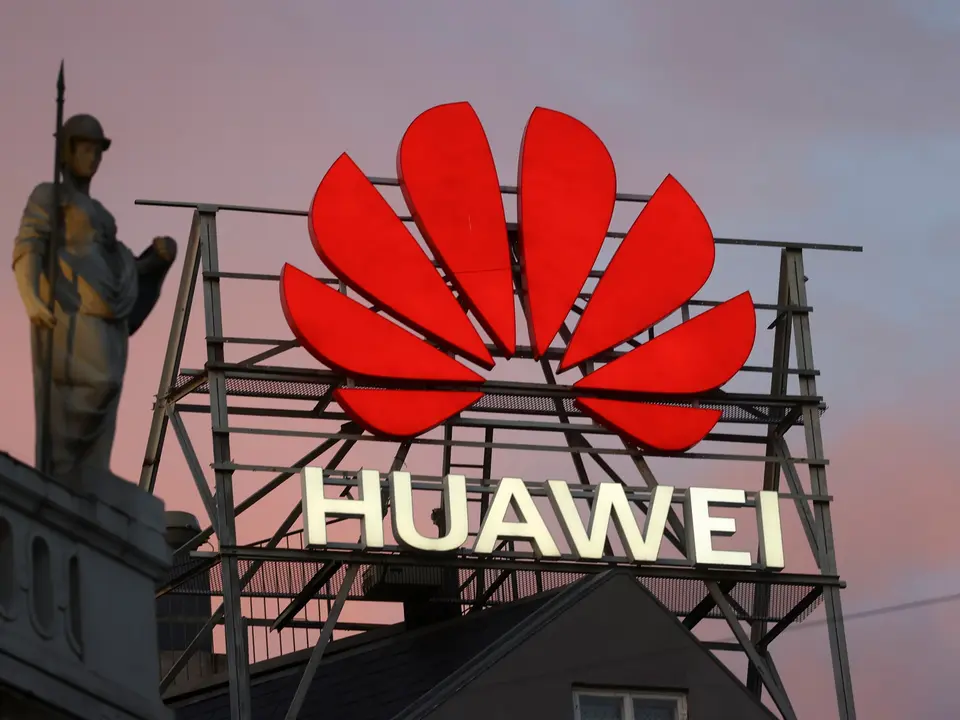
Huawei found guilty in New York federal court on fraud and espionage charges
A US jury has convicted Chinese tech giant Huawei and three of its subsidiaries on 10 of 11 criminal counts, including conspiracy to steal trade secrets from American companies and bank fraud, a New York federal court ruled on Tuesday, aljazeera.com reports.
The subsidiaries named in the verdict are Huawei Device Co Ltd, based in China, and US-registered entities Futurewei Technologies Inc and Huawei Device USA Inc. All four were found guilty of conspiracy to commit wire and bank fraud, wire fraud, bank fraud, conspiracy to defraud the United States, conspiracy to violate the International Emergency Economic Powers Act (IEEPA), substantive IEEPA violations and money laundering conspiracy.
Huawei was, however, acquitted of the most serious charge: engaging in a criminal racketeering conspiracy.
"For over two decades, Huawei built its global empire on a foundation of fraud, theft and deception," said Assistant Attorney General A. Tysen Duva of the Criminal Division of the US Department of Justice. "Huawei's crimes threatened the US financial system, took advantage of American companies that compete honestly in the global telecommunications market and undermined our national security."
The Justice Department detailed specific instances of alleged misconduct. A Huawei employee stole technical data related to Tappy, a robot developed by T-Mobile, despite a nondisclosure agreement between the two firms. Huawei engineers were also accused of copying source code belonging to Cisco routers. In a third case, an employee allegedly disguised their identity to gain access to US chip firm CNEX, a company that had previously declined to work directly with Huawei.
The convictions further relate to allegations that Huawei conducted business in Iran and North Korea — both under US sanctions — and made false statements to American officials and banks to conceal those activities.
Criminal charges against the company were first filed in 2019. Huawei's defence lawyers argued that investigators had used isolated acts of misconduct by individual employees to construct the narrative of a sweeping conspiracy. Sentencing is scheduled for September, and the company's legal team has indicated it will appeal the verdict.
Huawei is expected to face substantial financial penalties as a result of the convictions.
Beijing responded sharply to the ruling. The Chinese Ministry of Foreign Affairs said in a statement on Wednesday that it "firmly opposes moves by the US side aimed at containing and suppressing Chinese enterprises, and firmly supports Chinese enterprises' lawful rights." China's government described the verdict as a politically motivated effort by Washington to suppress Chinese technology companies.
The ruling comes at a moment of heightened tension in US-China technological competition, particularly around artificial intelligence. It was announced alongside separate scrutiny surrounding Nvidia, whose co-founder and CEO Jensen Huang is under US investigation for potentially leaking sensitive information to China. Nvidia's chips underpin major AI products, and Washington has already barred the company from selling its most advanced semiconductors to Chinese buyers. Nvidia holds a market capitalisation of more than $4.4 trillion, making it the world's second most valuable company after Apple.
Huawei's difficulties are not confined to the United States. The company has faced restrictions and bans in multiple US-allied nations, including Canada and Australia, over concerns about its alleged proximity to Chinese state authorities. Within the US, Huawei has for years been barred from selling telecommunications equipment to carriers without special government approval on national security grounds.
Source: Google News MT — Crime (en)