New York Court of Appeals upholds five-year sentence for Rochester woman in manslaughter case
New York's highest court has upheld a reduced sentence for Hannah Thomas, convicted of manslaughter in the 2020 fatal shooting of her mother in Greece, NY.
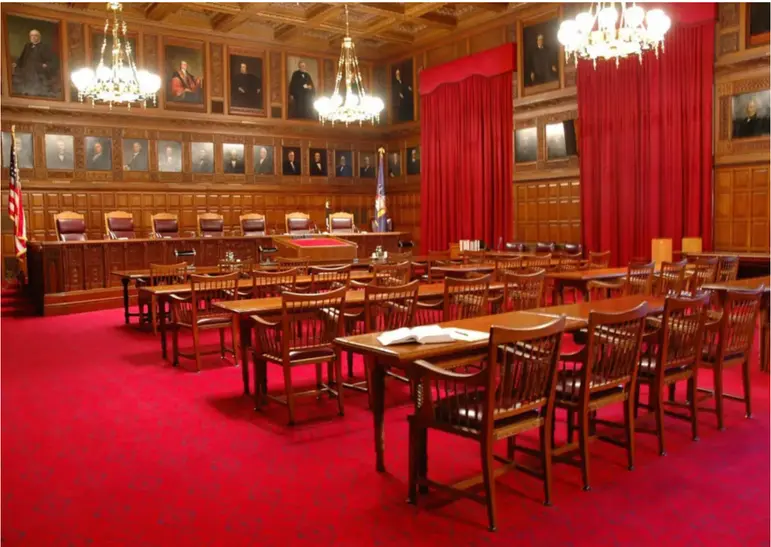
New York's top court confirms sentence cut for abuse survivor convicted of manslaughter
New York's Court of Appeals has let stand a significantly reduced prison sentence for Hannah Thomas, a Rochester woman convicted of manslaughter in the 2020 fatal shooting of her birth mother in Greece, New York, rochesterbeacon.com reports.
On Monday, the state's highest court ruled that the Fourth Department Appellate Division of State Supreme Court had acted properly when it reduced Thomas' sentence from 25 years to five years — a decision that resulted in her release following the July 2025 appellate ruling.
Guilty plea and original sentencing
Thomas and her then-boyfriend, Richard Avila, pleaded guilty to manslaughter in state Supreme Court in Rochester in 2023. Both admitted to the fatal shooting of Thomas' birth mother, Ottilia Piros, and were each sentenced to 25 years in prison. Thomas was 17 at the time of the killing; Avila was 16.
As part of their guilty pleas, both Thomas and Avila waived their right to appeal — a standard mechanism in plea agreements that is typically treated as legally binding once entered under oath.
A rare judicial intervention
The central legal question before the Court of Appeals was whether the Fourth Department had the authority to reduce Thomas' sentence despite her having waived the right to appeal. In July 2025, the appellate court took the unusual step of intervening without having been formally asked to review the waiver's validity.
The Court of Appeals majority affirmed that intervention. "We hold that the Appellate Division has the power to reduce an unduly harsh or severe sentence in the interest of justice even when the defendant has validly waived the right to appeal," the court ruled.
The majority found that past precedents grant regional appellate courts the jurisdiction and discretion to override a sentence — even one included in a plea agreement — when that sentence is deemed fundamentally unjust and all other remedies have been exhausted.
A childhood marked by abuse
The ruling placed significant weight on Thomas' documented history of severe childhood trauma. Court records indicate she suffered abuse at the hands of adoptive parents in Arizona, a couple who subsequently pleaded guilty to their crimes. The Arizona Republic reported in 2018 that two adopted girls — one of whom was Thomas — were found malnourished with injuries to their feet and buttocks. One child was made to sleep outside in a tent; the other slept on a towel indoors and was told she was "in prison." Both were forced to use an outdoor bucket as a toilet.
The Court of Appeals noted that this abuse left Thomas "with numerous psychiatric diagnoses and impaired cognitive development."
Court papers further describe abuse by Piros in the period immediately before the shooting. After Thomas was returned to Piros' custody in Greece in 2020 — having previously lived with her grandmother in Arizona — Piros allegedly slapped Thomas during an argument, threatened suicide when Thomas expressed a wish to return to Arizona, and refused to take Thomas to hospital while she was miscarrying a pregnancy and experiencing what Thomas described as the "worst pain of her life."
A dissenting voice
Monday's ruling was not unanimous. Court of Appeals Judge Madeline Singas issued a dissent, arguing that the majority had allowed the Fourth Department to overstep its constitutional boundaries and that prior precedents did not support the sentencing change.
"Thomas endured a life of unspeakable horrors before committing matricide," Singas wrote. "I share the desire to help her while holding her accountable for her heinous act. But the path that today's majority takes is ill-reasoned and squarely foreclosed by this Court's long settled precedent — precedent that the majority unaccountably writes out of existence."
Singas further warned that the ruling raises a broad set of unresolved questions about the legal durability of appeal waivers going forward.
Broader implications for plea agreements
The case — formally titled People v Hannah T. — has drawn attention in legal circles for its potential impact on how courts treat waivers of appeal in future cases. Such waivers are a cornerstone of the plea agreement system: without them, the volume of cases proceeding to full trial could place severe strain on court resources.
Proponents of waivers argue they offer mutual benefit — typically a reduced sentence for the defendant and greater efficiency for the justice system. Critics contend that waivers can shield serious problems — including police misconduct or judicial error — from meaningful review, and that guilty pleas do not always reflect genuine guilt.
Whether Monday's ruling will broadly weaken the enforceability of appeal waivers, or apply only under an exceptional set of circumstances like those presented by the Thomas case, remains a question under active debate among lawyers, according to rochesterbeacon.com.
Source: Google News MT — Crime (en)