Bolivia launches Safe Borders Plan as PCC and Comando Vermelho advance
The Bolivian government presented the 'Safe Borders Plan' to deploy elite troops in critical zones amid the dispute between Brazilian cartels over drug trafficking corridors.
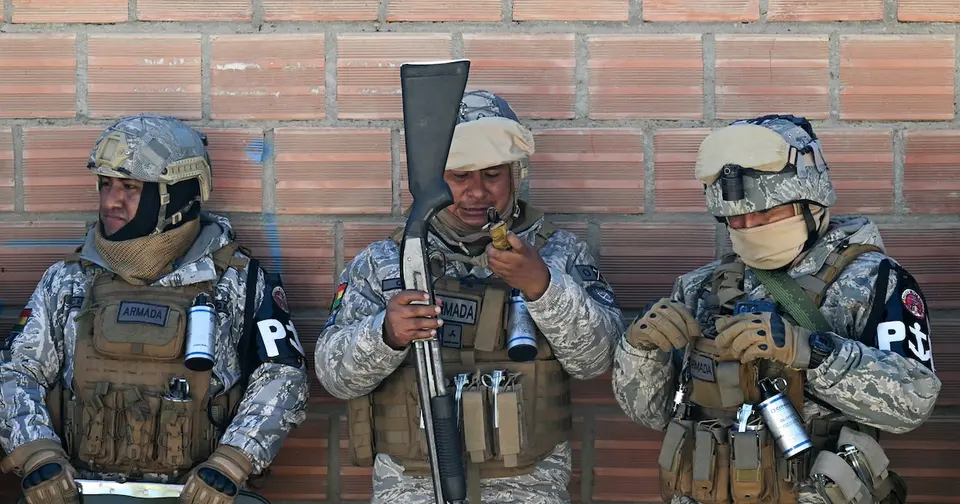
Bolivia deploys elite units on critical borders amid Brazilian cartel dispute
The Bolivian government launched the Safe Borders Plan on Thursday, a strategy to reinforce territorial control in border areas identified as critical points of transnational organised crime, according to infobae.com.
The presentation took place in Guayaramerín, an Amazonian locality in the Beni department on the border with Brazil, and was led by President Rodrigo Paz with the presence of ministers, local authorities and Brazilian representatives.
The plan provides for the permanent deployment of specialised units and elite troops from the Bolivian Police at key points: Guayaramerín, Cobija—the capital of Pando—, San Ignacio and San Matías, in the Santa Cruz de la Sierra department. The stated objective is to "dismantle transnational organised crime".
"There is no lasting social peace without productive development: a safe border is a border that produces, exports and makes progress," President Paz said during the launch. "Bolivia reclaims its territorial sovereignty," he added.
Two elite units with foreign instructors
Minister of Government Marco Antonio Oviedo specified that two elite police units will be created—one in Santa Cruz and another in Beni—with training to be provided by foreign instructors. The strategy, according to Oviedo, aims to "return sovereignty and control" of the territory to the State and will be implemented in the short, medium and long term.
"Bolivians are citizens of peace (...) We do not have a problem when citizens from friendly countries come, but when these citizens belong to criminal cartels and come to sow fear and terror, that is when we are taking these drastic, serious and consistent measures to combat narco-terrorism," the minister stressed.
Context: murders and dispute between PCC and Comando Vermelho
The announcement came following a series of violent incidents in Santa Cruz, including the murder of four civilians and an intelligence officer in San Matías. Oviedo made his first statements about the Brazilian cartels precisely when attending the wake of that officer, who was killed in an ambush near the border.
The government identified the Primeiro Comando da Capital (PCC) and Comando Vermelho (CV)—the two main drug trafficking organisations in Brazil—as the actors fighting for control of a Bolivian border corridor used for drug trafficking to the exterior.
"There are two major criminal clans from Brazil that are clashing in Bolivia, that are fighting for territory in our homeland to see who controls drug trafficking (...) Comando Vermelho and PCC today are fighting over a corridor through which drug traffickers get drugs out to the exterior," Oviedo told the media.
The minister asserted that the State "will not allow those powerful criminal clans" to establish themselves on Bolivian territory, in reference to the classification made by the United States in May, when it included the PCC and CV as terrorist organisations.
Violence in the eastern region of Santa Cruz has been increasing amid the growing dispute between criminal groups over drug trafficking routes that cross the Bolivian border.
Source: Google News BO — Crime