Sidacta case: Bolivia paid 191 million euros for non-functioning radar systems
The Defence Ministry filed a criminal complaint against four former ministers and 15 people in the radar case. 96.7 per cent of the contract was paid without receiving equipment in working order.
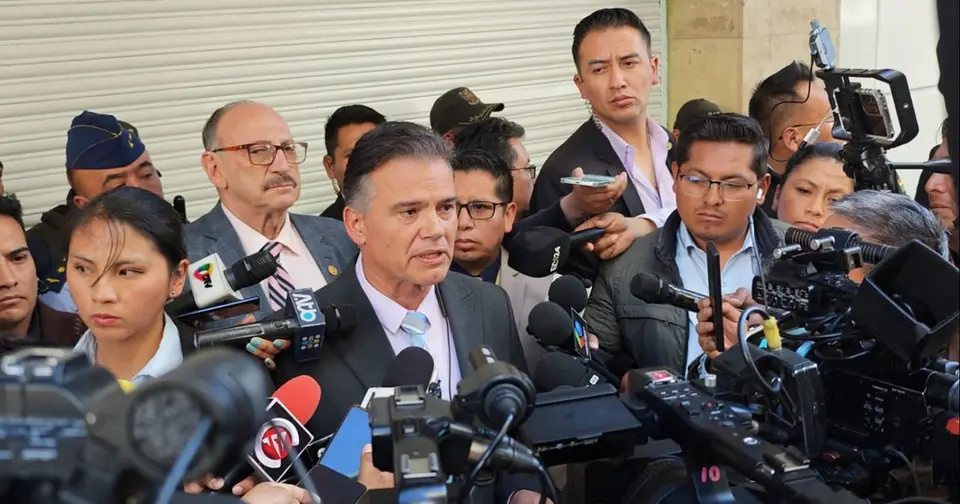
Criminal complaint in Sidacta case: paid almost everything and received little
The Defence Ministry filed a criminal complaint on Thursday with the Public Prosecutor's Office against four former ministers and 15 other people in connection with the radar case or Sidacta — Integrated System of Air Defence and Air Traffic Control — according to El Deber. Defence Minister Ernesto Justiniano backed the legal action with data from an audit revealing a payment of 191 million euros for a system that never functioned at full capacity.
"191 million euros were paid and we have not received what we were entitled to," Justiniano stated in the programme ON-Otra Noche con Sissi, broadcast by El Deber. The official clarified that the central issue is not whether the radars operate or not at the present time, but rather that "they delivered something that was not what was paid for".
Only two radars functioned correctly
The audit cited by the minister details the condition of the 13 radars contracted: two functioned correctly, nine presented operational deficiencies and two were completely inactive. Despite this situation, Bolivia went on to pay 96.7 per cent of the total amount agreed, with barely four million euros pending payment.
"The question is why so much money was paid if there were a series of problems that are reflected in the audit," Justiniano stated. The probable loss calculated amounts to 1,478 million bolivianos, according to the same audit.
From a 31-month deadline to almost ten years of waiting
The original contract stipulated delivery of the service within 31 months. Through seven successive addenda, that deadline was first extended to 82 months and then to 98. The first test of the system took place 98 months after receiving approval to proceed, "almost three times longer than had been agreed," according to Justiniano.
Former minister Ferreira defends his administration and challenges the courts
Reymi Ferreira, Defence Minister between 2015 and 2018, also appeared in El Deber's programme to explain details of the contract signed during his administration. He stated that the original project envisaged 18 radars and a cost of 350 million dollars, and that it was his administration that reduced it to 191 million euros by eliminating radars intended for the Andean region, arguing that drug trafficking does not use those routes.
"We wanted to stop the drug trafficking air corridor. It is a project that was approved by a law from 2014," Ferreira explained. He maintained that during his administration only two modifications to the contract were made, both of an administrative nature, without alteration of deadlines or increase in prices.
For this reason, Ferreira characterised the complaint as "political" and ruled out hiring private legal representation. "I am not going to hire a lawyer. I am going to ask for a court-appointed lawyer and I will go. I have no problem. I will defend myself. But I am not going to hire a lawyer. I keep my conscience clear. Prison does not frighten me," he declared.
The Sidacta case represents one of the largest contracts in Bolivia's recent history, with 191 million euros committed to modernising national air defence and air traffic control.
Source: El Deber