Detention of Mariaca exposes alleged payments and deals in his election as attorney general
The detention of former prosecutor Róger Mariaca reopened debate over his election in 2024, with accusations of payments for votes and political pressure in the Assembly.
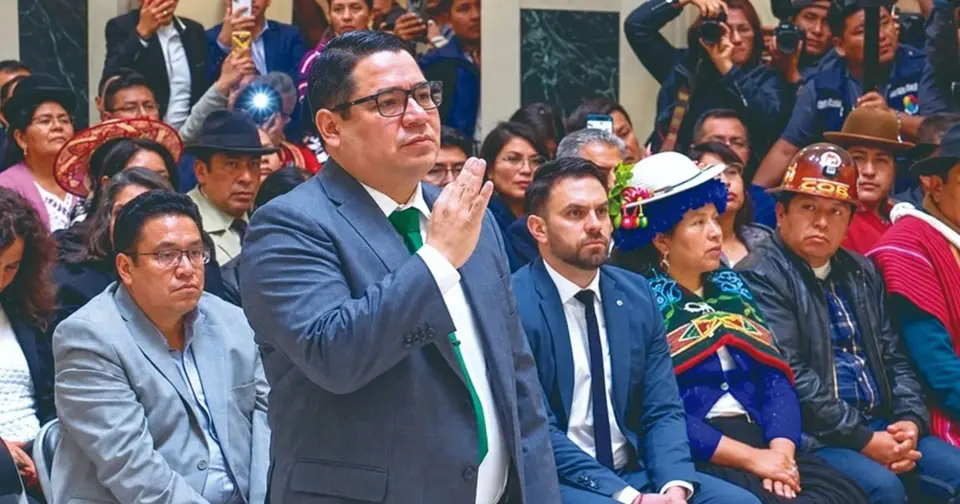
Cross-accusations following detention of former prosecutor Mariaca
The detention of Róger Mariaca, who as attorney general allegedly led a network protecting drug trafficking, revived controversy surrounding his appointment in 2024. Legislators and former legislators who participated in his election are exchanging accusations over alleged payments for votes, threats and political deals that allegedly facilitated his access to the Public Ministry, according to El Deber.
The controversy erupted following statements by former deputy Luciana Campero of Ciudadanía Ciudadana (CC), who accused leaders of that alliance and current deputy Carlos Alarcón of Unidad of supporting Mariaca despite irregularities that, according to her, surrounded the process. Campero also claimed that she received pressure to withdraw an unconstitutionality action filed before the Plurinational Constitutional Court (TCP) with the aim of blocking that election in the Assembly.
"A high-ranking leader of Ciudadanía Ciudadana called me on behalf of Alarcón. He told me: 'Luciana, please, withdraw the resource. Carlos Alarcón gave me his word. Mariaca doesn't have the two-thirds'", Campero recounted. "I trusted him and withdrew the action", she added, referring to an episode that occurred almost two years ago in the Plurinational Legislative Assembly, when the Movement towards Socialism (MAS) controlled both chambers.
Alarcón categorically denied the accusations. "This former deputy is making things up and I totally deny what she is saying", he declared to the media outlet. He recalled that CC had described it as "a total blunder" to resort to TCP magistrates with extended mandates, and argued that Campero withdrew the resource upon realising that her own actions delegitimised her.
The deputy and other former legislators involved argue that resorting to those magistrates meant recognising their authority. They also pointed out that this institutional continuity would have also favoured the continuation of then attorney general Juan Lanchipa, whose mandate was about to conclude.
Despite their differences, Campero, Alarcón and former CC parliamentary group leader Enrique Urquidi agree in pointing to a political coordination behind Mariaca's appointment. According to their accounts, sectors of MAS linked to evismo and arcismo, dissidents from CC and representatives of Creemos would have joined forces to bring about his appointment.
On 21 October 2024, Mariaca was elected attorney general with 115 votes out of 161 assembly members present. His critics attribute that result to an alleged "impunity agreement" to control the Public Ministry, an accusation that has not been proven so far.
Campero assured that political operators distributed payments and erasable-ink pens to guarantee support. According to her account, some assembly members photographed their votes before going out to "collect payment".
Urquidi argued that in Parliament it was an open secret that a team was managing votes for Mariaca through money and favours. "I can assure you that there was indeed money and other types of benefits from Mariaca and his operating team within the Assembly", he declared to El Deber.
The former parliamentary group leader added that allegations of alleged illegal payments and protection of drug trafficking were already circulating during Mariaca's tenure leading the Santa Cruz Public Ministry. Despite those antecedents, the candidate passed the evaluation of the Mixed Justice Commission and was included in the final list of qualified candidates.
For Urquidi, Mariaca represented the bet of MAS sectors to "protect and safeguard the political interests" of the party. His testimony again puts into debate the parliamentary backing that made that election possible, which has been questioned by accusations of alleged payments.
Source: El Deber