Colonel Ferrufino in preventive detention: "My image is tarnished" following Marset's arrest
The former police intelligence chief was sent to Patacamaya prison with preventive detention for six months. He is being investigated for allegedly removing suitcases from the property where Uruguayan drug trafficker Marset was captured.
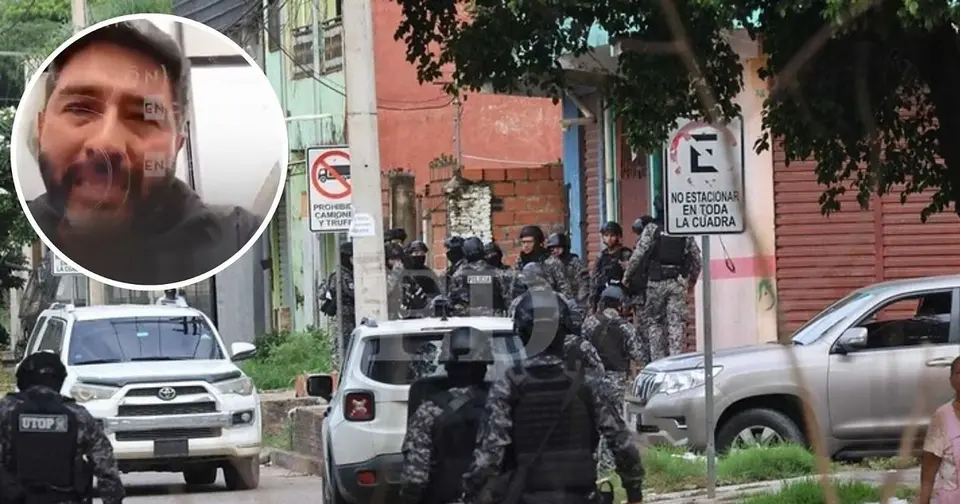
From the Marset operation to Patacamaya prison cell
Colonel Juan Marcelo Ferrufino Rojas, former national director of intelligence for the Bolivian Police, was sent to Patacamaya prison with preventive detention for six months, according to El Deber. The measure was decided following a bail hearing held this Sunday, in which the officer tearfully defended his actions in the operation that resulted in the capture of Uruguayan drug trafficker Sebastián Marset on 13 March 2026 in Santa Cruz de la Sierra.
During his intervention before the judicial authority, Ferrufino expressed greater concern for his family than for his own safety. "If preventive detention is imposed on me, I am not afraid for my life, but for my daughters and my family," he stated.
"None of the 35,000 police officers would have dared"
Ferrufino defended the legality and professionalism of the procedure executed by the Special Tactical Actions Group (GEAT). He maintained that the officers did not previously know the destination or details of the mission.
"I am certain that out of the 35,000 men of the Bolivian Police, none would have dared to do it, none. Those of us who have done it, we have done it out of conviction, out of training, because we had the capabilities," the colonel stated.
He added that no member of the GEAT, including himself, knew precisely where they were headed or what exact role they would fulfil during the operation. The former director also asked the judge to examine a video which, according to him, was sent through the corresponding office, and which in his view illustrates how he conducted the negotiations.
"I am a certified expert negotiator. I cannot abandon a negotiation. If I am speaking with a person, I cannot cancel an operation and think about stealing, as the Ministry of Government or the Public Prosecutor's Office claim. I am sufficiently professional, I am a trained man, I am a man who has given his life to the institution, and now they are treating me as just another number," he said.
The police officer who "was right"
In one of the most emotional moments of his statement, Ferrufino recalled a complaint that a police officer reportedly directed at Lieutenant Colonel Correa upon conclusion of the operation. According to the colonel, that officer asked: "Why did you send us to die?". At the time, Ferrufino said he had taken it in good humour.
"Today, now, sitting here, in a cell, where my image is tarnished, I realise that police officer was right," he lamented during the hearing.
The former director questioned whether his institutional trajectory should be doubted while he remains deprived of liberty, and insisted that his actions during the procedure were strictly professional.
The investigation: suitcases, cash and valuables
The legal case against Ferrufino is linked to the alleged irregular removal of suitcases from the property searched in the Las Palmas neighbourhood of Santa Cruz de la Sierra, where Marset was apprehended. According to the formal charges, the objects contained in those suitcases were not recorded or properly incorporated into inventory and custody procedures.
The Public Prosecutor's Office's hypothesis includes the presumed existence of cash estimated at no less than four million dollars, in addition to luxury watches and other valuables that were allegedly among the seized goods.
The colonel faces charges of embezzlement, breach of duties, aggravated theft, extortion and passive bribery.
The Marset case and its consequences
Sebastián Marset was captured in Santa Cruz de la Sierra on 13 March 2026 and currently faces United States justice. The case opened parallel investigations against several public officials for alleged links to the drug trafficker and possible irregularities connected to his environment.
Source: El Deber