Prosecutors Mariaca and Lanchipa on US blacklist for alleged drug trafficking links
The US restricted visas for the two most recent attorneys general of Bolivia over alleged links to drug trafficking and corruption. Mariaca was detained in Santa Cruz days after the announcement.
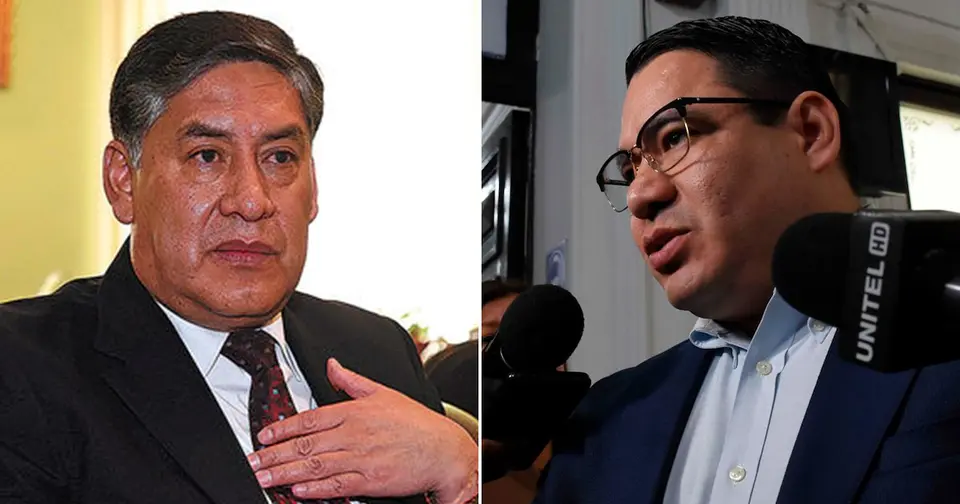
Bolivia's two most recent attorneys general under Washington scrutiny
Bolivia's two most recent attorneys general, Roger Mariaca and Juan Lanchipa, face migration restrictions imposed by the United States over alleged links to drug trafficking and corruption, according to infobae.com. The measures form part of a State Department offensive that has reached various Bolivian officials and former functionaries.
In late September, Washington released an initial list that included Mariaca, whom it accused of facilitating drug trafficking and assisting criminals in evading justice. Two days after that announcement, Mariaca was detained at Santa Cruz airport. The Bolivian government accuses him of leading a "criminal organisation" within the Public Prosecutor's Office, "designed to protect, encourage and safeguard narco-terrorism in the country".
Mariaca, 38, was departmental prosecutor for Santa Cruz before being elected in 2024 by more than two-thirds of the Legislative Assembly to lead the institution at the national level, with a six-year term. His appointment was accompanied by accusations of vote-buying that never came to be proven, though the cross-party backing of all legislative groups generated suspicions in political circles.
Lanchipa, his predecessor, also included on the blacklist
This Thursday, the Donald Trump administration expanded migration restrictions against Bolivian citizens and included former prosecutor Juan Lanchipa, who headed the Public Prosecutor's Office between 2018 and 2024, during the administrations of Evo Morales, Jeanine Áñez and Luis Arce.
Lanchipa's tenure was marked by questions about the independence of the Public Prosecutor's Office and the handling of high-profile political cases. Elected in 2018 with the majority vote of the Movement Towards Socialism (MAS), he adjusted his conduct to successive changes in power.
Following Morales' fall in 2019, Lanchipa drove judicial proceedings against former MAS authorities, jailed ministers and even issued an arrest warrant against the former president for sedition and terrorism. Jerjes Justiniano, former Minister of the Presidency during Áñez's interim government, described that meeting thus in an interview with Erbol radio:
"Two or three days after we took office, I went to a meeting and I told him that we did not trust him. I told him to his face: 'Mr Lanchipa, we do not trust you'. I told him that if I could I would ask for your resignation, but it was unconstitutional (...) Do you know what he told me? At your complete service the Public Prosecutor's Office."
Months later, when Luis Arce won the elections and the MAS returned to power in November 2020, the proceedings against Morales were shelved by the same Public Prosecutor's Office. Under Lanchipa's tenure, judicial persecution then began against figures of the interim government, including former president Áñez and two of her ministers, as well as other lower-ranking former officials.
Broader scope of Washington's measures
The new list released by the United States also includes deputies, prosecutors, judges and other high-ranking officials and former functionaries. Washington maintains that the restrictions target people who, through alleged acts of corruption or activities linked to drug trafficking, undermine democratic institutions in the region.
The case of both former prosecutors calls into question the capacity of Bolivian institutions to prevent networks protecting drug trafficking within the state apparatus, at a time when the government of President Rodrigo Paz seeks to strengthen cooperation with the United States in matters of security and the fight against organised crime.
Source: Google News BO — Crime