Organised crime infiltrates town halls and courts in Bolivia, expert warns in Santa Cruz
Criminologist Cristian Sánchez alerts that drug-trafficking structures place mayors, councillors and judges to guarantee impunity. Santa Cruz has consolidated itself as a hub for international drug trafficking.
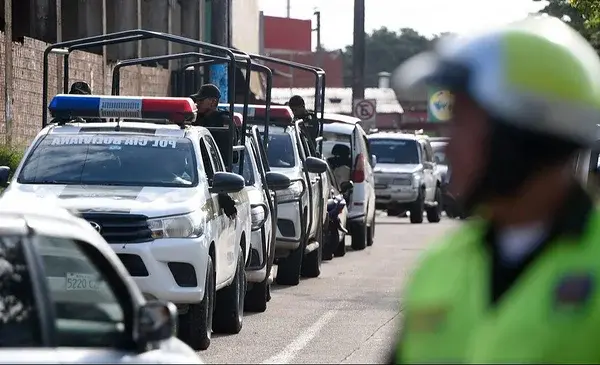
Expert: drug trafficking now controls public offices and operates from Santa Cruz
Organised crime in Bolivia has ceased to limit itself to corrupting police officers in order to infiltrate public institutions directly, according to warnings from criminal defence lawyer and security and criminology analyst Cristian Sánchez. According to reduno.com.bo, Sánchez stated that these criminal structures place local, communal, trade union authorities and judicial operators with the aim of guaranteeing impunity and sustaining their illegal businesses.
"The criminal structure not only corrupts police officers, it does not only manage clientelist relationships with corrupt prosecutors, with corrupt judges. It also places councillors, it also places mayors, it also places communal authorities, it also places union authorities," the specialist stated.
Sánchez clarified that these networks also connect with illicit activities such as gold extraction, illegal mining and drug trafficking.
Santa Cruz, operational centre for international drug trafficking
The analyst noted that international organised crime no longer uses Bolivia solely as a transit territory. According to his analysis, the city of Santa Cruz became the main installation point for these structures, due to the conditions it offers to operate with security, access to illicit resources and impunity.
"Santa Cruz has become a hub for international drug trafficking and the expansion of businesses linked precisely to this sector," Sánchez stated.
According to the expert's assessment, this situation was visible several years ago, but only now is it beginning to be publicly recognised by national authorities.
Violence as a demonstration of power
Sánchez linked recent cases of contract killing, murders and attacks against police with internal disputes between criminal organisations over the control of routes, regional leaderships and corruption networks. In his analysis, extreme violence functions as a form of demonstration of power.
"One of the forms of expression of drug trafficking as a business structure is the excessive use of violence," he stated.
The specialist warned that if the State attempts to investigate or affect the assets of these organisations without an integral strategy, criminal groups can respond with direct attacks against police, judges, investigators and journalists.
The judicial system, also under scrutiny
Sánchez pointed out that the crisis cannot be attributed solely to the police institution. According to the analyst, part of the responsibility falls on the judicial administration system, where some operators end up lending an appearance of legality to acts linked to drug trafficking.
He questioned that several investigated individuals remain deprived of liberty for a short time and then obtain procedural benefits, including the return of assets, properties and money.
"They return the money to them, they return the properties to them, they return the money to them, they return operational capacity to them to continue multiplying their criminal activity," he stated.
Police at structural disadvantage
The analyst noted that the Police face a disadvantage against criminal organisations due to deficits in operational, logistical, technological and investigative capacities. He maintained that for years institutional strengthening was neglected and a repressive role of a political nature was prioritised, to the detriment of prevention, the fight against drug trafficking and territorial control.
"Organised crime is bringing the State to its knees," Sánchez concluded.
Source: Google News BO — Crime