Former Bolivian Hydrocarbuons Minister arrested over adulterated petrol distribution
Bolivian police have arrested former minister Mauricio Medinaceli, held responsible for "rubbish petrol" that damaged at least 66,000 vehicles.
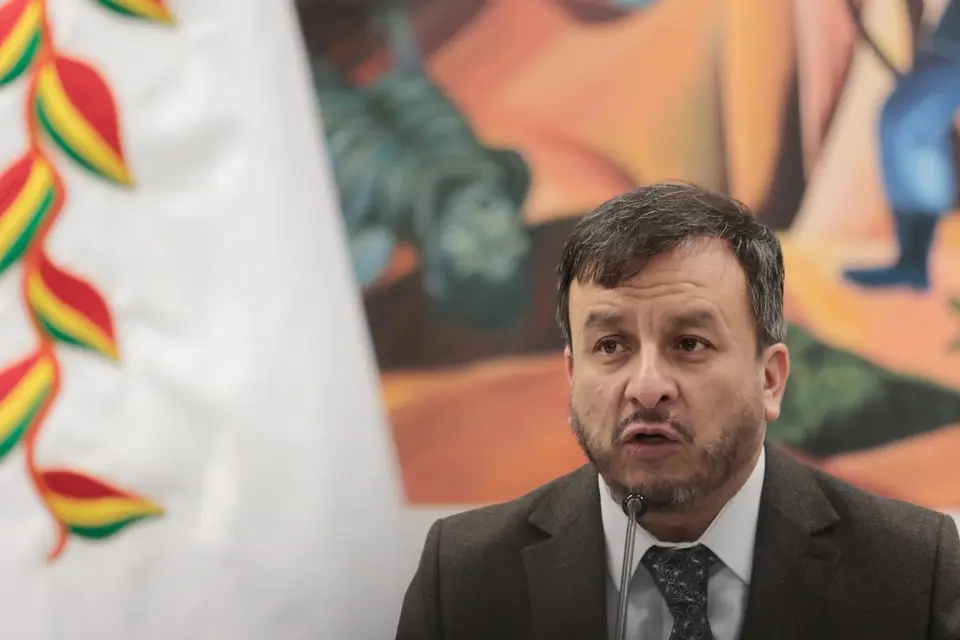
Former Bolivian minister arrested over adulterated petrol scandal
Bolivian police detained former Hydrocarbuons Minister Mauricio Medinaceli on Tuesday, accused of being one of the main figures responsible for the distribution of adulterated fuel that damaged at least 66,000 vehicles in the country. According to elpais.com, the Public Prosecutor's Office ordered his arrest following the results of a parliamentary investigation.
Medinaceli headed the Hydrocarbuons Ministry from 9 November last year—one day after President Rodrigo Paz took office—until 21 April this year. During that period, initial complaints emerged about what the local press calls "rubbish petrol".
Handcuffed and escorted by agents to the Public Prosecutor's Office, the former minister remained silent when approached by journalists. The hearing on precautionary measures is scheduled for Wednesday, when it will be determined whether he will give a statement or invoke the right to silence.
Other figures identified by the Congressional commission
The parliamentary investigation also points to Medinaceli's predecessor in the portfolio, Alejandro Gallardo, who held the post during the previous Government of Luis Arce (2020-2025). The report also mentions former directors of the state-owned company Yacimientos Petrolíferos Fiscales Bolivianos (YPFB) and the National Hydrocarbuons Agency (ANH).
According to the commission's conclusions, the distribution of substandard petrol resulted from "a chain of political and regulatory decisions, administrative omissions and technical deficiencies". The relaxation of quality standards in hydrocarbon imports would have begun in the final stage of the Arce Government, when the State, with public finances at historical lows, could no longer sustain fuel subsidies.
At the end of 2024, former president Arce approved a decree to expedite fuel imports through a new process that President Paz finalised in January with further regulations.
Quality controls suspended
"The ANH prioritised fuel supply above quality controls and technical safety," concluded the investigating congresspeople. Laboratory examinations were suspended and replaced by written resolutions, which prevented the detection of excess gum and manganese that ultimately damaged the engines of thousands of vehicles.
The Government asserts that affected vehicle owners have already received compensation of 20 million bolivianos, equivalent to 1.76 million dollars.
When the first taxi drivers' unions reported the problem in February, YPFB denied any irregularity. Social pressure eventually forced Medinaceli to acknowledge that harmful residues had been detected in fuels. At that point, responsibility was placed on the previous Government, which was accused of failing to maintain storage tanks.
Accusation of fuel theft and dilution
Two months later, the official position changed when President Paz held a press conference to present an alleged network involved in petrol and diesel theft and adulteration. The complaint stated that tankers illegally discharged part of the transported fuel to sell separately, making up the shortfall with "oil and water". Although legal action was announced at the time, the Executive did not mention the alleged network again.
Adulterated petrol was one of the main causes of two months of social conflict in Bolivia. In the pacification agreement that Paz signed with labour federations, the Government committed to guaranteeing fuel quality through a technical committee made up of professionals and civil society representatives. The new certification process that this agreement entails is, according to the Executive, one of the reasons why residents of the country's main cities queue for hours—or even days, in the case of diesel—to refuel.
Source: Google News ES — Crime (es)