Former Minister Edgar Montaño Returns to Prison After House Arrest Revocation
A criminal court revoked house arrest for former minister Montaño and returned him to San Pedro prison for two additional months. He faces two proceedings for irregularities in the construction of El Sillar.
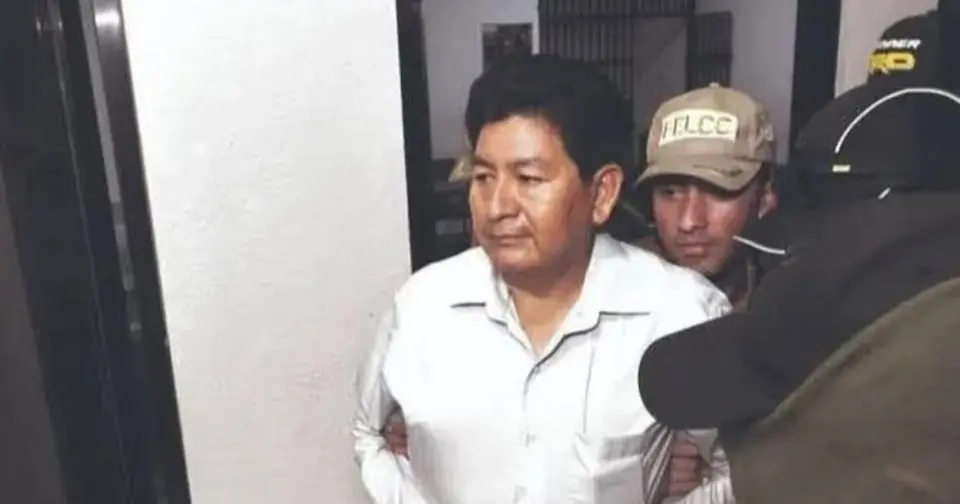
Montaño Returns to San Pedro Prison Following New House Arrest Revocation
Former Public Works Minister Edgar Montaño has been unable to secure his freedom since his detention in January of this year. According to El Deber, this Friday a criminal court revoked his house arrest—obtained only on 3 November—and returned him to San Pedro prison for a further two months.
"The decision was made at the hearing for the appeal of the personal precautionary measure, where the Office of the Attorney General of the State (PGE), together with other state departments, argued for an extension of detention," states a statement from the PGE itself. The court also set a hearing to verify his legal status for 30 December 2026.
Montaño was detained on 9 January, accused of embezzlement of public funds in the construction of the El Sillar section in the Cochabamba department. At that initial stage he was sent to preventive prison for six months.
On 30 April he was granted alternative measures to detention. One day later, a new hearing notified him of a second proceeding for the same facts—the construction of El Sillar—but with additional charges, which resulted in his return to prison for a further six months.
When that deadline ended in late October, the former minister's defence appealed and won the corresponding hearing. However, the Attorney General's Office and the ministries involved in the proceedings succeeded in reversing that decision, keeping him in custody.
The first case stems from a complaint by the Bolivian Road Authority (ABC), which detected irregularities in the El Sillar dual carriageway project on the Cochabamba-Santa Cruz highway. The contract was signed with the company Sinohydro Corporation Limited. Among the anomalies identified were extensions of deadlines and modifications to the original route, which allegedly caused structural failures in the roadway.
The second proceeding points to the alleged sale of preferential dollars to the construction company during a period of currency shortage in the country, a fact that allegedly caused additional economic damage to the Bolivian State.
Source: El Deber