Former Defence Minister Novillo spends first night in cells over purchase of faulty French radars
Former Defence Minister Edmundo Novillo was arrested after appearing before the Public Prosecutor's Office regarding irregularities in the purchase of 13 radars from Thales Air Systems for 191 million euros.
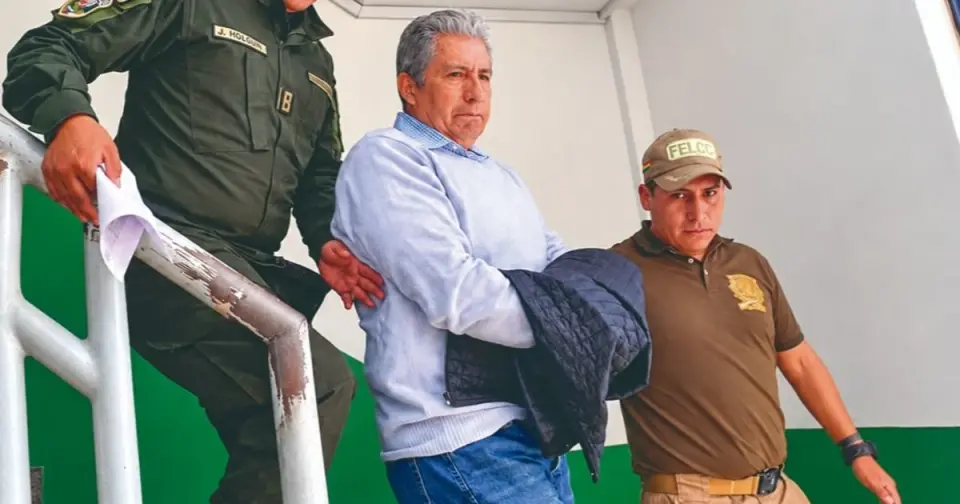
Radar case: Novillo detained and eleven equipment units with faults in air defence system
Former Defence Minister Edmundo Novillo spent his first night in cells at the Special Force for the Fight Against Crime (FELCC) in La Paz, after being apprehended following his appearance before the Public Prosecutor's Office regarding irregularities in the acquisition of 13 French radars. According to El Deber, the investigation concerns possible economic damage to the State exceeding 1.478 billion bolivianos and extends to former officials from three governments.
"I am innocent, I have presented all my legal and documentary submissions, and consequently I find the apprehension unjust," Novillo told the press. The former official served in the Luis Arce administration between 2019 and 2025.
The complaint and the original contract
The complaint was filed on 15 October by the current Defence Minister, Ernesto Justiniano, backed by the General Prosecutor's Office. The case centres on the Integrated Air Defence and Air Traffic Control System (Sidacta), contracted in August 2016 with French company Thales Air Systems SAS for 191.07 million euros, during the Evo Morales government.
The project included seven military radars and six civilian ones, along with control centres, communications, infrastructure and technology transfer. The objective was to guarantee surveillance of Bolivian airspace and the control of aircraft traffic.
Only two of thirteen radars without faults
A technical review revealed that only two of the 13 radars were functioning without defects. Nine presented faults and two were completely out of service. In an interview with El Deber's programme ON-Otra noche con Sissi, Justiniano questioned the results: "191 million euros were paid and we have not received what corresponds to us".
These results contrast with official reports that recorded 100% physical execution and 97.85% financial execution—indicators that will also be examined within the judicial process. An internal audit identified differences between what was provided for in the contract and the actual operational conditions of the equipment.
Extended deadlines and seven amendments
The delay in execution constitutes another of the observed issues. The contract established an initial timeframe of 31 months, but seven modifications extended it to 82. The final demonstration of the system took place after 98 months. The Prosecutor's Office maintains that the amendments altered deadlines, guarantees, obligations and reception processes.
Nineteen defendants from three governments
The Government brought action against 19 individuals: former ministers, former public servants, technical officials and representatives of the supplying company. Among those named are Reymi Ferreira and Javier Zavaleta, ministers under Evo Morales; Luis Fernando López, from Jeanine Áñez's administration; and Novillo, from Arce's administration.
Ferreira signed the original contract and two of its modifications; Zavaleta signed the third and fourth; López, the fifth; and Novillo, the sixth and seventh. Ferreira rejected the accusations and maintained that the changes approved during his term were administrative and did not increase the price or extend the timeframes. López, who currently resides in Paraguay, indicated that he is willing to appear before the courts to exercise his defence.
Justiniano stated that the investigation must identify concrete actions and not be limited to the positions held by those accused. Prosecutor Hugo César León indicated that the complaint mentions direct damages to the State.
Source: El Deber