UN warns of international cartels using Bolivia as operational hub
The Unodc representative in Bolivia warns of the expansion of CJNG, PCC and CV in the country. Bolivia is no longer merely a transit zone, but an organised crime "hub".
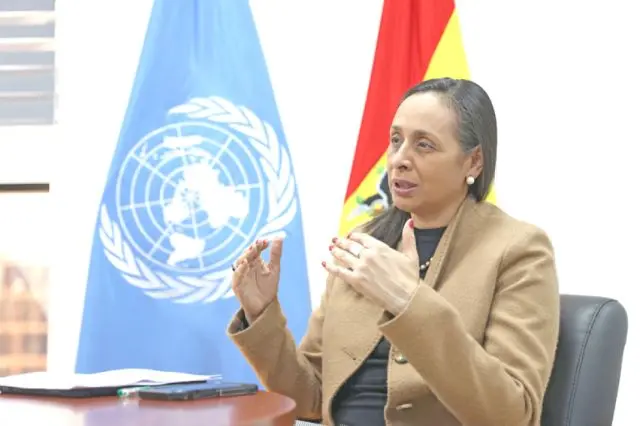
Bolivia, new operational centre for transnational organised crime
According to correodelsur.com, Bolivia's representative for the United Nations Office on Drugs and Crime (Unodc), Mónica Mendoza, revealed that Bolivia has become in recent years a "hub" or operational centre for international drug cartels. In statements to the EFE news agency, Mendoza identified the presence of the Jalisco New Generation Cartel (CJNG) from Mexico, the First Command of the Capital (PCC) and the Red Command (CV) from Brazil, as well as criminal groups from Peru and Colombia.
The presence of these organisations is evidenced, according to Mendoza, by the number of detainees of those nationalities in Bolivian prisons "and who are related to the command operations framework" of said organisations.
Contract killings and territorial disputes
Mendoza noted a "significant" increase in cases of "sicariato" or contract killings, which indicates that these groups "are in conflict" and "are fighting over territories". For some months now, contract murders have become recurrent in border zones with Brazil, a situation that forced the Bolivian Government to mobilise the military and elite units to reinforce security.
"Yes, there is presence of cartels. We are not talking about Bolivian cartels, we are talking about organisations from other countries and that operate with the consent, with the consensus of local organisations," affirmed the Unodc representative.
Beyond transit: a crime "holding"
For Mendoza, Bolivia can no longer be analysed solely as a raw material producer or transit territory. The problem "is much more complex": there is a "confluence" of crimes such as smuggling, human trafficking, corruption and illegal mining, which operate in the manner of a crime "holding" or business consortium.
Added to this is the increase in coca leaf cultivation. According to the latest Unodc report, presented in September, cultivations rose by 7%, from 34,000 hectares in 2024 to 36,400 in 2025. Bolivia is the world's third largest producer of the bush, behind Colombia — which in 2024 recorded 261,000 hectares — and Peru, with 84,546 hectares reported in 2025.
The shift from previous administrations
During the administrations of Evo Morales and Luis Arce, authorities denied the presence of cartels or "big fish" in the drug trade in Bolivia and maintained that illicit operations were limited to supposed "emissaries" or local clans. The current administration, approaching one year of government, has recognised the presence of transnational organised crime in the country and defends the capture of drug trafficking "bosses", including that of Uruguayan Sebastián Marset, detained last March and extradited to the United States.
Mendoza maintained that drug trafficking in Bolivia is "not" conducted at "a low level", something that is evident in cases such as that of Marset. The representative also noted that his capture marked the end of "narcopeace": a kind of truce in which criminal organisations coexist peacefully because they have distributed routes, functions and territories among themselves, which generates in the population the impression that the problem does not exist.
Institutional corruption and infiltration of the judiciary
Mendoza warned that in South America "there is a policy of expansion and infiltration of organised crime" that has "penetrated some institutions" of the justice system, transforming itself "into a corruption network" to obstruct the prosecution of crime. The representative responded thus when asked about the dismissal and imprisonment of former attorney general Roger Mariaca, accused of allegedly protecting "narcoterrorism".
Mendoza explained that "denying" that infiltration would be very "complex", because it would allow drug trafficking "to become established" in institutions and be "very difficult" to recover them.
Unodc calls for an integrated response
The Unodc representative considered it "impossible" to combat large-scale drug trafficking in a "unilateral or solely bilateral" manner. One of Bolivia's main challenges, she affirmed, is to articulate an "integral" response to the problem. Mendoza stressed the need to pursue crime and its finances, to dismantle its operational capacities and to advance in the approval of anti-money laundering regulations and asset forfeiture laws. She also highlighted that Bolivian courts must hand down sentences in drug trafficking cases, as thus far they have been "very few".
Source: Google News BO — Crime