Comando Vermelho expands routes to Rio ports and international drug trafficking
Comando Vermelho wants to control corridors to Rio and Itaguaí Ports to send drugs to Europe and Africa. The faction already dominates approximately 60% of communities in Rio.
CV targets ports and maritime routes to expand international trafficking
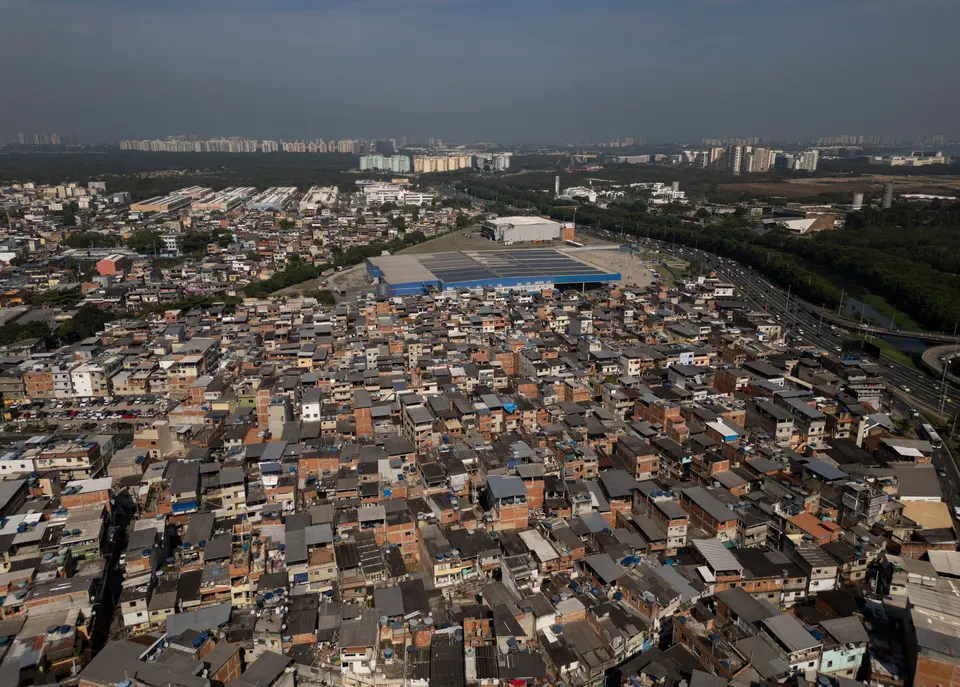
Comando Vermelho (CV), the largest criminal faction in Rio de Janeiro, is engaged in at least four simultaneous confrontations in different zones of the city, according to information published by oglobo.globo.com. The objective goes beyond territorial conquest: the faction wants to create passage corridors through communities in the Metropolitan Region to gain access to Rio Port, Itaguaí Port and Guanabara Bay.
The conflicts are occurring simultaneously in Rio das Pedras and in favelas in the Vargens and Recreio areas, in the South-West Zone, in Cordovil, in the North Zone, and between Campo Grande and Guaratiba, in the West Zone.
Expansion in the West Zone: rifles and camouflaged clothing
In the West Zone, a region with direct connection to the municipality of Itaguaí, the CV controls part of Bangu and disputes areas such as Favela do Barbante, in Campo Grande. On 27 July, eleven criminals armed with rifles and dressed in camouflaged clothing invaded a wooded area between the neighbourhood and Guaratiba, in an attempt to reach a community controlled by the militia. The action was recorded by security cameras. In Santa Cruz, the faction has not yet managed to penetrate any community under militia control.
In the Itanhangá region, in the South-West Zone, the CV controls all favelas, with the exception of Rio das Pedras. There are confrontations with rival gangs in the Vargens, in Terreirão and in the Tintas and Dourados favelas, in Cordovil. These last two have been under attack by men led by Álvaro Malaquias Santa Rosa, known as Peixão, one of the leaders of Terceiro Comando Puro (TCP) which controls the so-called Complexo de Israel, which includes the favelas of Parada de Lucas, Vigário Geral, Pica-Pau, Cidade Alta and Cinco Bocas.
Doca: 45 arrest warrants and central role in expansion
Delegate Paulo Saback, of the Narcotic Suppression Division (DRE), points to Edgar Alves de Andrade, known as Doca or Urso, as the main person responsible for ordering the invasions that fuel the CV's expansion. A member of the faction's upper echelon, Doca is the target of 45 arrest warrants issued by the Court of Justice, according to data from the National Council of Justice.
"The project is much larger than simple territorial control"
The CV already controls approximately 60% of communities in Rio. For police, conquering the remaining territorial hegemony could expand the faction's economic power and intensify the sending of drugs to Europe and Africa.
"If they advance in these areas, they will have more profitability. From the moment they occupy this territory, it would become a passage for weapons and drugs. They would be able to build a passage corridor," said Saback. "The CV's expansion project is much larger than simple territorial control. It is also the control and hegemony of routes. Including maritime expansion, reaching Itaguaí Port, the port here in the capital, Guanabara Bay, which has the Salgueiro Complex nearby, where the CV is already present. From there, they could access Niterói-Manilha, go up to the Serra region, head to the north of the state," added the delegate, emphasising that the objective is "also the control of routes, even to bring about an increase in international trafficking, sending drugs to Europe and Africa, where monetisation is much higher."
In the opposite direction, the opening of corridors with access to the sea would equally facilitate the entry of weapons and ammunition into the CV's arsenal.
Arsenal: hundreds of rifles and large-scale operations
Weapons and drugs from bordering countries arrive in Rio by three routes, with the main one known as the North Route or Trans-Amazonian Route. The material departs from the region near Venezuela, crosses the Amazon via the Negro and Solimões rivers and through Pará, until it reaches the Centre-West and then the South-East.
There is no consolidated estimate of the CV's arsenal in Rio. However, only in Rocinha, during an operation carried out in June 2025 by the Ceará Public Ministry and Rio police, 400 men armed with rifles were caught fleeing the cordon through a wooded area, images captured by drone with low-light camera. In the same year, more than 90 rifles were seized in the Penha and Alemão Complexes, following an action that resulted in 122 deaths — 117 suspects and five police officers.
Money laundering and cryptocurrency assets finance expansion
To finance the purchase of weapons and ammunition, the CV resorts to illegal activities such as robbery, extortion and clandestine sale of cable television and internet signals. In March this year, an investigation by the Division for Repression of Organised Criminal Actions and Special Inquiries (Draco-IE) dismantled a scheme of bank fraud and money laundering, allegedly managed by people with links to the CV, which moved 136 million reais in a single year.
Investigations have already confirmed that the faction laundered money of criminal origin through cryptocurrency. In June, the corporation announced the creation of the Support Centre for Investigations with Virtual Assets (NuCripto), designed to support delegacies investigating financial movements of this type by criminals. The initiative emerged following the identification of clandestine cryptocurrency mining farms — one of them found by police on 22 May, in the Lins Complex.
Source: CNN Portugal