Duarte Lima tracked by three mobile phones in the 45 hours before the crime in Rio
Portuguese and Brazilian police reconstructed Duarte Lima's movements through three numbers he used before the murder of Rosalina Ribeiro in December 2009.
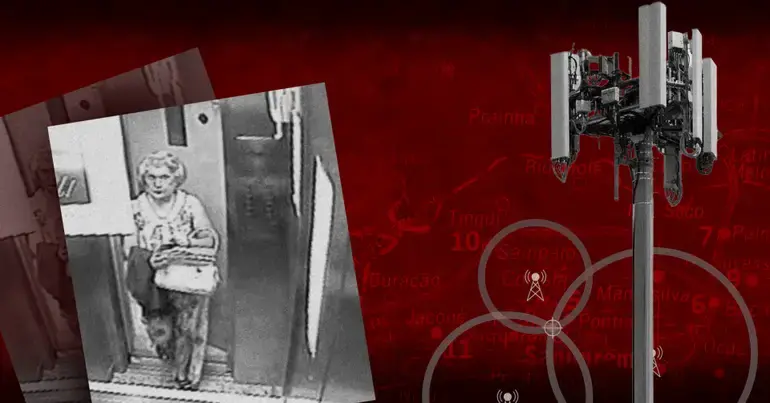
Three unknown mobile phones betray the lawyer's path in Brazil
6 December 2009, the day before the crime. The entertainment hall of Arouca Barra Clube, in Barra da Tijuca, is full. Rosalina Ribeiro attends a concert by Maria Alcina, who is celebrating 50 years of career. At the invitation of the fado singer's family, Rosalina was present with another friend, Rosemary Spínola. On leaving, she asked the singer to have lunch together on Wednesday: "I want to tell you many things. We need to talk a lot," she said to her. Alcina agreed immediately.
That same evening, Rosalina spoke to Rosemary about what had been troubling her for weeks. She asked her to accompany her to the meeting scheduled for the following day with lawyer Duarte Lima — the man who, according to Observador, would become the main suspect in her murder. Rosemary refused: she already had commitments. "She told me it was confidential, that she couldn't tell anyone," her friend recalled.
The personal mobile phone that disappeared
The investigation had already been underway for some months when inspectors Aurélio Nascimento and Rogério Lima focused on a disturbing fact: Duarte Lima's personal mobile phone registered no activity in Brazilian territory on 5, 6, 7 and 8 December 2009. Brazilian operators had registered the same number during other trips by the lawyer to the country. This time, the device was switched off — or had been left in Portugal.
The problem was that Rosalina had told her friends that she had spoken by telephone with the lawyer. Someone had called. The question was: from which number?
Four calls minutes before she left
Analysis of the calls received and made from Rosalina's home phone revealed two unknown numbers. The first was a Portuguese prepaid card. From that number, four calls were made to Rosalina's home on 7 December, the last of them minutes before she left for the meeting with the lawyer. "It is plausible to consider, based on the duration of the call and the time, that the caller could have been announcing his arrival at the meeting place," the investigators wrote in the report.
The second number was from a Swiss operator. In addition to contacts with Rosalina, that number also called several times to Duarte Lima's driver and to a Brazilian mobile phone registered in the name of Marlete Oliveira, a native of Belo Horizonte and resident in Portugal, who maintained a relationship with the lawyer.
The third number and the error that sealed the investigation
Investigators also identified a third number, linked to Duarte Lima by a technical detail: it had been activated at the same location and at the same time as the Swiss mobile phone, during the lawyer's trip between Belo Horizonte and Rio de Janeiro. This data allowed them to locate him geographically with precision.
The most revealing coincidence, however, was another: the two numbers that called Rosalina before she left home on the night of the crime shared the same prefix — 91171. Only the four final digits differed.
The three mobile phones together — the Portuguese prepaid card, the Swiss number and the third number associated with the same route — allowed police to reconstruct Duarte Lima's path in Brazil in the 45 hours that preceded the crime. For the inspectors, the fact that the lawyer avoided using his personal mobile phone constituted the first major error in his strategy.
The origin of the Swiss number
The investigation concluded that the number from a Swiss operator was provided to Duarte Lima by Michel Canals, UBS manager and defendant in the Monte Branco case — the major judicial operation that investigated crimes of qualified tax fraud and money laundering, and which generated some of the largest economic and financial crime proceedings in Portugal.
The lifting of telephone secrecy with Brazilian operators was requested at the beginning of the investigation. From the long lists of numbers received, investigators progressively highlighted the contacts originating from the three mobile phones that ultimately became the central axis of the reconstruction of the lawyer's movements.
---
"The Shadows of Duarte Lima" is a six-episode series of Observador's Podcast Plus, narrated by João Reis with original soundtrack by Filipe Raposo.
Source: Observador