Federal Police identifies $9m shortfall in funds for 'Dark Horse' film about Bolsonaro
The Federal Police identified severe accounting discrepancies between the $12m sent abroad and the $2.8m that returned to Brazil to finance the feature film.
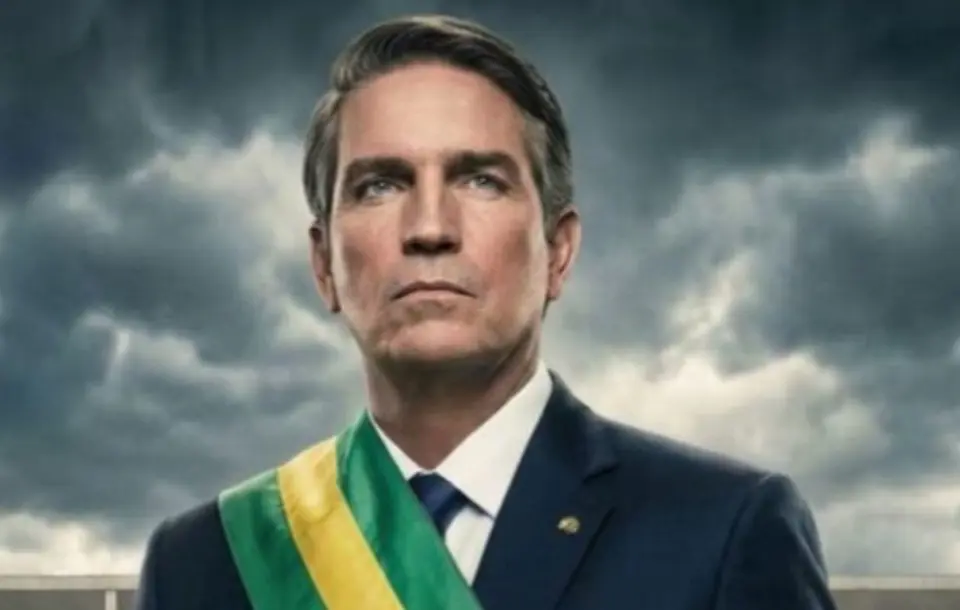
$9m discrepancy in 'Dark Horse' financing raises suspicions
The Federal Police pointed to a "severe accounting discrepancy" in documents presented by the production company of the film Dark Horse, a biographical film about former president Jair Bolsonaro. According to g1.globo.com, more than $12 million left the country via the Havengate fund, but only $2.8 million were registered as having returned to Brazil.
The money originated from Entre Investimentos, a company linked to former Banco Master owner Daniel Vorcaro, and was directed to the Havengate fund, based in the United States and administered by Paulo Calixto, lawyer for former deputy Eduardo Bolsonaro.
"It therefore becomes indispensable to submit the entire documentary and banking collection to rigorous forensic examination in order to cross-check the international transfers, the bookkeeping of the Brazilian production company and the documentation for declared expenses," the Federal Police stated in a document submitted to the Supreme Federal Court.
Film as possible 'cover narrative'
One line of investigation questions whether the amounts sent to the Havengate fund were actually used to finance the feature film or if Dark Horse "served as a cover narrative for the concealment, simulation and diversion of resources".
On Friday (16th), the Federal Police asked the Supreme Federal Court minister responsible for the case to extend investigations into the film's financing by 90 days. Along with the request, documents were submitted pointing out the differences between the amounts sent and those that actually returned to the country.
In June this year, production company Go UP Entertainment stated that Dark Horse cost at least 75.1 million reais — with 54 million reais spent abroad and 20.9 million reais in Brazil, according to a document attached to the investigation by the Civil Police examining Karina Ferreira da Gama, owner of the company.
In a statement, Go UP's defence affirmed that "the forensic examination will reveal the integrity and legality of all financing collections for this extraordinary work in support of this historical initiative of my client GO UP".
Three investigation fronts
Investigators are analysing three aspects related to the case:
- The transfers made by Vorcaro at the request of Flávio Bolsonaro, the Liberal Party candidate for the Presidency;
- The possibility that part of the resources was used to cover Eduardo Bolsonaro's expenses in the United States;
- The allocation of parliamentary amendments to entities related to the film's production company.
Eduardo Bolsonaro denied having received resources from the fund linked to Vorcaro. The former deputy stated that his immigration status in the United States would not permit this type of transfer and that he informed American authorities of the origin of his funds. He acknowledged having invested $50,000 in the project and stated that he received the amount back later, denying, however, that the reimbursement had passed through the fund that received Vorcaro's contributions.
At around the same time, a contract came to light in which Eduardo Bolsonaro was listed as executive producer of Dark Horse.
Parliamentary amendments also under scrutiny
A second investigation, conducted under the responsibility of minister Flávio Dino, is examining the sending of public resources to organisations linked to the production company's owner. This line of inquiry was opened after deputy Tabata Amaral (PSB-SP) asked the Supreme Federal Court to investigate the case.
The focus is on 2 million reais in parliamentary amendments indicated by deputy Mario Frias for entities presided over by Karina Ferreira da Gama: the Instituto Conhecer Brasil (ICB) and the Academia Nacional de Cultura (ANC). Go UP Entertainment was not the target of search warrants.
Mario Frias, who acts as screenwriter and executive producer of Dark Horse, stated to the Supreme Federal Court in May that the amendments allocated to the organisations were not sent to finance the cinematographic production.
Source: Google News BR — Crime