Armed factions control 31% of Rio and advance in national politics
Red Command and PCC are present in 26 of Brazil's 27 states. Public security dominates debate in October presidential election.
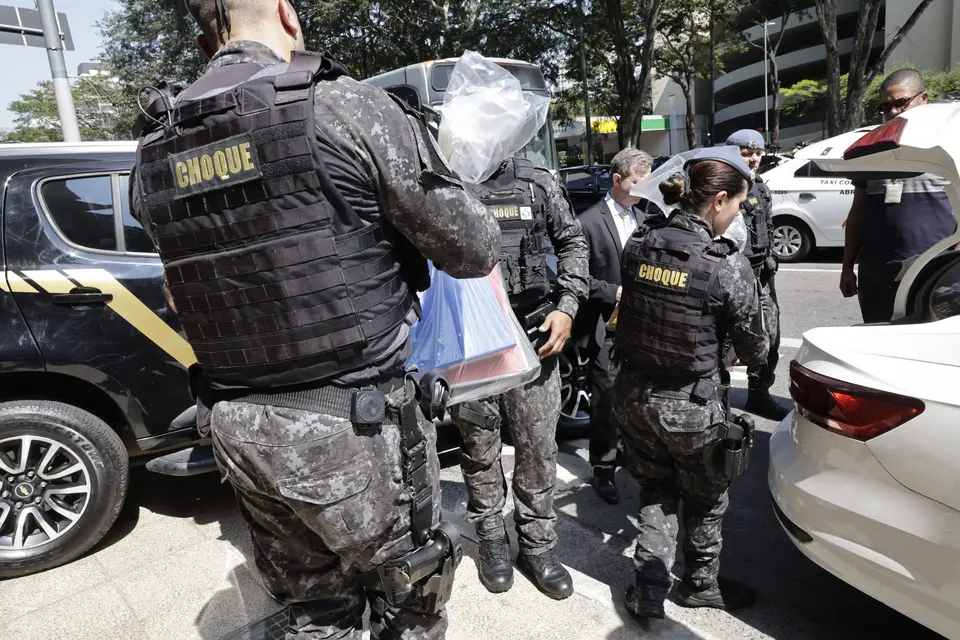
Armed factions dominate territory and politics as presidential election approaches
Right at the entrance to Thiago Braga's martial arts academy in Penha, in the northern zone of Rio de Janeiro, a barricade controlled by a drug trafficking faction filters who can move along the street. Three young people aged at most 16 or 17, wearing Brazilian national team shirts, hold automatic rifles for military use — the slings so long that the weapons hang below their waists.
"Until a few years ago, it was possible to walk freely along this street, but now there are three barricades along it," says Braga, a resident of the Penha complex of more than a dozen favelas. "If the barricade boys are killed, others take their place. It is an endless process — and the State is, in large part, absent."
According to reporting from www1.folha.uol.com.br, Penha is one of the bases of the Red Command, Rio's largest armed group, and illustrates precisely the phenomenon that has reorganised Brazilian politics around the demand for public security.
31% of the city under armed control
Research by the Crossfire Institute in partnership with Fluminense Federal University points out that 31% of Rio de Janeiro's city territory is currently under direct control or influence of armed groups. These areas are home to more than 40% of the population — nearly 3 million people. Since 2008, the period when Rio hosted the World Cup final and the Olympic Games, the territory of these groups has more than doubled.
Drug trafficking factions have expanded continuously since the 1980s, when they began controlling some favelas, as Brazil took on a more important role in the global cocaine trade. From Rio, the problem gained national dimensions: the Red Command is present in 26 of the 27 federal units, according to the Justice Ministry. The PCC (First Command of the Capital), São Paulo's largest faction, also has a presence in 26 states.
Researchers believe that both organisations today have more members than the better-known cartels in Colombia and Mexico. The United States has classified the two as foreign terrorist organisations.
Infiltration into politics
The power of these organisations extends beyond territorial control. In March, Rodrigo Bacellar, former president of Alerj (Rio Legislative Assembly), was arrested and awaits trial on charges of acting in favour of the Red Command.
"It is this phenomenon that is keeping me awake at night," says Robert Muggah, security expert at the Igarapé Institute in Rio. "We have a situation in which criminal networks are infiltrating the State's political bodies. [...] Organised crime is spreading like a metastasis from Rio and São Paulo to the rest of Brazil, which is something fundamentally new."
Presidential election shaped by violence
The perception that Brazilian authorities have been negligent in confronting armed groups is pointed to as one of the main reasons for the rise of the right-wing populist movement. Flávio Bolsonaro, son of former president Jair Bolsonaro and a native of Rio, finished the first round in the lead and is in an advantageous position to win the 25 October presidential election.
Bolsonaro promises more aggressive police operations and megaprisons for faction members. Critics, however, argue that this is precisely the strategy Brazil has adopted over the past three decades — without result. Rio already records one of the highest rates of deaths caused by police in the world.
Last year, a police operation in Penha and in Alemão, a neighbouring favela complex, killed more than 120 people during an attempt to arrest faction leaders — the deadliest operation in Brazilian history. Many bodies were left on a plot of land on the hillside behind Braga's academy. The Red Command, however, was not removed from the favelas.
Carolina Christoph Grillo, professor at Fluminense Federal University, states that the rise of armed groups has been "developing slowly over decades and could have been halted if more effective policies had been adopted". She adds that if Bolsonaro wins, "we will double the bet on something we know does not work and that, in fact, makes the problem worse".
Daily control in dominated territories
Few places in Latin America present the same scale, diversity and audacity in the operations of criminal groups as Rio de Janeiro. The Red Command is the largest of three drug trafficking factions with a strong presence in the eastern and northern zones of the city. The western zone is dominated by so-called militias: groups founded by former police officers initially to expel factions from neighbourhoods, but which later moved into extortion schemes and subsequently into drug trafficking.
In the areas they control, these groups regulate many aspects of daily life. In addition to deciding who can enter, they typically treat crimes such as sexual violence with brutality. The rules may include prohibitions on loud motorcycles or dangerous manoeuvres on busy roads.
At one point in Penha, the Red Command even prohibited the wearing of Chelsea shirts because the name of the club's sponsor at the time — the telecommunications company Three — referred to a rival Rio faction, the Pure Third Command.
There are schools and health units in these areas, but police presence is limited to occasional military-style incursions. The phenomenon, which began as a local problem in Rio, has become a structural national issue — and central fuel in the dispute for power in Brazil.
If immigration was the issue that drove the shift to the right in the United States and Europe, in much of Latin America it was voter demand for confrontation with armed groups that reconfigured the political map — and Brazil in 2026 is the most visible example of this trend.
Source: Google News BR — Crime