PCC and Comando Vermelho designated as terrorists by US: their reach in Chile and Latin America
The US designated the PCC and Comando Vermelho, two Brazilian criminal groups with transnational operations reaching Chile and the rest of the region, as terrorist organisations.
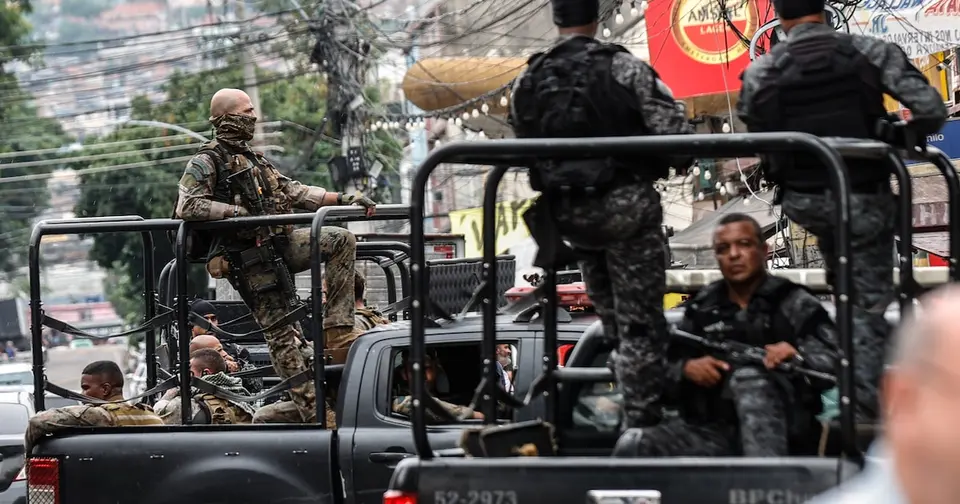
US terrorist designation of two Brazilian gangs intensifies pressure on regional organised crime
The United States Department of State, headed by Secretary Marco Rubio, formally designated the Primeiro Comando da Capital (PCC) and Comando Vermelho as Foreign Terrorist Organisations (FTO). According to infobae.com, the measure enables financial sanctions, restricts capital movements and seeks to isolate the leaders of both factions, whose crimes traverse routes connecting Brazil, Argentina, Paraguay, Venezuela, Colombia and extend to Africa and Europe.
The FTO classification expands the legal tools available to pursue their networks and reinforces international cooperation in investigations into illicit financing, arms trafficking and criminal logistics, according to international analyst Andrei Serbin Pont, who explained this on Infobae en Vivo Al Mediodía.
Comando Vermelho: from Rio's prisons to the Amazon routes
Comando Vermelho emerged between the 1960s and 1970s in Cândido Mendes prison in Rio de Janeiro, where common criminals and left-wing guerrillas detained during the military dictatorship lived together. With the release of political prisoners in the late 1970s, the faction abandoned any ideological element and concentrated on illicit businesses.
Today, the group maintains a dominant presence in Rio de Janeiro. The Brazilian state has three main paraestate structures: Comando Vermelho, Amigos dos Amigos and Comando Puro, which together control approximately 70% of the zones dominated by these organisations, to which are added the militias that also operate in the city.
Last year, an intervention by security forces in an area controlled by Comando Vermelho resulted in 132 deaths during the operation. In response, the organisation carried out blockades and bus burnings, leaving several streets closed for hours in a day of violence concentrated in Rio.
Serbin Pont noted that the group's expansion advanced towards northern Brazil and the Amazon routes, with trafficking corridors connecting with Venezuela and Colombia and exits towards the African continent with a final destination in Europe. That advance, he added, deepened following the fall of Família do Norte, which dominated that region, and incorporated illegal economies such as illegal mining and timber trafficking.
The PCC: from Carandiru to a structure with business logic
The Primeiro Comando da Capital is considered the largest criminal organisation in Brazil. It was born after the Carandiru massacre in 1992, when numerous prisoners died during an intervention in that prison, and was originally established as a "mutual protection" scheme among inmates.
Since then, the PCC consolidated an operational structure based in prisons, from where it coordinates activities and maintains an internal organisation that allows it to operate against other factions. Serbin Pont described the group as a structure with management methods close to those of a company, with accounting software and internal administration systems, in contrast to Comando Vermelho, more oriented towards territorial control and with a more direct operational logic.
The data cited by the analyst account for the economic scale of the group: more than 30 billion reals were identified as linked to PCC resources, more than 1,000 service stations that mobilised 52 billion reals between 2020 and 2024, and an estimated turnover of 80 billion reals in fuel, in addition to income from drug trafficking.
Presence in the Southern Cone and connection with Chile
The PCC's projection towards the south and west of Brazil makes it relevant in border zones. In Argentina, Serbin Pont mentioned indications of the presence of members linked to the group in the north of the country, reports of active members in prisons in Chaco and Coronda, Santa Fe, and the identification of 39 Brazilian citizens with links to Comando Vermelho and, in particular, to the PCC. "Last year the Argentine government took the decision to classify these organisations as terrorist," the analyst recalled.
In Paraguay, the PCC achieved even greater influence. Serbin Pont stated that the group proved key in the displacement of other structures, such as the Ejército del Pueblo Paraguayo (EPP), and suggested that there may have been some level of unrecognised coordination with the Paraguayan government in that process.
Regarding arms trafficking, the United States identified patterns associated with the demand of these factions years ago. According to the analyst, many weapons come from the US civilian market and arrive via routes that include ports in Uruguay and Argentina, with subsequent transit through Paraguay towards Brazil.
In the Chilean context, and according to information released by media outlets such as Chilevisión, at least 19 international gangs currently operate in the country, in a scenario in which transnational organised crime has extended its networks throughout the region. The terrorist designation imposed by Washington adds a new political and legal dimension to the pressure that Latin American governments face in coordinating responses to these organisations.
Source: Google News CL — Crime